
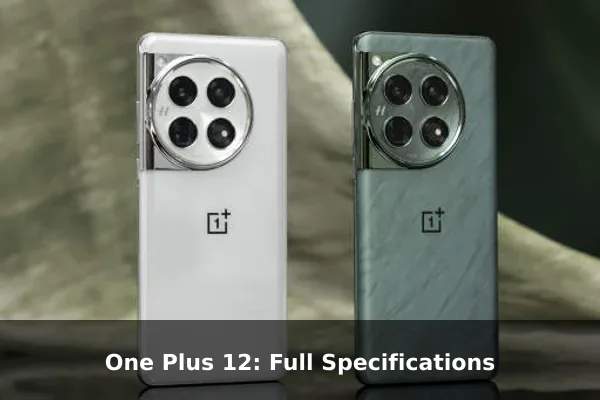
The One Plus 12 is a flagship Android phone built around high-end fundamentals: a large LTPO AMOLED display, Snapdragon 8 Gen 3 performance, Hasselblad-tuned triple cameras, and unusually aggressive wired and wireless charging.
This article looks beyond the raw specification sheet to explain how the One Plus 12 fits as a value-focused premium phone, where its hardware stands out, and who should consider it over newer or more expensive flagships.
Full Specifications
Network
| Technology: | GSM / CDMA / HSPA / CDMA2000 / LTE / 5G |
| 2G bands: | GSM 850 / 900 / 1800 / 1900 |
| CDMA 800 | |
| 3G bands: | HSDPA 850 / 900 / 1700(AWS) / 1900 / 2100 – International |
| HSDPA 850 / 900 / 1700(AWS) / 2100 – India, China | |
| CDMA2000 1x | |
| 4G bands: | 1, 2, 3, 4, 5, 7, 8, 12, 13, 17, 18, 19, 20, 25, 26, 28, 30, 32, 38, 39, 40, 41, 48, 66, 71 – International |
| 1, 3, 4, 5, 7, 8, 18, 19, 20, 26, 28, 34, 38, 39, 40, 41, 66 – India, China | |
| 5G bands: | 1, 2, 3, 5, 7, 8, 12, 20, 25, 28, 30, 38, 40, 41, 66, 71, 77, 78 SA/NSA – International |
| 1, 3, 5, 7, 8, 20, 28, 38, 40, 41, 66, 77, 78 SA/NSA – India, China | |
| Speed: | HSPA, LTE (CA), 5G |
Launch
| Announced: | 2023, December 05 |
| Status: | Available. Released 2023, December 11 |
Body
| Dimensions: | 164.3 x 75.8 x 9.2 mm (6.47 x 2.98 x 0.36 in) |
| Weight: | 220 g (7.76 oz) |
| Build: | Glass front (Gorilla Glass Victus 2), glass back (Gorilla Glass), aluminum frame |
| SIM: | Nano-SIMNano-SIM + Nano-SIM + eSIM (max 2 at a time)Nano-SIM + Nano-SIM |
| IP65 dust tight and water resistant (low pressure water jets) |
Display
| Type: | LTPO AMOLED, 1B colors, 120Hz, 2160Hz PWM, Dolby Vision, HDR10+, 600 nits (typ), 1600 nits (HBM), 4500 nits (peak) |
| Size: | 6.82 inches, 113.0 cm2 (~90.8% screen-to-body ratio) |
| Resolution: | 1440 x 3168 pixels (~510 ppi density) |
| Protection: | Corning Gorilla Glass Victus 2 |
Platform
| OS: | Android 14, up to 4 major Android upgrades, OxygenOS 15 (International), ColorOS 14 (China) |
| Chipset: | Qualcomm SM8650-AB Snapdragon 8 Gen 3 (4 nm) |
| CPU: | Octa-core (1×3.3 GHz Cortex-X4 & 3×3.2 GHz Cortex-A720 & 2×3.0 GHz Cortex-A720 & 2×2.3 GHz Cortex-A520) |
| GPU: | Adreno 750 |
Memory
| Card slot: | No |
| Internal: | 256GB 12GB RAM, 256GB 16GB RAM, 512GB 16GB RAM, 1TB 16GB RAM, 1TB 24GB RAM |
| UFS 4.0 |
Main Camera
| Triple: | 50 MP, f/1.6, 23mm (wide), 1/1.43″, 1.12µm, multi-directional PDAF, OIS 64 MP, f/2.6, 70mm (periscope telephoto), 1/2.0″, 0.7µm, PDAF, OIS, 3x optical zoom 48 MP, f/2.2, 14mm, 114˚ (ultrawide), 1/2.0″, 0.8µm, PDAF |
| Features: | Hasselblad Color Calibration, color spectrum sensor, Dual-LED flash, HDR, panorama |
| Video: | 8K@24fps, 4K@30/60fps, 1080p@30/60/240/480fps, Auto HDR, gyro-EIS, Dolby Vision |
Selfie camera
| Single: | 32 MP, f/2.4, 21mm (wide), 1/2.74″, 0.8µm |
| Features: | HDR, panorama |
| Video: | 4K@30fps, 1080p@30fps, gyro-EIS |
Sound
| Loudspeaker: | Yes, with stereo speakers |
| 3.5mm jack: | No |
| 24-bit/192kHz Hi-Res audio |
Comms
| WLAN: | Wi-Fi 802.11 a/b/g/n/ac/6e/7, tri-band, Wi-Fi Direct |
| Bluetooth: | 5.4, A2DP, LE, aptX HD, LHDC |
| Positioning: | GPS (L1+L5), GLONASS (G1), BDS (B1I+B1c+B2a), GALILEO (E1+E5a), QZSS (L1+L5), NavIC |
| NFC: | Yes |
| Infrared port: | Yes |
| Radio: | No |
| USB: | USB Type-C 3.2, OTG |
Features
| Sensors: | Fingerprint (under display, optical), accelerometer, gyro, proximity, compass |
Battery
| Type: | Li-Po 5400 mAh |
| Charging: | 100W wired, PD, QC, 100% in 26 min (International) 80W wired, PD, QC, 100% in 30 min (USA) 50W wireless, 100% in 55 min 10W reverse wireless |
Misc
| Colors: | Flowy Emerald, Silky Black, Silver (Glacial White) |
| Models: | PJD110, CPH2573, CPH2581, CPH2583 |
| SAR: | 1.18 W/kg (head) 0.68 W/kg (body) |
| Price: | € 699.00 / $ 624.99 / £ 673.21 / ₹ 64,997 |
Our Tests
| Performance: | AnTuTu: 1821801 (v10) GeekBench: 5124 (v6) GFXBench ES 3.1: 157fps (offscreen 1080p) |
| Display: | 1155 nits max brightness (measured) |
| Camera: | Photo / Video |
| Loudspeaker: | -26.3 LUFS (Good) |
| Battery: | Active use score 14:11h |
Price and Availability
The One Plus 12 offers a compelling combination of features and performance. While the base price is around €699, the actual cost may vary depending on your location and retailer. Below, you’ll find the approximate price of the One Plus 12 converted into various currencies. Please note that these are estimates based on recent exchange rates as of October 8, 2026 and may not reflect the exact price you’ll find at a retailer.
- United States: $783
- Japan: ¥123,695
- United Kingdom: £592
- Australia: A$1,125
- Canada: C$1,116
- Taiwan: NT$24,948
- Denmark: kr5.225
- Saudi Arabia: ﷼2,935
- South Korea: ₩1,048,256
- Germany: €699
- Brazil: R$3.914
- Vietnam: ₫20.337.562
- Kenya: KSh 102,685
- India: ₹75,679
- Indonesia: Rp 13.970.204
- Nigeria: ₦1,056,720
- Pakistan: ₨216,948
- Philippines: ₱49,087
- Bangladesh: ৳৯৬,১৯১
Value Position
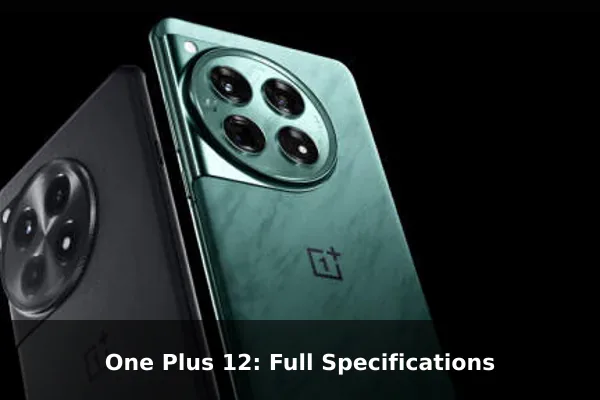
The One Plus 12 sits in an interesting flagship space: it uses premium-grade hardware without leaning entirely on luxury branding. The Snapdragon 8 Gen 3 chipset, 1440p LTPO display, large battery, fast wired charging, wireless charging, and periscope telephoto camera give it the kind of spec mix normally associated with more expensive ultra-class phones. Its value angle is strongest for buyers who care about display quality, charging speed, and sustained everyday performance more than having the newest model name.
Design and Durability
The phone is substantial at 220 g and 9.2 mm thick, so it is not designed for users who want an especially slim or lightweight device. That extra size is used for a large screen, a 5400 mAh battery, and a serious rear camera system. The glass front uses Gorilla Glass Victus 2, paired with a glass back and aluminum frame for a proper flagship feel. IP65 dust and water resistance is helpful against dust and low-pressure water jets, although it is not the same class of water protection as IP68 phones.
Display Experience
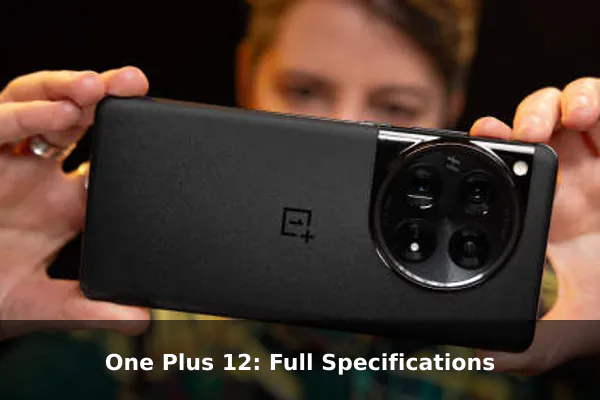
The 6.82-inch LTPO AMOLED panel is one of the key reasons to look at this device. It combines a sharp 1440 x 3168 resolution, 120Hz refresh rate, Dolby Vision, HDR10+, and very high advertised peak brightness. The LTPO panel should also help efficiency by adjusting refresh behavior depending on the content. For reading, streaming, gaming, and outdoor use, the One Plus 12 display specification is firmly flagship-grade rather than merely large.
Performance and Storage
Qualcomm’s Snapdragon 8 Gen 3 is the performance foundation here, paired with UFS 4.0 storage and RAM configurations ranging from 12GB to 24GB depending on variant. That gives the One Plus 12 plenty of headroom for gaming, multitasking, high-resolution video capture, and long-term app demands. The source test numbers, including a very high AnTuTu v10 result and strong GFXBench offscreen performance, support its position as a high-performance Android flagship.
Camera System
The triple rear camera setup is broad and useful: a 50 MP main camera with OIS, a 64 MP periscope telephoto camera with 3x optical zoom, and a 48 MP ultrawide camera with autofocus. The inclusion of Hasselblad Color Calibration, a color spectrum sensor, Dolby Vision video, and up to 8K recording gives the phone a more complete creative toolkit than many performance-first devices. The 32 MP selfie camera is also strong on paper, with 4K video support and gyro-EIS.
Battery and Charging
The 5400 mAh battery is larger than the typical 5000 mAh flagship pack, and the charging setup is a major selling point. International models support 100W wired charging, while the USA rating is listed at 80W; both are far faster than many mainstream premium phones. The phone also includes 50W wireless charging and 10W reverse wireless charging, making it practical for users who mix fast top-ups with cable-free charging at a desk or bedside.
Software Support
The One Plus 12 launched with Android 14 and is listed with up to four major Android upgrades. International models use OxygenOS, while China models use ColorOS. This distinction matters for buyers importing a unit, because software experience, preinstalled services, update channel, and regional features can differ. For most global buyers, the OxygenOS variant is the cleaner choice if local network bands and warranty support line up.
Connectivity and Daily Features
Connectivity is unusually complete. The phone supports wide 4G and 5G band coverage depending on region, Wi-Fi 7, Bluetooth 5.4, NFC, infrared, USB Type-C 3.2, and multiple satellite positioning systems including GPS L1+L5 and NavIC. There is no 3.5 mm headphone jack or FM radio, but stereo speakers and Hi-Res audio support help compensate for wired-audio users who have moved to USB-C or wireless accessories.
Who Should Buy It
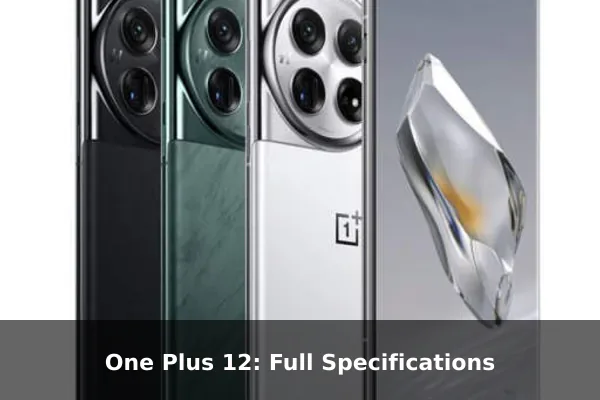
The One Plus 12 is best for users who want flagship speed, a large high-resolution display, excellent charging flexibility, and a versatile camera system without automatically choosing the most expensive ultra flagship. It is less ideal for people who prefer compact phones, need IP68 water resistance, rely on expandable storage, or want a traditional headphone jack. Buyers should also check the exact regional model because SIM options, charging rating, software, and network bands can vary.
References
Reference sources used for verification include the official OnePlus 12 product page, Qualcomm’s Snapdragon 8 Gen 3 platform page, and GSMArena’s OnePlus 12 review and lab tests.
Conclusion
The One Plus 12 remains a compelling flagship for buyers who prioritize screen quality, speed, camera versatility, and charging power. Its size, lack of expandable storage, and IP65 rating are worth noting, but the overall package is strong. Recommended for users who want premium Android hardware with a practical value edge.
