
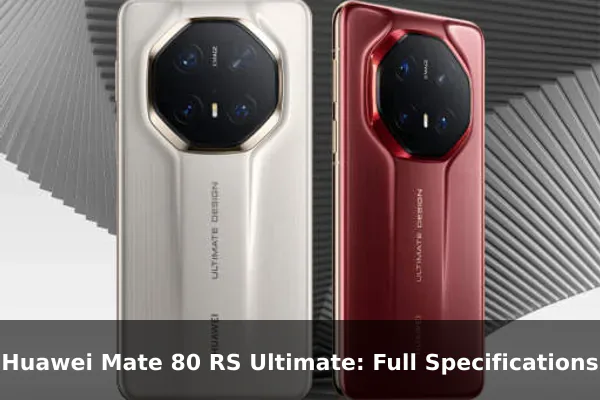
The Huawei Mate 80 RS Ultimate is the most exclusive member of the Mate 80 family, built around a luxury RS identity, a large LTPO OLED display, a quad rear camera system, and flagship-class charging hardware. It is aimed at buyers who want Huawei’s most complete hardware package rather than a mainstream value flagship.
This article focuses on the practical meaning of the specifications: where the Mate 80 RS Ultimate looks strongest, which trade-offs matter, and who should consider it. A separate full specifications table will cover every band, sensor, dimension, camera detail, and connectivity line item in a cleaner reference format.
Full Specifications
Network
| Technology: | GSM / CDMA / HSPA / CDMA2000 / LTE / 5G |
| 2G bands: | GSM 850 / 900 / 1800 / 1900 |
| CDMA 800 | |
| 3G bands: | HSDPA 800 / 850 / 900 / 1700(AWS) / 1900 / 2100 |
| CDMA2000 1x | |
| 4G bands: | LTE |
| 5G bands: | SA/NSA |
| Speed: | HSPA, LTE, 5G |
Launch
| Announced: | 2025, November 25 |
| Status: | Available. Released 2025, November 26 |
Body
| Dimensions: | 164.4 x 79 x 8.3 mm (6.47 x 3.11 x 0.33 in) |
| Weight: | 249 g (8.78 oz) |
| Build: | Glass front, titanium alloy frame |
| SIM: | Nano-SIM + Nano-SIM + eSIM (max 2 at a time) |
| IP68/IP69 dust tight and water resistant (high pressure water jets; immersible up to 6m for 30 min) |
Display
| Type: | Dual-layer LTPO OLED, 1B colors, 120Hz, 1440Hz PWM, BT.2020, HDR Vivid, 8000 nits (peak) |
| Size: | 6.9 inches, 117.2 cm2 (~90.2% screen-to-body ratio) |
| Resolution: | 1320 x 2848 pixels, 19.5:9 ratio (~455 ppi density) |
| Protection: | Huawei Kunlun Glass 3 (basalt tempered) |
Platform
| OS: | HarmonyOS 6.0 |
| Chipset: | Kirin 9030 Pro (6 nm) |
| CPU: | 9-core (1×2.75 GHz & 4×2.27 GHz & 4×1.72 GHz) |
| GPU: | Maleoon 935 |
Memory
| Card slot: | No |
| Internal: | 512GB 20GB RAM, 1TB 20GB RAM |
Main Camera
| Quad: | 50 MP, f/1.4-f/4.0, 24mm (wide), PDAF, OIS 50 MP, f/2.1, 91mm (periscope telephoto), PDAF, OIS, 4x optical zoom 50 MP, f/3.2, 140mm (periscope telephoto), PDAF, OIS, 6.2x optical zoom 40 MP, f/2.2, 13mm, 120˚ (ultrawide), PDAF |
| Features: | Laser AF, color spectrum sensor, LED flash, panorama, HDR |
| Video: | 4K, 1080p, 1080p@240fps, HDR, gyro-EIS, OIS, HDR Vivid |
Selfie camera
| Single: | 13 MP, f/2.0, 18mm (ultrawide), AF TOF 3D, (depth/biometrics sensor) |
| Features: | HDR, panorama |
| Video: | 4K, 1080p |
Sound
| Loudspeaker: | Yes, with stereo speakers |
| 3.5mm jack: | No |
| High-definition audio High & low frequency separate speakers |
Comms
| WLAN: | Wi-Fi 802.11 a/b/g/n/ac/6/7, dual-band, Wi-Fi Direct |
| Bluetooth: | 6.0, A2DP, LE, L2HC |
| Positioning: | GPS (L1+L5), GLONASS (L1), BDS (B1I+B1c+B2a+B2b), GALILEO (E1+E5a+E5b), QZSS (L1+L5), NavIC |
| NFC: | Yes |
| Infrared port: | Yes |
| Radio: | No |
| USB: | USB Type-C 3.1, OTG, DisplayPort 1.2 |
Features
| Sensors: | Face ID, fingerprint (side-mounted), accelerometer, gyro, proximity, barometer, compass |
| BDS Satellite Calling and Messaging – China only Ultra Wideband (UWB) support |
Battery
| Type: | 6000 mAh |
| Charging: | 100W wired 80W wireless 20W reverse wireless 18W reverse wired |
Misc
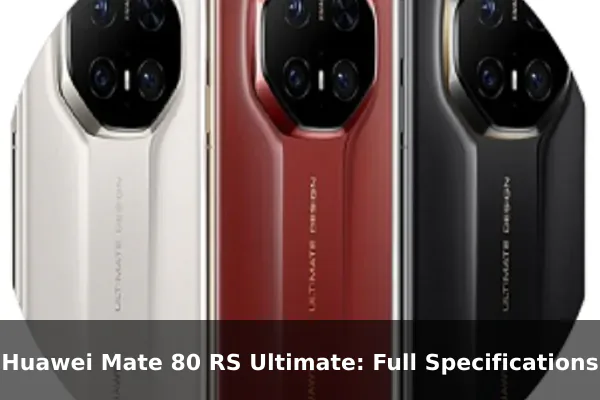
| Colors: | Black, White, Violet |
| Models: | SGU-AL10 |
| Price: | About 1470 EUR |
Price and Availability
The Huawei Mate 80 RS Ultimate offers a compelling combination of features and performance. While the base price is around €1.470, the actual cost may vary depending on your location and retailer. Below, you’ll find the approximate price of the Huawei Mate 80 RS Ultimate converted into various currencies. Please note that these are estimates based on recent exchange rates as of July 17, 2026 and may not reflect the exact price you’ll find at a retailer.
- United States: $1,683
- Japan: ¥273,208
- United Kingdom: £1,248
- Australia: A$2,405
- Canada: C$2,362
- Taiwan: NT$54,247
- Denmark: kr10.972
- Saudi Arabia: ﷼6,311
- South Korea: ₩2,493,144
- Germany: €1.470
- Brazil: R$8.572
- Vietnam: ₫44.073.618
- Kenya: KSh 217,757
- India: ₹1,62,149
- Indonesia: Rp 30.280.973
- Nigeria: ₦2,303,940
- Pakistan: ₨467,653
- Philippines: ₱103,774
- Bangladesh: ৳২,০৭,৪১৯
Why Should You Buy the Huawei Mate 80 RS Ultimate?
The strongest reason to consider the Huawei Mate 80 RS Ultimate is that it combines several premium priorities in one device. It is not only a fast phone with a large screen; it also emphasizes high-end materials, long-range camera flexibility, a large battery, fast wired and wireless charging, and advanced connectivity features such as UWB and satellite communication support in China.
That makes it different from many regular flagship phones that focus heavily on one headline area. The Mate 80 RS Ultimate reads more like a showcase device: expensive, heavy, highly specified, and designed for users who want the top Huawei experience rather than the most economical route to flagship performance.
Premium Design and Durability
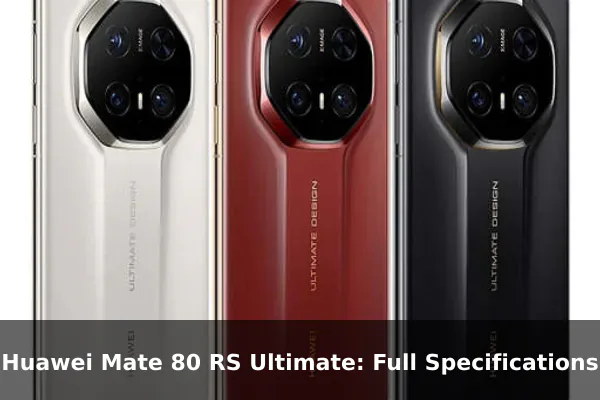
The design story is one of the clearest reasons this model carries the RS Ultimate name. Huawei lists a glass front with a titanium alloy frame, and the phone comes in Black, White, and Violet finishes. At 249 g, it is a heavy device, so buyers who prefer compact or lightweight phones should treat the weight as a real daily-use factor.
Durability is also a major part of the package. The phone carries IP68 and IP69 ratings, including resistance to dust, immersion in controlled conditions, and high-pressure water jets. As with any water-resistant phone, this should be understood as protection against accidents and harsh conditions, not permission to treat the device as permanently waterproof.
Display Quality
The 6.9-inch Dual-layer LTPO OLED display is one of the standout specifications. It supports 1 billion colors, a 120Hz adaptive refresh rate, 1440Hz PWM dimming, BT.2020 color coverage, HDR Vivid, and a very high quoted peak brightness. On paper, this is a screen built for outdoor readability, HDR video, gaming, and long reading sessions.
The resolution of 1320 x 2848 pixels gives the panel a sharp density of about 455 ppi, which is enough for crisp text and detailed photos. Huawei Kunlun Glass 3 with basalt tempering adds another premium layer to the display package, especially for users who keep a phone for several years and care about screen resilience.
Performance and Storage
The Mate 80 RS Ultimate runs HarmonyOS 6.0 on the Kirin 9030 Pro, a 6 nm chipset with a 9-core CPU and Maleoon 935 graphics. The raw specification suggests a device built for demanding multitasking, camera processing, high-refresh display use, and heavy everyday workloads.
Storage options are straightforward but premium: 512GB with 20GB RAM or 1TB with 20GB RAM. There is no memory card slot, so choosing the right storage tier matters from the start. For users who record lots of 4K video, keep large offline media libraries, or store years of photos locally, the 1TB version is the more comfortable long-term pick.
Camera System
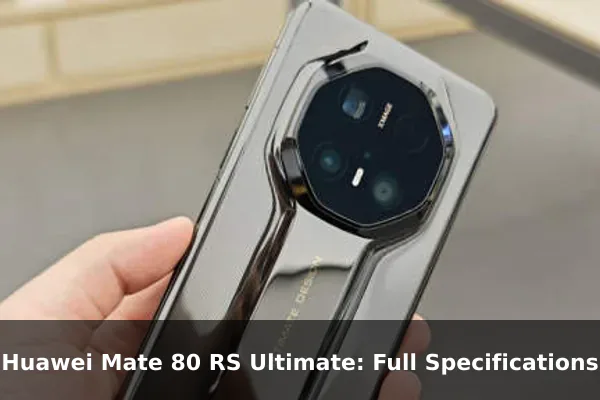
The rear camera system is one of the biggest separators between this phone and ordinary flagship models. Huawei uses a quad setup with a 50 MP variable-aperture wide camera, two 50 MP periscope telephoto cameras, and a 40 MP ultrawide camera. The dual telephoto approach is especially important because it gives the phone two native long-range perspectives rather than relying only on digital zoom from one lens.
The 4x and 6.2x optical zoom levels make the Mate 80 RS Ultimate more interesting for travel, stage shots, architecture, portraits from a distance, and compressed-perspective photography. Laser autofocus, a color spectrum sensor, OIS, HDR, and HDR Vivid video support all point toward a camera system designed for versatility rather than just high megapixel marketing.
Selfies, Video, and Audio
On the front, the phone uses a 13 MP ultrawide selfie camera with autofocus, supported by a TOF 3D depth and biometrics sensor. The ultrawide field of view is useful for group selfies and video calls, while 4K front video support gives creators more flexibility than basic 1080p-only selfie systems.
The audio setup includes stereo speakers, high-definition audio, and separate high and low frequency speakers. There is no 3.5mm headphone jack, which is expected at this tier but still worth noting for wired-audio users. USB-C audio or wireless headphones will be the practical route for most buyers.
Battery and Charging
The 6000 mAh battery is another major strength, especially considering the size and display hardware. Capacity alone does not guarantee excellent endurance, because screen brightness, network use, camera activity, and software optimization all matter, but this is still a large battery by modern flagship standards.
Charging support is very strong: 100W wired charging, 80W wireless charging, 20W reverse wireless charging, and 18W reverse wired charging. That combination makes the phone practical for users who travel, work away from a desk, or use accessories that may need a quick top-up from the phone itself.
Software Experience
HarmonyOS 6.0 is central to the phone’s identity. Buyers already invested in Huawei phones, tablets, laptops, wearables, and smart-home devices will get the most value from the ecosystem features. The Mate 80 RS Ultimate makes the most sense when it is part of that broader Huawei setup rather than treated as a generic Android alternative.
For international buyers, software expectations should be checked carefully before purchase, especially app availability, regional services, warranty support, and local network compatibility. The hardware is ambitious, but software and service fit can matter just as much as camera or charging specifications.
Connectivity and Extras
The connectivity package is extensive. The phone supports GSM, CDMA, HSPA, CDMA2000, LTE, and 5G, with SA and NSA 5G listed. Wi-Fi 7, Bluetooth 6.0, NFC, infrared, USB Type-C 3.1 with OTG, and DisplayPort 1.2 all make it a well-equipped productivity and entertainment device.
Positioning support is also broad, covering GPS, GLONASS, BDS, Galileo, QZSS, and NavIC. BDS satellite calling and messaging is listed as China-only, so buyers outside China should not treat it as a universal emergency communication feature. UWB support is another premium extra for short-range precision use cases where compatible accessories and services are available.
Who Should Buy It?
The Huawei Mate 80 RS Ultimate is best suited to Huawei enthusiasts, premium hardware collectors, mobile photographers, and users who want a large-screen flagship with unusually strong zoom coverage. It is also a good fit for buyers who value fast wireless charging and a more distinctive design than standard glass-and-aluminum flagships.
It is less ideal for people who want a light phone, a lower price, expandable storage, or a simple global software experience. The RS Ultimate name is meaningful here: this is a specialized flagship for buyers who specifically want Huawei’s highest-end Mate expression.
Conclusion
The Huawei Mate 80 RS Ultimate stands out through its titanium alloy frame, large LTPO OLED display, dual periscope camera setup, 6000 mAh battery, fast wired and wireless charging, and deep Huawei ecosystem focus. It is not the practical budget choice, but it is one of Huawei’s most complete specification showcases. Choose it if you want a luxury Huawei flagship with serious camera and battery hardware.
References
- HUAWEI Consumer China – Mate 80 RS Ultimate Design Specifications – Primary manufacturer specifications for dimensions, display, processor, memory, cameras, battery, charging, sensors, connectivity, and box contents.
- HUAWEI Consumer China – Mate 80 RS Ultimate Design Product Page – Official product page for feature claims, colors, design materials, HarmonyOS version, satellite features, and Huawei footnotes/disclaimers.
- HUAWEI Vmall Official Store – Mate 80 RS Ultimate – Official Huawei retail listing useful for confirming available RAM/storage variants, pricing in China, colors, and key specs shown to buyers.
- HUAWEI Consumer China Support – Mate 80 RS Ultimate Design – Official support page for manuals, service information, model support, warranty/service context, and post-launch documentation.
- Notebookcheck – Huawei Mate 80 RS Ultimate – Reputable device database and review publication useful as a secondary cross-check for summarized specifications and launch coverage.
