
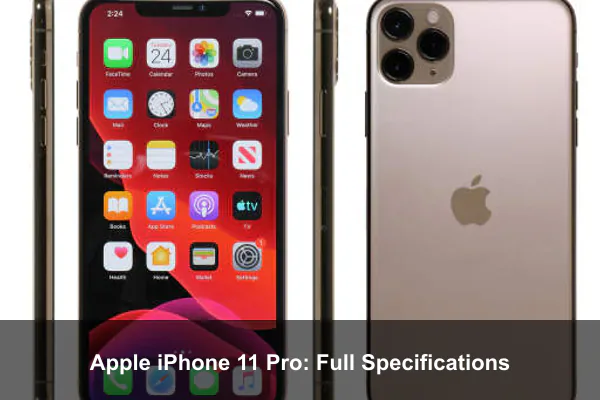
The Apple iPhone 11 Pro arrived in September 2019 as the company’s compact flagship, pairing a 5.8-inch Super Retina XDR OLED panel with the then-new A13 Bionic chipset and a triple 12 MP rear camera system. Years later it remains a compelling pick on the used market, now circulating at roughly 240 EUR, which puts genuine pro-grade hardware within reach of budget-minded buyers.
This article looks past the spec sheet to explain what the iPhone 11 Pro actually delivers in daily use, where it still holds up against newer mid-rangers, and which type of buyer gets the most out of it. If you want a small, durable iOS phone with long software support and a balanced camera, read on.
Full Specifications
Network
| Technology: | GSM / CDMA / HSPA / EVDO / LTE |
| 2G bands: | GSM 850 / 900 / 1800 / 1900 |
| CDMA 800 / 1900 | |
| 3G bands: | HSDPA 850 / 900 / 1700(AWS) / 1900 / 2100 |
| CDMA2000 1xEV-DO | |
| 4G bands: | 1, 2, 3, 4, 5, 7, 8, 11, 12, 13, 17, 18, 19, 20, 21, 25, 26, 28, 29, 30, 32, 34, 38, 39, 40, 41, 42, 46, 48, 66 – A2215 |
| 1, 2, 3, 4, 5, 7, 8, 12, 13, 14, 17, 18, 19, 20, 25, 26, 29, 30, 34, 38, 39, 40, 41, 42, 46, 48, 66, 71 – A2160, A2217 | |
| Speed: | HSPA, LTE 1.6 Gbps DL, EV-DO Rev.A 3.1 Mbps |
Launch
| Announced: | 2019, September 10 |
| Status: | Available. Released 2019, September 20 |
Body
| Dimensions: | 144 x 71.4 x 8.1 mm (5.67 x 2.81 x 0.32 in) |
| Weight: | 188 g (6.63 oz) |
| Build: | Glass front (Corning-made glass), glass back (Corning-made glass), stainless steel frame |
| SIM: | Nano-SIM + eSIMNano-SIM + Nano-SIM (China) |
| IP68 dust tight and water resistant (immersible up to 4m for 30 min) Apple Pay (Visa, MasterCard, AMEX certified) |
Display
| Type: | Super Retina XDR OLED, HDR10, Dolby Vision, 800 nits (HBM), 1200 nits (peak) |
| Size: | 5.8 inches, 84.4 cm2 (~82.1% screen-to-body ratio) |
| Resolution: | 1125 x 2436 pixels, 19.5:9 ratio (~458 ppi density) |
| Protection: | Scratch-resistant glass |
Platform
| OS: | iOS 13, upgradable to iOS 18.6 |
| Chipset: | Apple A13 Bionic (7 nm+) |
| CPU: | Hexa-core (2×2.65 GHz Lightning + 4×1.8 GHz Thunder) |
| GPU: | Apple GPU (4-core graphics) |
Memory
| Card slot: | No |
| Internal: | 64GB 4GB RAM, 256GB 4GB RAM, 512GB 4GB RAM |
| NVMe |
Main Camera
| Triple: | 12 MP, f/1.8, 26mm (wide), 1/2.55″, 1.4µm, dual pixel PDAF, OIS 12 MP, f/2.0, 52mm (telephoto), 1/3.4″, 1.0µm, PDAF, OIS, 2x optical zoom 12 MP, f/2.4, 120˚, 13mm (ultrawide), 1/3.6″ |
| Features: | Dual-LED dual-tone flash, HDR (photo/panorama) |
| Video: | 4K@24/25/30/60fps, 1080p@25/30/60/120/240fps, HDR, stereo sound rec. |
Selfie camera
| Single: | 12 MP, f/2.2, 23mm (wide), 1/3.6″, 1.0µm SL 3D, (depth/biometrics sensor) |
| Features: | HDR |
| Video: | 4K@24/25/30/60fps, 1080p@25/30/60/120fps, gyro-EIS |
Sound
| Loudspeaker: | Yes, with stereo speakers |
| 3.5mm jack: | No |
Comms
| WLAN: | Wi-Fi 802.11 a/b/g/n/ac/6, dual-band, hotspot |
| Bluetooth: | 5.0, A2DP, LE |
| Positioning: | GPS, GLONASS, GALILEO, QZSS |
| NFC: | Yes |
| Radio: | No |
| USB: | Lightning, USB 2.0 |
Features
| Sensors: | Face ID, accelerometer, gyro, proximity, compass, barometer |
| Ultra Wideband (UWB) support |
Battery
| Type: | Li-Ion 3046 mAh, non-removable (11.67 Wh) |
| Charging: | Wired, PD2.0, 50% in 30 min Wireless (Qi) |
Misc
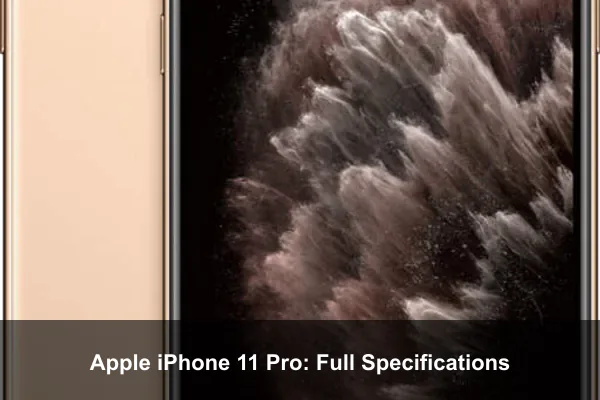
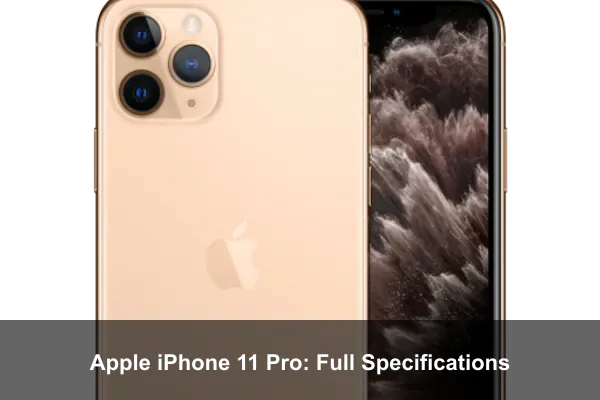
| Colors: | Matte Space Gray, Matte Silver, Matte Gold, Matte Midnight Green |
| Models: | A2215, A2160, A2217, iPhone12,3 |
| SAR: | 1.18 W/kg (head) 1.16 W/kg (body) |
| SAR EU: | 0.99 W/kg (head) 0.99 W/kg (body) |
| Price: | About 240 EUR |
Our Tests
| Performance: | AnTuTu: 460784 (v7) GeekBench: 13829 (v4.4) GFXBench: 57fps (ES 3.1 onscreen) |
| Display: | 805 nits max brightness (measured) |
| Camera: | Photo / Video |
| Loudspeaker: | -24.3 LUFS (Very good) |
| Audio quality: | Noise -94.2dB / Crosstalk -81.0dB |
| Battery (old): | Endurance rating 86h |
Price and Availability
The Apple iPhone 11 Pro offers a compelling combination of features and performance. While the base price is around €240, the actual cost may vary depending on your location and retailer. Below, you’ll find the approximate price of the Apple iPhone 11 Pro converted into various currencies. Please note that these are estimates based on recent exchange rates as of June 21, 2026 and may not reflect the exact price you’ll find at a retailer.
- United States: $275
- Japan: ¥44,384
- United Kingdom: £208
- Australia: A$392
- Canada: C$389
- Taiwan: NT$8,706
- Denmark: kr1.791
- Saudi Arabia: ﷼1,032
- South Korea: ₩421,512
- Germany: €240
- Brazil: R$1.419
- Vietnam: ₫7.236.570
- Kenya: KSh 35,675
- India: ₹25,965
- Indonesia: Rp 4.891.675
- Nigeria: ₦371,015
- Pakistan: ₨76,654
- Philippines: ₱16,710
- Bangladesh: ৳৩৩,৮১৪
Why the iPhone 11 Pro Still Makes Sense in 2026
At around 240 EUR on the second-hand market, the iPhone 11 Pro offers a class of hardware that originally launched as a top-tier flagship. You get a stainless steel frame, IP68 water resistance to 4 meters, an OLED display, and a triple-camera array, all of which remain uncommon at this price. For shoppers comparing it to fresh budget Androids, the value argument is about build quality and longevity rather than raw spec-sheet headlines.
Design and Build Quality
Measuring 144 x 71.4 x 8.1 mm and weighing 188 g, the iPhone 11 Pro is dense and reassuringly solid in the hand. The Corning-made glass front and back sandwich a surgical-grade stainless steel frame, and the matte rear finish in Space Gray, Silver, Gold, or the signature Midnight Green resists fingerprints well. IP68 dust and water resistance means accidental splashes or short submersion are no concern, and the compact footprint makes one-handed use far easier than today’s larger flagships.
Display Experience
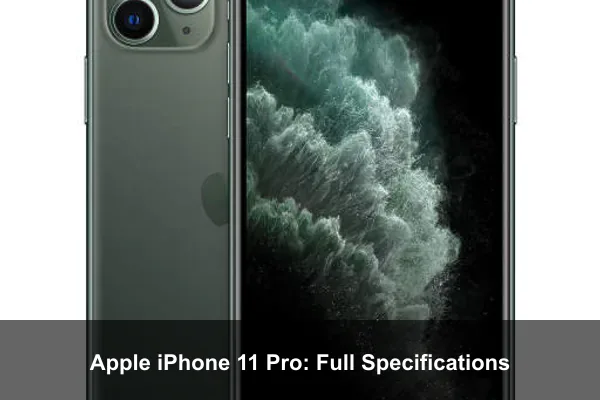
The 5.8-inch Super Retina XDR OLED resolves 1125 x 2436 pixels at roughly 458 ppi, with HDR10 and Dolby Vision support. Apple rates it at 800 nits typical and 1200 nits peak brightness, and independent testing measured around 805 nits, so outdoor visibility stays strong. Colors are accurate, blacks are true OLED black, and the 82.1% screen-to-body ratio keeps the front clean. The trade-off versus modern phones is the fixed 60 Hz refresh rate, so scrolling is smooth but not as fluid as 90 Hz or 120 Hz rivals.
Performance and Daily Speed
The A13 Bionic, built on a 7 nm+ process with a hexa-core CPU and a 4-core Apple GPU, was a benchmark leader at launch and remains quick today. AnTuTu scores near 460,000 and a GeekBench result around 13,829 confirm that everyday tasks, demanding apps, and most current games run without stutter. Paired with 4 GB of RAM and fast NVMe storage in 64 GB, 256 GB, or 512 GB capacities, the phone still feels responsive, comfortably outpacing many newer budget chipsets.
Camera System
The triple 12 MP setup covers a wide (f/1.8, OIS), a 52 mm telephoto (f/2.0, OIS, 2x optical zoom), and a 120-degree ultrawide (f/2.4). This was Apple’s first Pro to include all three focal lengths, and the consistent color science across lenses still produces reliable results. Video is a particular strength, with 4K capture up to 60 fps, extended dynamic range, and stereo sound recording. The 12 MP TrueDepth selfie camera shoots 4K video and powers secure Face ID. There is no dedicated night-vision hardware beyond Night Mode, but for the price the imaging package is hard to fault.
Battery and Charging
A 3046 mAh battery may sound modest, but Apple’s efficient hardware and software earn the iPhone 11 Pro an 86-hour endurance rating, meaning a full day of mixed use is realistic. It supports 18 W wired fast charging via Lightning, reaching 50% in about 30 minutes with the right adapter, plus Qi wireless charging. Note that battery health on a used unit varies, so checking the maximum capacity figure before buying is wise.
Software and Long-Term Support
Launched on iOS 13, the iPhone 11 Pro is upgradable all the way to iOS 18.6, an example of the long update lifecycle that few competitors match. That extended support means continued security patches and access to current apps, which is a major reason a 2019 phone remains genuinely usable. Buyers prioritizing software longevity over the latest features will find this one of the strongest cases for going with a used iPhone.
Connectivity
Connectivity covers Wi-Fi 6 (dual-band), Bluetooth 5.0, NFC for Apple Pay, and Ultra Wideband for precise device location. Positioning spans GPS, GLONASS, Galileo, and QZSS. The phone is 4G LTE only, with no 5G, and it relies on a Lightning port with USB 2.0 speeds rather than USB-C. There is no 3.5 mm headphone jack, though the stereo speakers measured a strong -24.3 LUFS in loudness testing.
Who Should Buy the iPhone 11 Pro
This phone suits buyers who want a compact, premium iOS device without paying flagship money, as well as those upgrading from an older iPhone who value Face ID, OLED, and a versatile triple camera. It is also a smart pick for anyone who prioritizes durability and years of software updates. Shoppers who need 5G connectivity, USB-C, or a high-refresh display should look elsewhere, but for everyone else the 11 Pro remains a balanced, dependable choice.
Conclusion
The Apple iPhone 11 Pro has aged gracefully, combining a sharp OLED display, the still-capable A13 Bionic, a flexible triple-camera system, and an exceptionally long software life into a compact, well-built package. The absence of 5G and a 60 Hz screen are its clearest compromises. At around 240 EUR on the used market, it is an easy recommendation for anyone seeking a durable, long-supported iPhone on a budget, especially buyers who prefer a smaller phone and verify the battery health before purchase.
