
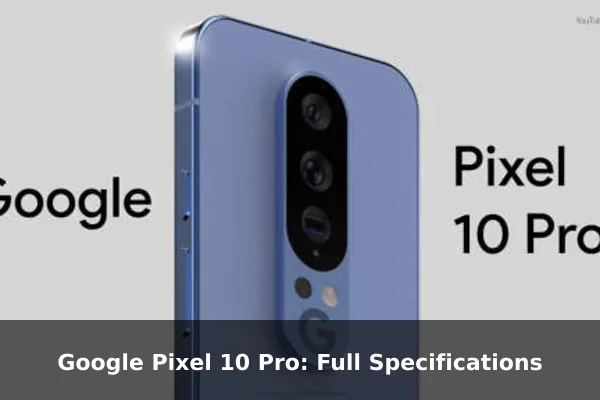
The Google Pixel 10 Pro is positioned as a compact Pro-class Android flagship, combining a 6.3-inch LTPO OLED display, Google Tensor G5 hardware, 16GB of RAM, and a triple rear camera system with wide, ultrawide, and 5x periscope telephoto coverage.
The supplied source data lists the phone as rumored and not yet announced, so final regional availability and retail details should be checked against official Google channels. No exact source price is available, so this article focuses on the hardware profile, feature balance, and buyer fit.
Full Specifications
Network
| Technology: | GSM / HSPA / LTE / 5G |
| 2G bands: | GSM 850 / 900 / 1800 / 1900 |
| 3G bands: | HSDPA 800 / 850 / 900 / 1700(AWS) / 1900 / 2100 |
| 4G bands: | LTE |
| 5G bands: | SA/NSA/Sub6/mmWave – USA |
| SA/NSA/Sub6 – ROW | |
| Speed: | HSPA, LTE (CA), 5G |
Launch
| Announced: | Not announced yet |
| Status: | Rumored |
Body
| Dimensions: | 152.8 x 72 x 8.5 mm (6.02 x 2.83 x 0.33 in) |
| Weight: | 199 g (7.02 oz) |
| Build: | Glass front (Gorilla Glass Victus 2), glass back (Gorilla Glass Victus 2), aluminum frame |
| SIM: | Nano-SIM + eSIM |
| IP68 dust tight and water resistant (immersible up to 1.5m for 30 min) |
Display
| Type: | LTPO OLED, 120Hz, HDR10+, 2000 nits (HBM), 3000 nits (peak) |
| Size: | 6.3 inches, 95.6 cm2 (~86.9% screen-to-body ratio) |
| Resolution: | 1280 x 2856 pixels, 20:9 ratio (~497 ppi density) |
| Protection: | Corning Gorilla Glass Victus 2 |
Platform
| OS: | Android 15, up to 7 major Android upgrades |
| Chipset: | Google Tensor G5 (4 nm) |
| CPU: | Octa-core (1×3.1 GHz Cortex-X4 & 3×2.6 GHz Cortex-A720 & 4×1.92 GHz Cortex-A520) |
| GPU: | Mali-G715 MC7 |
Memory
| Card slot: | No |
| Internal: | 128GB 16GB RAM, 256GB 16GB RAM, 512GB 16GB RAM, 1TB 16GB RAM |
| UFS 4.0 |
Main Camera
| Triple: | 50 MP, f/1.7, 25mm (wide), 1/1.31″, 1.2µm, dual pixel PDAF, OIS 48 MP, f/2.8, 113mm (periscope telephoto), 1/2.55″, dual pixel PDAF, OIS, 5x optical zoom 48 MP, f/1.7, 123˚ (ultrawide), 1/2.55″, dual pixel PDAF |
| Features: | Multi-zone Laser AF, LED flash, Pixel Shift, Ultra-HDR, panorama, Best Take, Zoom Enhance |
| Video: | 8K@30fps (via cloud-based upscaling), 4K@24/30/60fps, 1080p@24/30/60/120/240fps; gyro-EIS, OIS, 10-bit HDR |
Selfie camera
| Single: | 42 MP, f/2.2, 17mm (ultrawide), PDAF |
| Features: | HDR, panorama |
| Video: | 4K@30/60fps, 1080p@30/60fps |
Sound
| Loudspeaker: | Yes, with stereo speakers |
| 3.5mm jack: | No |
Comms
| WLAN: | Wi-Fi 802.11 a/b/g/n/ac/6e/7, tri-band |
| Bluetooth: | 5.3, A2DP, LE, aptX HD |
| Positioning: | GPS (L1+L5), GLONASS, GALILEO, BDS, QZSS, NavIC |
| NFC: | Yes |
| Radio: | No |
| USB: | USB Type-C 3.2 |
Features
| Sensors: | Fingerprint (under display, ultrasonic), accelerometer, gyro, proximity, compass, barometer, thermometer (skin temperature) |
| Ultra Wideband (UWB) support Satellite SOS service Circle to Search |
Battery
| Type: | Li-Ion 4870 mAh |
| Charging: | 29W wired, PD3.0, PPS, 55% in 30 min 21W wireless (w/ Pixel Stand) 15W wireless (w/ Qi compatible charger) Reverse wireless Bypass charging |
Misc
| Colors: | Gray; other colors |
Why Should You Buy the Google Pixel 10 Pro?
The Pixel 10 Pro is aimed at buyers who want flagship camera hardware, a sharp high-brightness display, and long Android software support without moving to a very large phone. Its main appeal is the balance between compact dimensions and Pro features: the source lists a 6.3-inch display, 16GB of RAM across all storage variants, UFS 4.0 storage, and a triple rear camera setup that includes a dedicated periscope telephoto lens. That combination makes it more than a standard compact flagship. It is a device for users who want the full Pixel camera and AI-assisted feature set in a size that is still manageable for everyday use.
Value and Price Context
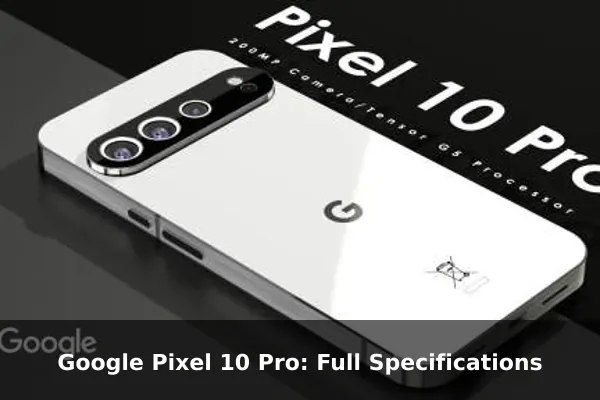
Because the source data does not include an exact price, the Pixel 10 Pro should be judged by its configuration rather than by a confirmed value rating. The hardware list points toward a premium segment device: Gorilla Glass Victus 2 on the front and back, an aluminum frame, IP68 dust and water resistance, Tensor G5, 16GB RAM, high-resolution LTPO OLED, UWB, Satellite SOS support, and advanced camera features such as Best Take and Zoom Enhance. If the launch price lands near other compact flagship models, the value will depend heavily on how much a buyer prioritizes Pixel software, computational photography, and long Android upgrade support over raw gaming performance or bundled charging accessories.
Design and Build Quality
The listed dimensions of 152.8 x 72 x 8.5 mm make the Pixel 10 Pro relatively compact by modern flagship standards, while the 199 g weight suggests a dense, premium build rather than a lightweight design. The use of Gorilla Glass Victus 2 on both sides and an aluminum frame fits the expected durability profile for a Pro-tier phone. IP68 protection is also important for buyers who keep phones for several years, since resistance to dust and water immersion up to 1.5 m for 30 minutes adds practical confidence. The Nano-SIM plus eSIM setup keeps it flexible for travel, although users who need two physical SIM cards may need to check their regional model carefully.
Display Experience
The display is one of the strongest parts of the specification sheet. The Pixel 10 Pro uses a 6.3-inch LTPO OLED panel with a 120Hz refresh rate, HDR10+ support, and a high 1280 x 2856 pixel resolution at about 497 ppi. That should make text, photos, maps, and camera previews look very crisp. The listed brightness figures are also flagship-grade, with 2000 nits in high brightness mode and 3000 nits peak brightness. In practical use, this matters for outdoor readability, HDR video highlights, and keeping the interface visible under direct sunlight. LTPO technology also helps the phone vary refresh rate more efficiently, which can support smoother scrolling without wasting power constantly.
Performance and Storage
The Google Tensor G5 listed here uses a 4 nm process and an octa-core CPU layout with one Cortex-X4 performance core, three Cortex-A720 cores, and four Cortex-A520 efficiency cores. That configuration suggests a chip tuned for premium Android responsiveness, image processing, voice features, and on-device intelligence rather than simply chasing benchmark records. The Mali-G715 MC7 GPU should handle common gaming and graphics workloads, while 16GB of RAM across 128GB, 256GB, 512GB, and 1TB storage versions gives the phone strong multitasking headroom. The lack of a microSD card slot makes the storage choice important at purchase, especially for users who record a lot of 4K video or keep large offline media libraries.
Camera System
The rear camera setup is the clearest reason to consider the Pixel 10 Pro over a non-Pro model. The source lists a 50 MP wide camera with OIS, a 48 MP periscope telephoto camera with OIS and 5x optical zoom, and a 48 MP ultrawide camera with dual pixel autofocus. This is a flexible range for everyday photography, portraits, travel, landscape shots, and distant subjects. Pixel-specific processing features such as Pixel Shift, Ultra-HDR, Best Take, and Zoom Enhance give the system a software-driven edge. Video support is also ambitious, with 4K recording up to 60fps, 1080p slow motion up to 240fps, 10-bit HDR, gyro-EIS, OIS, and 8K at 30fps via cloud-based upscaling.
Selfie and Video Use
The 42 MP ultrawide selfie camera is unusually strong on paper, especially because it includes PDAF. A 17 mm ultrawide field of view is useful for group selfies, video calls, travel framing, and creator-style handheld clips where the user wants more background in the shot. The front camera supports 4K video at 30fps and 60fps, which makes the Pixel 10 Pro better suited for social video and high-quality conferencing than phones limited to 1080p selfie capture. HDR and panorama support add more flexibility, although the real-world result will still depend on Google’s final image tuning and how well skin tones, exposure, and stabilization are handled.
Battery and Charging
The listed 4870 mAh battery is a solid capacity for a 6.3-inch Pro phone. Charging is rated at 29W wired with PD3.0 and PPS support, with the source claiming 55 percent in 30 minutes. Wireless charging is split between 21W with a Pixel Stand and 15W with a Qi-compatible charger, while reverse wireless charging can help top up earbuds or another small device. Bypass charging is also listed, which is useful for users who game, navigate, or stream while plugged in because it can reduce battery stress during longer sessions. The charging numbers are not the fastest in the flagship market, but the feature mix is practical and broad.
Software, Sensors, and Smart Features
The source lists Android 15 with up to seven major Android upgrades, which is a major part of the Pixel 10 Pro’s appeal for long-term buyers. The under-display ultrasonic fingerprint sensor should be faster and more reliable than older optical readers, especially in varied lighting. The sensor list is extensive, including accelerometer, gyro, proximity, compass, barometer, and a skin temperature thermometer. Pixel features such as Circle to Search, Satellite SOS service, and UWB support make the phone more than a basic Android flagship. These additions are especially relevant for users who want safety tools, precise location or nearby-device features, and Google’s latest search and assistant-style experiences.
Connectivity and Buyer Fit
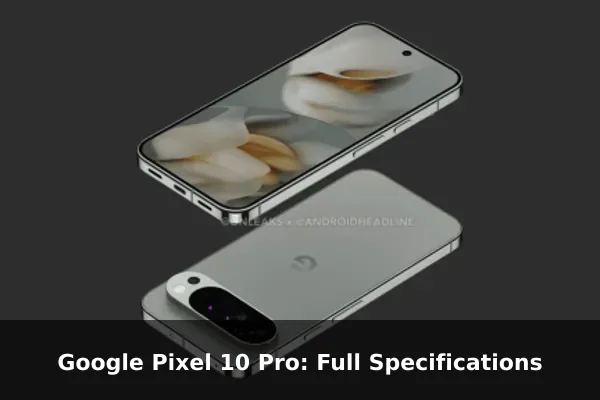
Connectivity is broad, with GSM, HSPA, LTE, and 5G support, plus separate listings for USA mmWave/Sub-6 and rest-of-world Sub-6 models. Wi-Fi support extends through Wi-Fi 7 with tri-band operation, while Bluetooth 5.3, NFC, USB Type-C 3.2, dual-frequency GPS, GLONASS, GALILEO, BDS, QZSS, and NavIC make the phone well equipped for travel, payments, accessories, and navigation. The Pixel 10 Pro is best suited to buyers who want a smaller flagship with a serious camera system, premium display, long software life, and Google-first features. It is less ideal for users who need expandable storage, a 3.5 mm headphone jack, or the absolute fastest wired charging available.
Conclusion
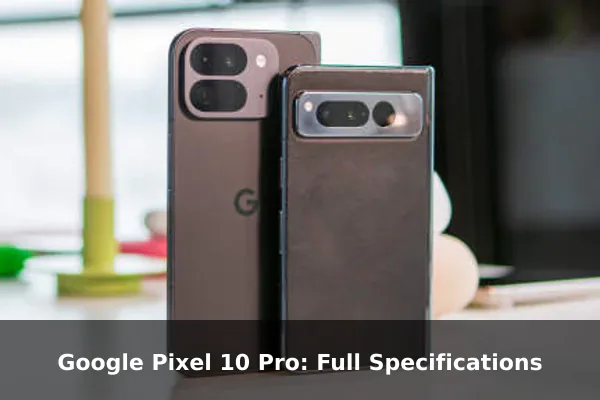
The Google Pixel 10 Pro looks like a compact flagship built around display quality, camera flexibility, Pixel software, and long-term support. With no confirmed source price, the recommendation is cautious: shortlist it if you want a smaller Pro Android phone with strong cameras and Google features, but wait for official regional pricing before deciding.
References
- Google Store – Pixel 10 Pro & Pixel 10 Pro XL – Official product page for Pixel 10 Pro variants, pricing, storage options, display, camera, Tensor G5, charging, and availability details.
- Google Pixel Phone Help – Pixel phone hardware tech specs – Official detailed specification table for Pixel 10 Pro hardware, including display, dimensions, weight, battery, RAM, storage, processor, cameras, connectivity, sensors, materials, and box contents.
- Google Pixel Phone Help – Safety and regulatory guide for Pixel 10, Pixel 10 Pro and Pixel 10 Pro XL – Official source for regulatory, safety, SAR, UWB, repair, warranty, and compliance information relevant to Pixel 10 Pro.
- Google Pixel Phone Help – Learn when you'll get software updates on Google Pixel phones – Official source for Pixel 10 Pro OS, security, and feature update commitment.
- Google Blog – Powerful and proactive: Pixel 10 phones are here – Official launch article with context on Pixel 10 Pro features, Tensor G5, camera upgrades, AI capabilities, release timing, and starting price.
