
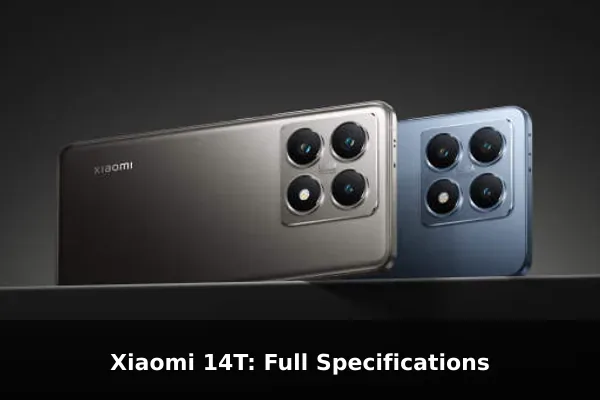
The Xiaomi 14T is a performance-focused Android phone built around a bright 144Hz AMOLED display, Leica-branded triple rear cameras, and the MediaTek Dimensity 8300 Ultra platform. It sits below the Pro model, but it keeps many of the features buyers usually look for in a modern upper-midrange device.
This article focuses on the practical meaning of the Xiaomi 14T specification sheet: where it looks strong, where it makes compromises, and who should consider it over similarly priced Android phones.
Full Specifications
Network
| Technology: | GSM / HSPA / LTE / 5G |
| 2G bands: | GSM 850 / 900 / 1800 / 1900 |
| 3G bands: | HSDPA 800 / 850 / 900 / 1700(AWS) / 1900 / 2100 |
| 4G bands: | 1, 2, 3, 4, 5, 7, 8, 12, 13, 17, 18, 19, 20, 26, 28, 32, 38, 40, 41, 42, 48, 66 |
| 5G bands: | 1, 2, 3, 5, 7, 8, 12, 20, 26, 28, 38, 40, 41, 48, 66, 77, 78 SA/NSA |
| Speed: | HSPA, LTE, 5G |
Launch
| Announced: | 2024, September 26 |
| Status: | Available. Released 2024, September 26 |
Body
| Dimensions: | 160.5 x 75.1 x 7.8 mm or 8.0 mm |
| Weight: | 193 g or 195 g (6.81 oz) |
| Build: | Glass front (Gorilla Glass 5), plastic frame, glass back (Panda X) |
| SIM: | Nano-SIM + eSIMeSIM + eSIMNano-SIM + Nano-SIM |
| IP68 dust tight and water resistant (immersible up to 2m for 30 min) |
Display
| Type: | AMOLED, 68B colors, 144Hz, 2880Hz PWM, Dolby Vision, HDR10+, 1600 nits (HBM), 4000 nits (peak) |
| Size: | 6.67 inches, 107.4 cm2 (~89.1% screen-to-body ratio) |
| Resolution: | 1220 x 2712 pixels, 20:9 ratio (~446 ppi density) |
| Protection: | Corning Gorilla Glass 5 |
Platform
| OS: | Android 14, upgradable to Android 15, HyperOS 2 |
| Chipset: | Mediatek Dimensity 8300 Ultra (4 nm) |
| CPU: | Octa-core (1×3.35 GHz Cortex-A715 & 3×3.20 GHz Cortex-A715 & 4×2.20 GHz Cortex-A510) |
| GPU: | Mali G615-MC6 |
Memory
| Card slot: | No |
| Internal: | 256GB 12GB RAM, 512GB 12GB RAM, 512GB 16GB RAM |
| UFS 4.0 |
Main Camera
| Triple: | 50 MP, f/1.7, 23mm (wide), 1/1.56″, 1.0µm, PDAF, OIS 50 MP, f/1.9, 50mm (telephoto), 1/2.76″, 0.64µm, PDAF, 2x optical zoom 12 MP, f/2.2, 15mm (ultrawide), 1/3.06″, 1.12µm |
| Features: | Leica lens, Ultra HDR, LED flash, HDR, panorama |
| Video: | 4K@24/30/60fps, 1080p@30/60/120/240/960fps, gyro-EIS, 10-bit Rec. 2020, HDR10+ |
Selfie camera
| Single: | 32 MP, f/2.0, 25mm (wide), 1/3.44″, 0.64µm |
| Features: | HDR |
| Video: | 4K@30fps, 1080p@30/60fps, HDR10+ |
Sound
| Loudspeaker: | Yes, with stereo speakers |
| 3.5mm jack: | No |
| 24-bit/192kHz Hi-Res & Hi-Res Wireless audio |
Comms
| WLAN: | Wi-Fi 802.11 a/b/g/n/ac/6e, dual-band, Wi-Fi Direct |
| Bluetooth: | 5.4, A2DP, LE, LHDC |
| Positioning: | GPS (L1+L5), BDS (B1I+B1C+B2a), GALILEO (E1+E5a), NavIC (L5), GLONASS |
| NFC: | Yes (market/region dependent) |
| Infrared port: | Yes |
| Radio: | No |
| USB: | USB Type-C 2.0, OTG |
Features
| Sensors: | Fingerprint (under display, optical), accelerometer, gyro, proximity, compass |
| Circle to Search |
Battery
| Type: | Li-Po 5000 mAh |
| Charging: | 67W wired, PD3.0, 100% in 45 min |
Misc
| Colors: | Titan Gray, Titan Blue, Titan Black, Lemon Green |
| Models: | 2406APNFAG |
| SAR EU: | 0.98 W/kg (head) 0.99 W/kg (body) |
| Price: | € 360.00 / $ 480.10 / £ 339.00 |
Our Tests
| Performance: | AnTuTu: 1253994 (v10) GeekBench: 3989 (v6) 3DMark: 2942 (Wild Life Extreme) |
| Display: | 1355 nits max brightness (measured) |
| Loudspeaker: | -25.0 LUFS (Very good) |
| Battery: | Active use score 11:32h |
Price and Availability
The Xiaomi 14T offers a compelling combination of features and performance. While the base price is around €360, the actual cost may vary depending on your location and retailer. Below, you’ll find the approximate price of the Xiaomi 14T converted into various currencies. Please note that these are estimates based on recent exchange rates as of August 19, 2026 and may not reflect the exact price you’ll find at a retailer.
- United States: $417
- Japan: ¥66,510
- United Kingdom: £308
- Australia: A$587
- Canada: C$579
- Taiwan: NT$13,288
- Denmark: kr2.691
- Saudi Arabia: ﷼1,563
- South Korea: ₩588,403
- Germany: €360
- Brazil: R$2.171
- Vietnam: ₫10.840.011
- Kenya: KSh 54,001
- India: ₹39,878
- Indonesia: Rp 7.434.891
- Nigeria: ₦565,261
- Pakistan: ₨115,729
- Philippines: ₱25,745
- Bangladesh: ৳৫০,৯১৭
Value Position
The Xiaomi 14T is best understood as a high-spec value phone rather than a compact flagship or a budget model. Its raw price data places it in a competitive band where buyers often compare display quality, camera versatility, chipset speed, charging, and water resistance before choosing. On paper, Xiaomi gives the 14T several premium-grade features: a 68-billion-color AMOLED panel, 144Hz refresh rate, IP68 protection, UFS 4.0 storage, and a Leica-branded camera system.
The most important value point is balance. Some phones in this range focus heavily on gaming performance but cut back on cameras or durability. Others prioritize design and photography while using slower storage or less ambitious processors. The Xiaomi 14T does not lead in every single area, but its specification mix is unusually complete for a non-Pro model.
Design and Durability
The Xiaomi 14T has a slim body at 7.8 mm or 8.0 mm thick, depending on variant, and weighs either 193 g or 195 g. That makes it reasonably manageable for a 6.67-inch phone, though it is not especially light. The glass front uses Gorilla Glass 5, the rear is listed as Panda X glass, and the frame is plastic. The plastic frame is one of the clearer cost-control choices, but the IP68 rating helps the device feel more confidence-inspiring for daily use.
IP68 dust and water resistance is a meaningful advantage in this class. The rating listed here covers immersion up to 2 meters for 30 minutes, which is useful protection against accidental exposure. The color choices also give the phone broader appeal, with Titan Gray, Titan Blue, Titan Black, and Lemon Green available depending on market.
Display Quality
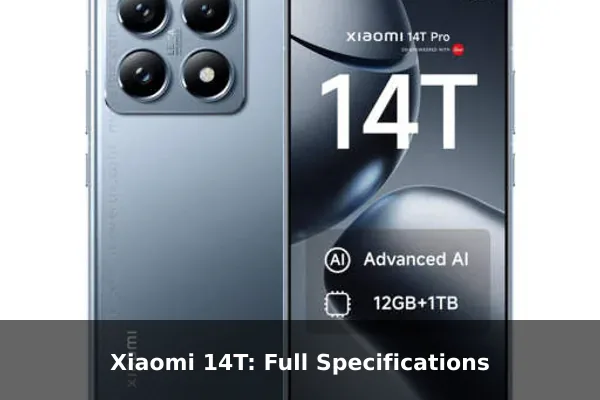
The display is one of the Xiaomi 14T’s strongest selling points. The 6.67-inch AMOLED panel has a 1220 x 2712 resolution, a 20:9 aspect ratio, and a pixel density of about 446 ppi. That makes it sharper than standard Full HD+ screens while avoiding the heavier power demand of higher-end QHD panels.
Xiaomi also lists 144Hz refresh support, Dolby Vision, HDR10+, 2880Hz PWM dimming, 1600 nits high brightness mode, and 4000 nits peak brightness. In testing, the screen reached 1355 nits maximum measured brightness, which is still excellent for outdoor readability. The combination of high refresh rate, HDR format support, and strong brightness makes the 14T particularly well suited to video, scrolling-heavy apps, navigation, and gaming.
Performance Hardware
The MediaTek Dimensity 8300 Ultra is the core of the Xiaomi 14T. It is a 4 nm chipset with an octa-core CPU configuration led by Cortex-A715 performance cores and supported by Cortex-A510 efficiency cores. Graphics are handled by the Mali G615-MC6 GPU. This is not Xiaomi’s absolute top-tier silicon, but it is a very capable platform for demanding Android use.
The benchmark data reinforces that point: AnTuTu v10 is listed at 1,253,994, GeekBench 6 at 3,989, and 3DMark Wild Life Extreme at 2,942. Those results suggest the phone has enough headroom for heavy multitasking, high-refresh gaming, photo processing, and long-term app updates. The use of UFS 4.0 storage is also important because it helps with app loading, large file transfers, and sustained responsiveness.
Memory and Storage
Xiaomi offers the 14T with 256GB storage and 12GB RAM, 512GB storage and 12GB RAM, or 512GB storage and 16GB RAM. There is no microSD card slot, so choosing the right storage version matters before purchase. For most buyers, 256GB is comfortable, but users who record a lot of 4K video or keep large offline media libraries should look at the 512GB option.
The RAM options are generous for the category. Even the base listed configuration includes 12GB RAM, which should help with app switching and heavier Android workloads. The 16GB version is more about future headroom and enthusiast appeal than basic necessity.
Leica Triple Camera Setup
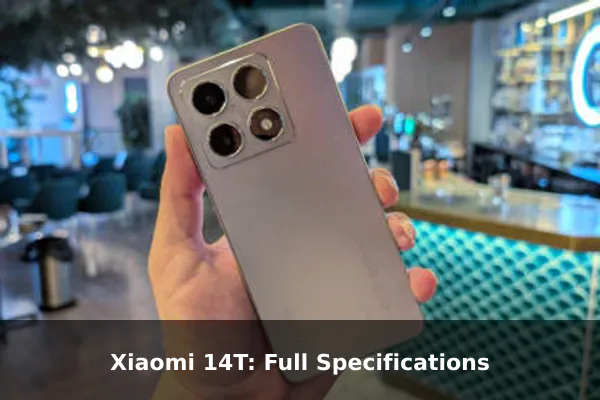
The rear camera system is a major part of the Xiaomi 14T’s identity. It includes a 50 MP wide camera with OIS, a 50 MP telephoto camera with 2x optical zoom, and a 12 MP ultrawide camera. The presence of a dedicated telephoto camera gives the 14T a more complete setup than phones that rely only on digital zoom from the main sensor.
Video support is also strong. The rear camera can record up to 4K at 24, 30, or 60 fps, and 1080p at several frame-rate options up to 960 fps. The listing also includes gyro-EIS, 10-bit Rec. 2020, and HDR10+ video. The 32 MP front camera supports 4K at 30 fps and 1080p at 30 or 60 fps, making it more versatile than many selfie cameras in this price range.
Battery and Charging
The Xiaomi 14T has a 5000 mAh Li-Po battery, which is the expected size for a modern Android phone in this segment. The active use score is listed at 11 hours and 32 minutes, a solid result for a phone with a bright high-refresh AMOLED display and a powerful chipset.
Charging is handled by 67W wired charging with PD3.0 support, and Xiaomi lists a full charge in 45 minutes. There is no wireless charging in the supplied data, so buyers who rely on charging pads should note that limitation. For most users, however, the fast wired charging will be the more practical daily benefit.
Software and Everyday Features
The phone launched with Android 14 and is listed as upgradable to Android 15 with HyperOS 2. Xiaomi’s software layer is feature-rich, and the inclusion of Circle to Search adds a useful modern Android convenience for quickly searching on-screen content.
The sensor package covers the essentials, including an under-display optical fingerprint reader, accelerometer, gyroscope, proximity sensor, and compass. Audio is handled by stereo speakers, with testing listing loudspeaker performance at -25.0 LUFS, rated very good. There is no 3.5 mm headphone jack, but Hi-Res and Hi-Res Wireless audio support are included.
Connectivity and Regional Notes
The Xiaomi 14T supports GSM, HSPA, LTE, and 5G networks, with a broad band list covering both SA and NSA 5G. Connectivity also includes Wi-Fi 6e, Bluetooth 5.4 with LHDC, NFC depending on market or region, an infrared port, and USB Type-C 2.0 with OTG.
SIM support is listed in multiple configurations, including Nano-SIM, eSIM, dual eSIM, and dual Nano-SIM options, so buyers should confirm the exact regional version before purchase. The model number listed is 2406APNFAG, and official regional specification pages and certification tools are useful for checking local package contents, certification records, and wireless compatibility.
Who Should Buy the Xiaomi 14T?
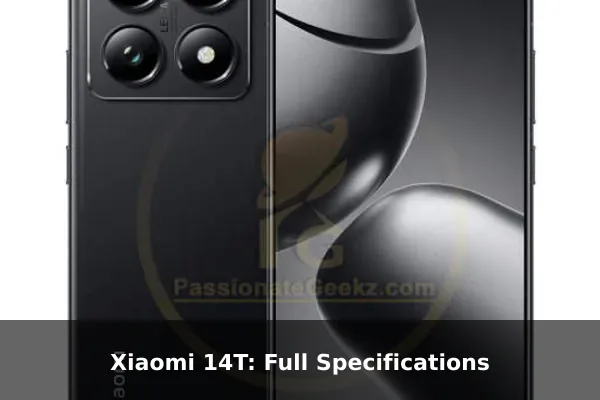
The Xiaomi 14T is a strong match for buyers who want a bright display, fast storage, robust performance, IP68 protection, and a flexible camera system without moving to a full flagship price tier. It is especially appealing for users who watch a lot of video, play games, take portraits with optical zoom, and want fast wired charging.
It is less ideal for people who need wireless charging, expandable storage, a headphone jack, or a metal-framed premium build. Buyers comparing it with the Xiaomi 14T Pro should focus on chipset, charging, and camera differences, while buyers comparing it with cheaper Redmi or Poco models should weigh the value of the Leica camera tuning, IP68 rating, and higher-end display.
Conclusion
The Xiaomi 14T delivers a well-rounded specification package with a standout AMOLED display, strong Dimensity 8300 Ultra performance, Leica triple cameras, IP68 protection, and fast 67W charging. Its main compromises are the lack of wireless charging, no microSD slot, no 3.5 mm jack, and a plastic frame. For buyers who want near-flagship features at a more approachable price, the Xiaomi 14T is easy to recommend.
References
- Xiaomi Global – Xiaomi 14T Specs – Primary manufacturer specifications for processor, memory, dimensions, display, cameras, battery, charging, bands, connectivity, sensors, IP rating, OS, and package contents.
- Xiaomi Global Support – Xiaomi 14T Certification FAQ – Official Xiaomi support page explaining where to verify device certifications such as CE, FCC, IMDA, MCMC, and NTC on the Xiaomi 14T.
- Xiaomi Taiwan – Xiaomi 14T Specs – Official regional specs page useful for confirming model identifier 2406APNFAG, NCC ID, and regional package-content differences.
- MediaTek Dimensity 8300 Product Page – Primary chipset source for Dimensity 8300 platform details, including CPU/GPU, NPU, memory/storage support, Wi-Fi, Bluetooth, and cellular capabilities.
- FCC Equipment Authorization System – Official FCC database for checking wireless certification records and RF exposure documents; search by FCC ID 2AFZZPNFAG or product code PNFAG.
