
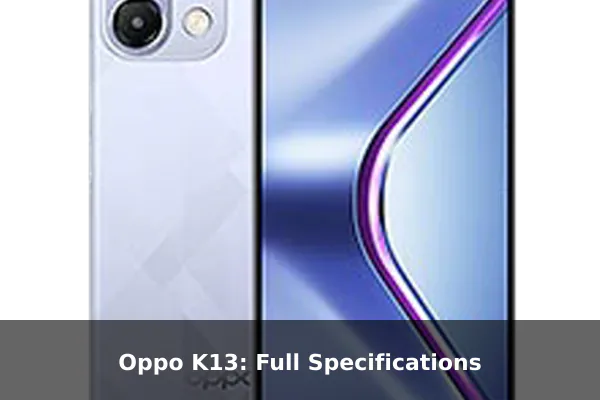
The Oppo K13 is a 5G Android phone built around endurance, fast charging, and a modern mid-range platform rather than flashy extras. Its key appeal is the combination of a 7000mAh silicon-carbon battery, 80W wired charging, a 120Hz AMOLED display, and Qualcomm’s Snapdragon 6 Gen 4 chipset.
Positioned at around 190 EUR in the supplied source data, the K13 targets buyers who want long battery life, smooth everyday performance, and practical durability in a budget-friendly package. Two recommended article images: one front-and-back product render showing the Prism Black or Icy Purple finish, and one close-up lifestyle image highlighting the large battery and 80W charging angle.
Full Specifications
Network
| Technology: | GSM / HSPA / LTE / 5G |
| 2G bands: | GSM 850 / 900 / 1800 / 1900 |
| 3G bands: | HSDPA 850 / 900 / 2100 |
| 4G bands: | 1, 3, 5, 8, 28, 34, 38, 39, 40, 41, 42, 48 – China |
| 5G bands: | 1, 5, 8, 28, 41, 77, 78 SA/NSA – China |
| Speed: | HSPA, LTE, 5G |
Launch
| Announced: | 2025, April 21 |
| Status: | Available. Released 2025, April 25 |
Body
| Dimensions: | 163.2 x 76.1 x 8.5 mm (6.43 x 3.00 x 0.33 in) |
| Weight: | 208 g (7.34 oz) |
| SIM: | Nano-SIM + Nano-SIM |
| IP65 dust tight and water resistant (low pressure water jets) |
Display
| Type: | AMOLED, 120Hz, 1920Hz PWM, 600 nits (typ), 1200 nits (peak) |
| Size: | 6.67 inches, 107.4 cm2 (~86.5% screen-to-body ratio) |
| Resolution: | 1080 x 2400 pixels, 20:9 ratio (~395 ppi density) |
Platform
| OS: | Android 15, up to 2 major Android upgrades, ColorOS 15 |
| Chipset: | Qualcomm Snapdragon 6 Gen 4 (4 nm) |
| CPU: | Octa-core (1×2.3 GHz Cortex-A720s & 3×2.2 GHz Cortex-A720s & 4×1.8 GHz Cortex-A520s) |
| GPU: | Adreno 810 |
Memory
| Card slot: | No |
| Internal: | 128GB 8GB RAM, 256GB 8GB RAM, 256GB 12GB RAM, 512GB 12GB RAM |
| UFS 3.1 |
Main Camera
| Dual: | 50 MP, f/1.9, 27mm (wide), 1/2.88″, PDAF 2 MP, f/2.4, (depth) |
| Features: | LED flash, HDR, panorama |
| Video: | 4K@30fps, 1080p@30/60/120fps, gyro-EIS |
Selfie camera
| Single: | 16 MP, f/2.5, 23mm (wide), 1/3.0″, 1.0µm |
| Video: | 1080p@30fps, gyro-EIS |
Sound
| Loudspeaker: | Yes, with stereo speakers |
| 3.5mm jack: | No |
| Snapdragon Sound |
Comms
| WLAN: | Wi-Fi 802.11 a/b/g/n/ac/6, dual-band |
| Bluetooth: | 5.2, A2DP, LE, aptX HD |
| Positioning: | GPS, GALILEO, GLONASS, BDS, QZSS |
| NFC: | NFC (China only) |
| Infrared port: | Yes |
| Radio: | No |
| USB: | USB Type-C 2.0, OTG |
Features
| Sensors: | Fingerprint (under display, optical), accelerometer, gyro, proximity, compass |
| Circle to Search |
Battery
| Type: | Si/C Li-Ion 7000 mAh |
| Charging: | 80W wired, 33W PPS, PD, QC, 62% in 30 min, 100% in 56 min |
Misc
| Colors: | Icy Purple, Prism Black, White |
| Models: | CPH2729, PLD110 |
| Price: | About 190 EUR |
Price and Availability
The Oppo K13 offers a compelling combination of features and performance. While the base price is around €190, the actual cost may vary depending on your location and retailer. Below, you’ll find the approximate price of the Oppo K13 converted into various currencies. Please note that these are estimates based on recent exchange rates as of August 29, 2026 and may not reflect the exact price you’ll find at a retailer.
- United States: $221
- Japan: ¥35,256
- United Kingdom: £163
- Australia: A$307
- Canada: C$306
- Taiwan: NT$6,978
- Denmark: kr1.420
- Saudi Arabia: ﷼827
- South Korea: ₩304,141
- Germany: €190
- Brazil: R$1.141
- Vietnam: ₫5.706.255
- Kenya: KSh 28,642
- India: ₹21,067
- Indonesia: Rp 3.894.806
- Nigeria: ₦300,992
- Pakistan: ₨61,194
- Philippines: ₱13,734
- Bangladesh: ৳২৭,১৫৩
Why Should You Buy the Oppo K13?
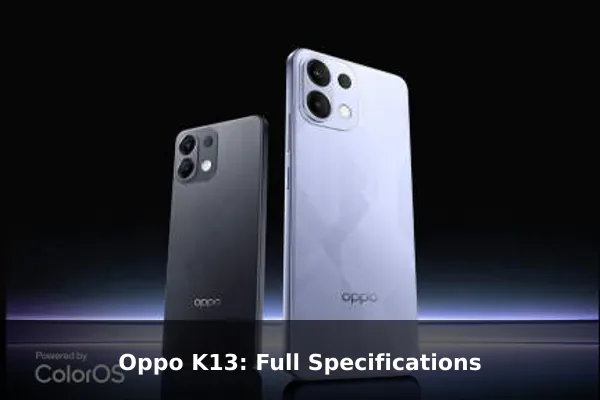
The strongest reason to consider the Oppo K13 is its unusually large battery for a slim mid-range smartphone. A 7000mAh cell gives it a clear value angle for users who stream, commute, use navigation, or spend long days away from a charger. The phone also avoids the common budget-phone compromise of slow charging by supporting 80W wired charging, with the supplied data claiming 62% in 30 minutes and a full charge in 56 minutes.
This makes the K13 different from many similarly priced phones that focus mainly on camera count or design. Oppo is aiming this model at practical users: students, delivery workers, frequent travelers, and heavy social media users who need reliable screen-on time. The presence of stereo speakers, an AMOLED panel, 5G support, and UFS 3.1 storage also gives it a stronger all-round profile than a basic entry-level handset.
Design and Durability
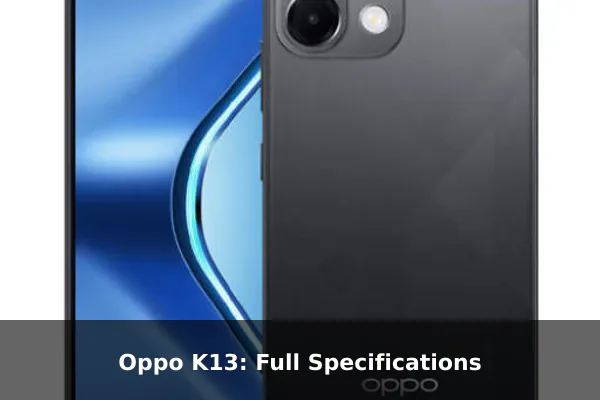
The Oppo K13 measures 163.2 x 76.1 x 8.5 mm and weighs 208 g, so it is not an ultra-light phone. That weight is understandable given the battery capacity, but buyers moving from a smaller 4500mAh or 5000mAh phone should expect a more substantial hand feel. The thickness remains manageable, and the available colors, Icy Purple, Prism Black, and White, give the device a clean mainstream look rather than a gaming-style identity.
The IP65 rating is another practical advantage. It means the phone is dust tight and resistant to low-pressure water jets, which is useful for daily exposure to rain, dust, and accidental splashes. It should not be treated as a swimming or underwater camera phone, but for this price class, IP65 protection is a meaningful durability point. Dual Nano-SIM support is also useful for buyers who separate work and personal numbers.
Display Experience
The 6.67-inch AMOLED display is one of the K13’s better balanced features. Its 1080 x 2400 pixel resolution delivers around 395 ppi, which is sharp enough for reading, video, and gaming without pushing the processor as hard as a higher-resolution panel would. The 20:9 aspect ratio keeps it familiar for modern apps and vertical content.
The 120Hz refresh rate helps the phone feel smooth when scrolling through feeds, browsing websites, or moving around the ColorOS interface. Oppo also lists 1920Hz PWM dimming, which may appeal to users sensitive to display flicker, although individual comfort can vary. Brightness is rated at 600 nits typical and 1200 nits peak, so outdoor visibility should be respectable for a mid-range AMOLED phone, especially when compared with older LCD-based budget devices.
Performance and Storage
The Snapdragon 6 Gen 4 is the main performance upgrade that gives the Oppo K13 its mid-range credibility. Built on a 4 nm process and paired with an Adreno 810 GPU, it should handle daily apps, multitasking, social media, navigation, and moderate gaming comfortably. The CPU layout includes Cortex-A720-class performance cores and Cortex-A520 efficiency cores, which is a modern setup for balancing speed and battery life.
Storage is another important detail. The source data lists 128GB and 256GB options with 8GB RAM, plus higher 256GB and 512GB versions with 12GB RAM, depending on market. Since there is no card slot, buyers should choose storage carefully at purchase. The use of UFS 3.1 is welcome because faster storage can improve app launches, file transfers, and long-term responsiveness compared with slower eMMC or older UFS solutions.
Camera System
The Oppo K13 keeps the rear camera setup simple: a 50 MP wide camera with PDAF and a 2 MP depth sensor. This is a practical dual-camera arrangement, but not a photography-focused setup. The main 50 MP sensor should be the camera buyers use most often, while the depth sensor is mainly there to support portrait effects. There is no ultra-wide camera and no dedicated telephoto lens in the supplied specifications.
Video support is better than basic. The rear camera can record up to 4K at 30fps, while 1080p recording supports 30, 60, and 120fps, with gyro-EIS listed for stabilization. The 16 MP front camera records 1080p at 30fps and also supports gyro-EIS, which is useful for video calls and handheld clips. For casual photography, document scanning, portraits, and social uploads, the K13 should be capable, but camera-first buyers should compare samples before deciding.
Battery and Charging
Battery life is the Oppo K13’s headline specification. The 7000mAh silicon-carbon Li-Ion battery is much larger than the 5000mAh cells still common in many mid-range phones. The advantage is not just longer endurance, but also more flexibility: users can run high refresh rate, 5G, hotspot sharing, or navigation without constantly watching the percentage.
The charging setup is also competitive. Alongside 80W wired charging, the phone supports 33W PPS, PD, and QC standards according to the supplied data, which improves compatibility with broader USB-C charging accessories. As always, actual charging speed depends on the charger, cable, temperature, battery condition, and regional in-box accessories, but the official and source materials consistently position the K13 as a battery-first phone with genuinely fast top-ups.
Software and Features
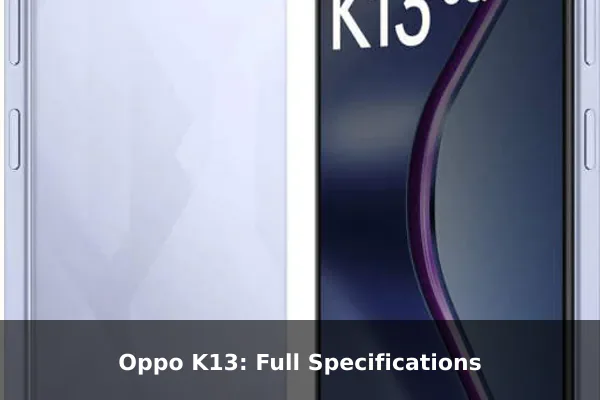
The Oppo K13 runs Android 15 with ColorOS 15, and the supplied information states support for up to two major Android upgrades. That is a reasonable promise for the price segment, although buyers who keep phones for four or five years may want to compare security update policies carefully. ColorOS 15 brings Oppo’s current interface style, customization tools, and system features layered over Android.
Useful extras include an optical under-display fingerprint sensor, accelerometer, gyro, proximity sensor, compass, and Circle to Search. The under-display scanner keeps the design modern, while Circle to Search adds a convenient way to identify on-screen content without switching apps. The phone also includes an infrared port, which remains useful for controlling TVs, air conditioners, and other home electronics in supported apps.
Connectivity and Audio
The K13 supports GSM, HSPA, LTE, and 5G, with SA and NSA 5G bands listed in the source data. Band support is market-specific, so import buyers should verify the exact CPH2729 or PLD110 variant before purchase, especially if they plan to use the phone outside its intended region. The supplied listing includes China-oriented LTE and 5G bands, while Oppo’s India materials document the Indian retail configuration, so checking the model number matters.
Wireless connectivity includes Wi-Fi 6, Bluetooth 5.2, GPS, GALILEO, GLONASS, BDS, and QZSS. NFC is listed as China-only in the supplied data, so buyers should not assume contactless payment support in every market. Audio is handled by stereo speakers with Snapdragon Sound support, but there is no 3.5mm headphone jack. Wired audio users will need USB-C earphones or an adapter.
Who Should Buy the Oppo K13?
The Oppo K13 is best suited to buyers who rank battery life, display quality, and charging speed above camera versatility. It makes sense for users who want a phone that can survive long workdays, classes, travel, hotspot use, and streaming sessions without frequent charging breaks. The 120Hz AMOLED display and Snapdragon 6 Gen 4 chipset also make it feel more modern than a basic low-cost phone.
It is less ideal for users who need an ultra-wide camera, expandable storage, a headphone jack, or guaranteed NFC in every region. The 208 g weight may also be noticeable for one-handed use. In comparison-friendly terms, the Oppo K13 is a battery-led 5G mid-ranger: not the most camera-rich option, but a strong choice for endurance, speed, and everyday practicality.
Conclusion
The Oppo K13 stands out because it brings a 7000mAh battery, 80W charging, a 120Hz AMOLED screen, UFS 3.1 storage, and Snapdragon 6 Gen 4 performance into an accessible 5G package. Its camera system is straightforward and storage is non-expandable, but the overall value is strong for buyers who want a dependable daily phone. Recommended for battery-focused users who want a smooth AMOLED Android phone without paying flagship prices.
References
- OPPO India – OPPO K13 5G Specifications – Primary source for exact model number, dimensions, display, cameras, chipset, battery, charging, bands, SAR, sensors, OS, and in-box contents.
- OPPO India – OPPO K13 5G Product Page – Official product page for feature claims, design colors, battery/charging notes, durability claims, and OPPO lab disclaimers.
- OPPO India Newsroom – K13 5G Launch Press Release – Official launch reference for announcement date, release timing, launch pricing, update promise, key specs, and market availability.
- Qualcomm – Snapdragon 6 Gen 4 Mobile Platform – Primary chipset source to verify Snapdragon 6 Gen 4 CPU clock, GPU, process node, modem, Wi-Fi, Bluetooth, and platform capabilities.
- Flipkart – OPPO K13 5G Retail Listing – Major official sales-channel listing for India availability, live variants, current retail price, warranty wording, and product highlights.
