
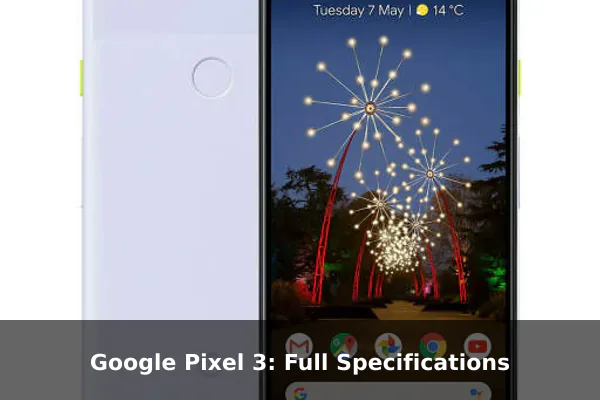
The Google Pixel 3 is a compact Android flagship from Google’s 2018 generation, built around the Snapdragon 845 platform, a 5.5-inch P-OLED display, and the company’s image-processing-first camera approach.
Because it is now discontinued, the Pixel 3 is best understood as a legacy premium phone: still interesting for collectors, Android reference-device fans, and buyers comparing older flagship hardware against newer budget phones.
Full Specifications
Network
| Technology: | GSM / CDMA / HSPA / EVDO / LTE |
| 2G bands: | GSM 850 / 900 / 1800 / 1900 |
| CDMA 800 / 1900 | |
| 3G bands: | HSDPA 850 / 900 / 1700(AWS) / 1900 / 2100 |
| CDMA2000 1xEV-DO | |
| 4G bands: | 1, 2, 3, 4, 5, 7, 8, 12, 13, 17, 18, 19, 20, 25, 26, 28, 29, 32, 38, 39, 40, 41, 42, 46, 66, 71 |
| Speed: | HSPA 42.2/5.76 Mbps, LTE (5CA) Cat16 1024/75 Mbps |
Launch
| Announced: | 2018, October 09. Released 2018, October 18 |
| Status: | Discontinued |
Body
| Dimensions: | 145.6 x 68.2 x 7.9 mm (5.73 x 2.69 x 0.31 in) |
| Weight: | 148 g (5.22 oz) |
| Build: | Glass front (Gorilla Glass 5), glass back (Gorilla Glass 5), aluminum frame |
| SIM: | Nano-SIM + eSIM |
| IP68 dust tight and water resistant (immersible up to 1.5m for 30 min) |
Display
| Type: | P-OLED, HDR |
| Size: | 5.5 inches, 76.7 cm2 (~77.2% screen-to-body ratio) |
| Resolution: | 1080 x 2160 pixels, 18:9 ratio (~443 ppi density) |
| Protection: | Corning Gorilla Glass 5 |
Platform
| OS: | Android 9.0 (Pie), upgradable to Android 12 |
| Chipset: | Qualcomm SDM845 Snapdragon 845 (10 nm) |
| CPU: | Octa-core (4×2.5 GHz Kryo 385 Gold & 4×1.6 GHz Kryo 385 Silver) |
| GPU: | Adreno 630 |
Memory
| Card slot: | No |
| Internal: | 64GB 4GB RAM, 128GB 4GB RAM |
| UFS 2.1 |
Main Camera
| Single: | 12.2 MP, f/1.8, 28mm (wide), 1/2.55″, 1.4µm, dual pixel PDAF, OIS |
| Features: | Dual-LED flash, Pixel Shift, Auto-HDR, panorama |
| Video: | 4K@30fps, 1080p@30/60/120fps, 1080p@30fps (gyro-EIS) |
Selfie camera
| Dual: | 8 MP, f/1.8, 28mm (wide), PDAF 8 MP, f/2.2, 19mm (ultrawide), no AF |
| Features: | HDR |
| Video: | 1080p@30fps |
Sound
| Loudspeaker: | Yes, with stereo speakers |
| 3.5mm jack: | No |
Comms
| WLAN: | Wi-Fi 802.11 a/b/g/n/ac, dual-band, Wi-Fi Direct, DLNA |
| Bluetooth: | 5.0, A2DP, LE, aptX HD |
| Positioning: | GPS, GLONASS, BDS, GALILEO |
| NFC: | Yes |
| Radio: | No |
| USB: | USB Type-C 3.1 |
Features
| Sensors: | Fingerprint (rear-mounted), accelerometer, gyro, proximity, compass, barometer |
Battery
| Type: | Li-Po 2915 mAh, non-removable |
| Charging: | 18W wired, PD2.0 Wireless |
Misc
| Colors: | Clearly White, Just Black, Not Pink |
| Models: | G013A |
| Price: | About 450 EUR |
Our Tests
| Performance: | AnTuTu: 285044 (v7) GeekBench: 8337 (v4.4) GFXBench: 33fps (ES 3.1 onscreen) |
| Display: | Contrast ratio: Infinite (nominal), 4.350 (sunlight) |
| Camera: | Photo / Video |
| Loudspeaker: | Voice 77dB / Noise 71dB / Ring 81dB |
| Audio quality: | Noise -71.7dB / Crosstalk -70.1dB |
| Battery (old): | Endurance rating 69h |
Price and Availability
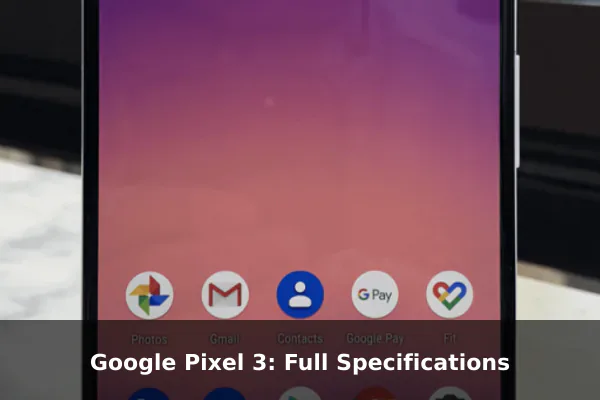
The Google Pixel 3 offers a compelling combination of features and performance. While the base price is around €450, the actual cost may vary depending on your location and retailer. Below, you’ll find the approximate price of the Google Pixel 3 converted into various currencies. Please note that these are estimates based on recent exchange rates as of August 17, 2026 and may not reflect the exact price you’ll find at a retailer.
- United States: $521
- Japan: ¥82,907
- United Kingdom: £385
- Australia: A$735
- Canada: C$722
- Taiwan: NT$16,661
- Denmark: kr3.364
- Saudi Arabia: ﷼1,953
- South Korea: ₩736,655
- Germany: €450
- Brazil: R$2.699
- Vietnam: ₫13.572.681
- Kenya: KSh 67,280
- India: ₹49,692
- Indonesia: Rp 9.272.636
- Nigeria: ₦707,678
- Pakistan: ₨144,570
- Philippines: ₱31,985
- Bangladesh: ৳৬৩,৮৯৯
Value and Positioning
The Pixel 3 was launched as a premium Google phone rather than a spec-sheet bargain, and that context still matters when reading its specifications today. Its original price class placed it against other 2018 flagships, but its long-term appeal comes from a different angle: compact size, clean Android software, IP68 protection, wireless charging, stereo speakers, and Google’s computational camera tuning. In a modern buying comparison, the Pixel 3 is not competing with new mid-range phones on battery size, high-refresh displays, or 5G. It is more useful as a compact, well-built Android reference device with flagship-era materials and a camera system that aged better than many multi-camera rivals from the same period.
Design and Build Quality
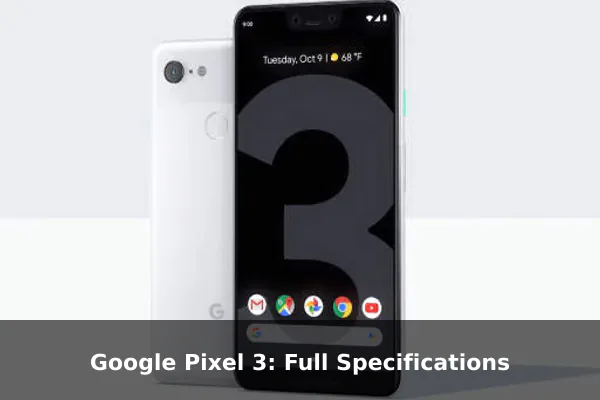
The Pixel 3 uses a glass front and back with an aluminum frame, giving it a more premium feel than many plastic-bodied budget phones. At 148 g and under 146 mm tall, it is notably easy to handle by modern standards. The 18:9 display shape also keeps the phone narrow, which helps one-handed use. IP68 dust and water resistance adds durability that is still valuable today, especially for buyers comparing it with entry-level phones that often lack formal ingress protection. The rear-mounted fingerprint reader is practical and fast, though it also marks the phone as a pre-in-display-fingerprint-era design. The lack of a 3.5 mm headphone jack may disappoint wired-audio users, but stereo speakers help the Pixel 3 feel more complete as a media device.
Display Experience
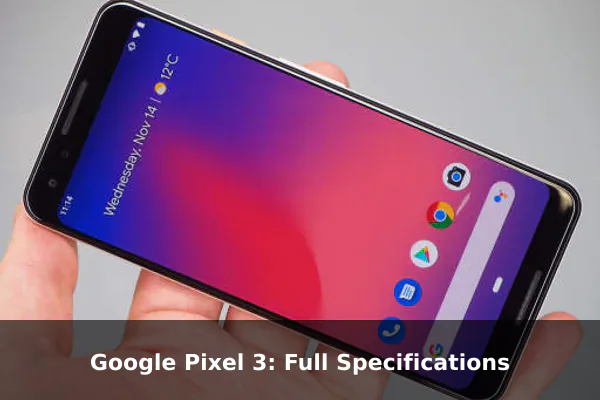
The 5.5-inch P-OLED panel is one of the defining parts of the Pixel 3 experience. Its 1080 x 2160 resolution gives it a sharp pixel density for the screen size, and HDR support makes it better suited to video playback than the basic LCD panels often found in lower-cost phones. The smaller panel will not suit users who want a large gaming or streaming display, but it makes the device comfortable for reading, messaging, navigation, and photography. The listed test data points to effectively infinite nominal contrast, which is expected from OLED technology, while the sunlight contrast result suggests usable outdoor visibility for its generation. Gorilla Glass 5 protection is also a useful detail, though any used unit should still be inspected for scratches, burn-in, and screen replacement history.
Performance Hardware
The Snapdragon 845 was a true flagship chipset in its launch window, and the Pixel 3 pairs it with UFS 2.1 storage for responsive app loading and system performance. The 4 GB RAM figure is modest by current Android standards, so heavy multitasking is not its strongest area. Still, for core phone tasks, photography, maps, browsing, and lightweight productivity, the hardware remains more capable than many older mid-range chips. The published benchmark numbers help place it historically: strong for 2018, but clearly behind modern flagship and upper-midrange silicon. Buyers should also remember that thermals and battery condition affect real-world performance on older phones, so a well-kept unit can feel very different from one with years of heat and charge-cycle wear.
Camera Character
The Pixel 3 is a good example of Google’s software-led camera strategy. Instead of adding several rear lenses, it uses a single 12.2 MP wide camera with optical image stabilization, dual pixel autofocus, Auto-HDR, and Pixel Shift support. The value is not in lens variety but in consistency: point-and-shoot stills, reliable exposure, and strong processing for everyday scenes. The dual selfie camera is also a distinctive strength, combining a standard wide view with an ultrawide option for group shots. Video support includes 4K at 30 fps and high-frame-rate 1080p modes, though modern phones have moved ahead with better stabilization, dynamic range, and 4K frame-rate options. For still photography on a compact phone, however, the Pixel 3 remains a meaningful reference point.
Battery and Charging
The 2915 mAh battery is small by current standards, and this is one of the main practical limits of the Pixel 3 today. Its original endurance rating of 69 hours was acceptable for a compact flagship of its time, but any used Pixel 3 will now depend heavily on battery health. The phone supports 18W USB-C Power Delivery charging and wireless charging, which gives it more charging flexibility than many budget devices. Even so, buyers should not expect multi-day endurance or heavy gaming longevity. If battery life is the top priority, newer phones with larger cells will be easier to recommend. If compact size and camera quality matter more, the battery trade-off may be acceptable with a replacement battery or careful daily charging habits.
Software and Long-Term Use
The Pixel 3 shipped with Android 9.0 Pie and is listed as upgradable to Android 12. That software path is important because it shows the phone received major Android updates, but it also means buyers should treat it as an older platform today. It is no longer the right choice for someone who wants a long future of operating system and security updates. Its software appeal is instead about the clean Pixel interface, Google-first features, and the historically smooth Android experience. For a secondary phone, development reference device, media player, or camera-focused backup, that can still be useful. For a main phone handling sensitive accounts, banking, or long-term daily use, current security support should be considered carefully before purchase.
Connectivity and Everyday Features
The Pixel 3 has broad 4G LTE support, including many bands used across different regions, plus eSIM alongside Nano-SIM. It does not support 5G, which is expected for its generation and should be part of any buying decision. Wi-Fi 802.11ac, Bluetooth 5.0 with aptX HD, NFC, multi-system satellite positioning, and USB Type-C 3.1 keep the connectivity package reasonably complete. The absence of FM radio and microSD expansion are worth noting, especially because internal storage is limited to 64 GB or 128 GB configurations. For users who rely heavily on offline video, large games, or local photo archives, the 128 GB version is the more sensible option.
Who Should Buy the Google Pixel 3?
The Pixel 3 makes the most sense for buyers who specifically want a small Android phone with premium materials, a strong still camera, wireless charging, IP68 protection, and the classic Pixel software feel. It is also appealing for enthusiasts comparing Google’s camera evolution or collectors filling out the Pixel lineup. It is less suitable for users who need 5G, long battery life, expandable storage, a large display, modern update support, or advanced multi-lens camera flexibility. In practical terms, the Pixel 3 is no longer a mainstream recommendation, but it remains a distinctive compact flagship with a clear identity.
Conclusion
The Google Pixel 3 stands out as a compact, camera-focused Android flagship with premium construction, a sharp OLED display, stereo speakers, IP68 protection, and clean Google software. Its biggest drawbacks today are the small aging battery, lack of 5G, limited RAM, no microSD slot, and older update status. Recommended for Pixel fans and compact-phone buyers who understand those trade-offs.
References
- Google Pixel Phone Help – Pixel phone hardware tech specs – Official Google hardware specification page covering Pixel 3 display, cameras, processor, memory, storage, dimensions, battery, connectivity, colors, and in-box items.
- Google Product Documentation – Safety & regulatory manual for Pixel 3 and Pixel 3 XL – Official Google regulatory and safety documentation for Pixel 3 and Pixel 3 XL, useful for SAR, compliance, and regulatory details.
- Google Blog – Google Pixel 3 announcement – Official launch article confirming Pixel 3 and Pixel 3 XL positioning, release-era features, sizes, colors, Android version, IP68 rating, and Titan M security chip.
- Qualcomm – Snapdragon 845 Mobile Platform – Official chipset reference for the Snapdragon 845 platform used in the Pixel 3, including CPU, GPU, modem, wireless, and platform capabilities.
- FCC Equipment Authorization Search – Official FCC database for checking Pixel 3 equipment authorization records; search grantee code A4R and product codes G013A or G013C for radio certification and SAR filings.
