
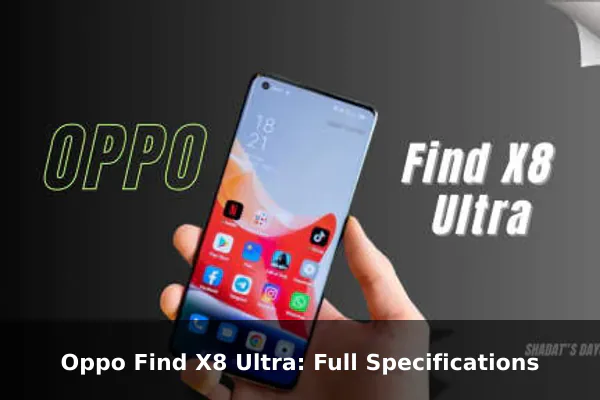
The Oppo Find X8 Ultra is OPPO’s top-tier Android flagship for buyers who care about camera flexibility, endurance, and display quality in one premium package. Announced on April 10, 2025 and released on April 16, 2025, it sits above the regular Find X8 with a more ambitious imaging setup and a larger 6100 mAh silicon-carbon battery.
This article focuses on what the Find X8 Ultra means in daily use, not just the raw specification sheet. The full technical table can be checked separately, while the sections below explain the value, strengths, compromises, and ideal buyer profile of this Snapdragon 8 Elite phone.
Full Specifications
Network
| Technology: | GSM / HSPA / LTE / 5G |
| 2G bands: | GSM 850 / 900 / 1800 / 1900 |
| 3G bands: | HSDPA 800 / 850 / 900 / 1700(AWS) / 1900 / 2100 |
| 4G bands: | 1, 3, 4, 5, 7, 8, 18, 19, 20, 26, 28, 34, 38, 39, 40, 41, 42, 48, 66 |
| 5G bands: | 1, 3, 5, 7, 8, 20, 28, 38, 40, 41, 66, 77, 78, 79, 80, 81, 83, 84 SA/NSA |
| Speed: | HSPA, LTE, 5G |
Launch
| Announced: | 2025, April 10 |
| Status: | Available. Released 2025, April 16 |
Body
| Dimensions: | 163.1 x 76.8 x 8.8 mm (6.42 x 3.02 x 0.35 in) |
| Weight: | 226 g (7.97 oz) |
| SIM: | Nano-SIM + Nano-SIM |
| IP68/IP69 dust tight and water resistant (high pressure water jets; immersible up to 1.5m for 30 min) |
Display
| Type: | LTPO AMOLED, 1B colors, 120Hz, 2160Hz PWM, Dolby Vision, HDR Vivid, HDR10+, 800 nits (typ), 1600 nits (HBM), 2500 nits (peak) |
| Size: | 6.82 inches, 113.0 cm2 (~90.2% screen-to-body ratio) |
| Resolution: | 1440 x 3168 pixels (~510 ppi density) |
| Protection: | Corning Gorilla Glass (unspecified version) |
| Ultra HDR image support |
Platform
| OS: | Android 15, ColorOS 15 |
| Chipset: | Qualcomm SM8750-AB Snapdragon 8 Elite (3 nm) |
| CPU: | Octa-core (2×4.32 GHz Oryon V2 Phoenix L + 6×3.53 GHz Oryon V2 Phoenix M) |
| GPU: | Adreno 830 |
Memory
| Card slot: | No |
| Internal: | 256GB 12GB RAM, 512GB 16GB RAM, 1TB 16GB RAM |
| UFS 4.1 |
Main Camera
| Quad: | 50 MP, f/1.8, 23mm (wide), 1.0″-type, 1.6µm, dual pixel PDAF, OIS 50 MP, f/2.1, 70mm (periscope telephoto), 1/1.56″, 1.0µm, 3x optical zoom, multi-directional PDAF (10cm – ∞), OIS 50 MP, f/3.1, 135mm (periscope telephoto), 1/1/.95″, 0.8µm, 6x optical zoom, dual pixel PDAF (35cm – ∞), OIS 50 MP, f/2.0, 15mm, 120˚ (ultrawide), 1/2.75″, 0.64µm, PDAF |
| Features: | Laser AF, color spectrum sensor, Hasselblad Color Calibration, LED flash, HDR, panorama |
| Video: | 4K@30/60/120fps, 1080p@30/60/120/240fps; gyro-EIS; HDR, 10‑bit video, Dolby Vision |
Selfie camera
| Single: | 32 MP, f/2.4, 21mm (wide), 1/2.74″, 0.8µm, PDAF |
| Features: | Panorama, HDR |
| Video: | 4K@30/60fps, 1080p@30/60fps, gyro-EIS |
Sound
| Loudspeaker: | Yes, with stereo speakers |
| 3.5mm jack: | No |
Comms
| WLAN: | Wi-Fi 802.11 a/b/g/n/ac/6/7, dual-band, Wi-Fi Direct |
| Bluetooth: | 5.4, A2DP, LE, aptX HD, LHDC 5 |
| Positioning: | GPS (L1+L5), BDS (B1I+B1c+B2a), GALILEO (E1+E5a), QZSS (L1+L5), GLONASS |
| NFC: | Yes |
| Infrared port: | Yes |
| Radio: | No |
| USB: | USB Type-C 3.2, OTG |
Features
| Sensors: | Fingerprint (under display, ultrasonic), accelerometer, gyro, proximity, compass |
| Emergency SOS via satellite (messages and calls) – available in Oppo Find X8 Ultra Satellite version |
Battery
| Type: | Si/C Li-Ion 6100 mAh |
| Charging: | 100W wired, 18W PD, 18W QC, 55W PPS 50W wireless 10W reverse wireless |
Misc
| Colors: | Matte Black, Pure White, Shell Pink |
| Models: | PKJ110, PKU110 |
Our Tests
| Performance: | AnTuTu: 2710432 (v10) GeekBench: 9503 (v6) 3DMark: 6644 (Wild Life Extreme) |
| Display: | 1157 nits max brightness (measured) |
| Loudspeaker: | -26.3 LUFS (Good) |
| Battery: | Active use score 16:20h |
Why Should You Buy the Oppo Find X8 Ultra?
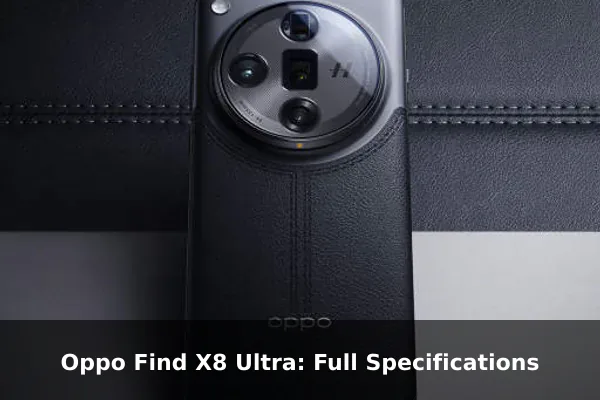
The Find X8 Ultra is built for users who want a no-compromise Android flagship with particular emphasis on photography. Its biggest value is the combination of a 1-inch-type main camera, dual periscope telephoto cameras, a high-resolution ultrawide camera, and Hasselblad color tuning. That makes it more specialized than many performance-first phones and more versatile than flagships with only one meaningful zoom lens.
It is also a strong all-rounder. The phone pairs Qualcomm’s Snapdragon 8 Elite chipset with UFS 4.1 storage, up to 16GB of RAM, a QHD+ LTPO AMOLED display, fast wired and wireless charging, IP68/IP69 resistance, Wi-Fi 7, and USB-C 3.2. Because the source data does not include an exact price, the value judgment depends heavily on regional availability and retailer pricing, but the hardware clearly targets the premium flagship class.
Design and Durability
At 163.1 x 76.8 x 8.8 mm and 226 g, the Oppo Find X8 Ultra is a large and noticeably substantial device. It is not designed to feel featherlight; instead, it prioritizes a big screen, large battery, advanced cameras, and rugged protection. Buyers moving from a compact phone should expect a proper two-handed flagship experience.
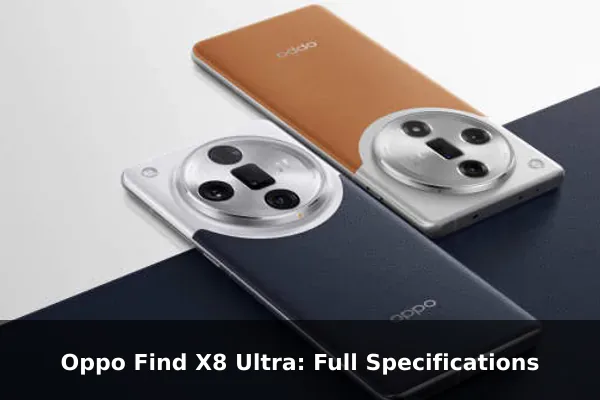
The IP68/IP69 rating is one of its practical advantages. The phone is dust tight, rated for immersion up to 1.5 meters for 30 minutes, and also rated against high-pressure water jets. That does not make it indestructible, but it gives the Find X8 Ultra stronger environmental protection than many conventional premium phones. Color choices include Matte Black, Pure White, and Shell Pink, giving the device a wider personality range than the usual black-and-silver flagship palette.
Display Quality
The 6.82-inch LTPO AMOLED panel is one of the phone’s headline features. It uses a sharp 1440 x 3168 resolution at about 510 ppi, supports 1 billion colors, and refreshes at up to 120Hz. LTPO technology helps the screen adjust refresh behavior more efficiently, which is useful for balancing smoothness and battery life.
Brightness is competitive for outdoor use, with the source listing 800 nits typical brightness, 1600 nits high-brightness mode, and 2500 nits peak brightness. Test data records 1157 nits maximum measured brightness, so the phone should remain usable in bright environments even if real-world numbers vary by content and mode. Dolby Vision, HDR Vivid, HDR10+, Ultra HDR image support, and 2160Hz PWM dimming round out a display package aimed at streaming, photography review, and long reading sessions.
Snapdragon 8 Elite Performance
Performance is anchored by the Snapdragon 8 Elite, a 3 nm flagship platform with Oryon CPU cores and Adreno 830 graphics. The source test figures are suitably high: AnTuTu v10 at 2,710,432, GeekBench 6 at 9,503, and 3DMark Wild Life Extreme at 6,644. Those numbers place the phone in serious flagship territory for gaming, multitasking, camera processing, and heavy Android workloads.
Memory and storage choices are also performance-focused. The phone is listed with 256GB and 12GB RAM, 512GB and 16GB RAM, or 1TB and 16GB RAM, all using UFS 4.1 storage. There is no microSD card slot, so the best configuration should be chosen up front. For users who record 4K video, shoot RAW photos, or keep large offline media libraries, the higher storage tiers are the safer long-term pick.
Quad 50 MP Camera System
The camera system is the Find X8 Ultra’s clearest reason to exist. It uses four 50 MP rear cameras: a wide camera with a 1-inch-type sensor and OIS, a 70mm periscope telephoto camera with 3x optical zoom and OIS, a 135mm periscope telephoto camera with 6x optical zoom and OIS, and a 15mm ultrawide camera with autofocus. This gives the phone a more complete focal-length range than typical triple-camera flagships.
The dual-telephoto approach is especially useful. A single long zoom camera can leave an awkward gap between main-camera crops and high magnification, but the 3x and 6x pairing gives portraits, travel scenes, architecture, and distant subjects more natural options. Laser autofocus, a color spectrum sensor, Hasselblad Color Calibration, HDR, panorama, and Dolby Vision video support add to the camera-first positioning.
Video capability is also high-end, with rear recording up to 4K at 120fps and 1080p at up to 240fps, plus gyro-EIS, HDR, 10-bit video, and Dolby Vision. The 32 MP front camera supports autofocus and 4K recording at 30 or 60fps, making it stronger than fixed-focus selfie cameras for vlogging and video calls.
Battery Life and Charging
The 6100 mAh silicon-carbon battery is larger than the batteries found in many slim flagship phones. The listed active use score of 16 hours and 20 minutes suggests strong endurance for mixed daily use, especially considering the large QHD+ 120Hz display and flagship chipset.
Charging is another strength. The Find X8 Ultra supports 100W wired charging, 55W PPS, 18W PD, 18W QC, 50W wireless charging, and 10W reverse wireless charging. That means it can work well with OPPO’s own fast-charging ecosystem while retaining broader compatibility with common charging standards. Users who rely on wireless charging pads will also appreciate that wireless speed is not treated as an afterthought.
Software and Everyday Features
The phone ships with Android 15 and ColorOS 15. ColorOS typically emphasizes customization, multitasking tools, and an extensive feature set, so buyers who like a clean minimalist interface may want to test the software style before committing. For users already familiar with OPPO phones, the experience should feel feature-rich and consistent.
Biometrics are handled by an under-display ultrasonic fingerprint sensor, which is a welcome flagship-grade choice. The broader sensor package includes accelerometer, gyro, proximity, and compass support. Emergency SOS via satellite for messages and calls is listed only for the Oppo Find X8 Ultra Satellite version, so buyers should confirm the exact model before assuming satellite capability is included.
Connectivity and Audio
The Find X8 Ultra has extensive network support, covering GSM, HSPA, LTE, and 5G SA/NSA. It also includes modern local connectivity with Wi-Fi 7, Bluetooth 5.4, NFC, infrared, dual-frequency satellite positioning systems, and USB Type-C 3.2 with OTG. For a flagship buyer, these details matter because they affect accessory compatibility, transfer speed, navigation reliability, and long-term network usefulness.
Audio is handled by stereo speakers, with test data rating loudspeaker output at -26.3 LUFS, described as good. There is no 3.5mm headphone jack, so wired audio users will need USB-C or wireless options. Bluetooth codec support, including aptX HD and LHDC 5, helps make the lack of a headphone jack easier to live with for wireless audio users.
Who Should Buy It?
The Oppo Find X8 Ultra is best for buyers who want a photography-led flagship without giving up battery capacity, screen quality, or peak Android performance. It suits travelers, mobile photographers, content creators, gamers who also care about cameras, and users who want a premium phone that feels technically loaded from top to bottom.
It is less ideal for people who want a compact phone, expandable storage, a headphone jack, or the lowest possible flagship price. At 226 g, it is also not the best choice for users sensitive to phone weight. The Find X8 Ultra makes the most sense when its camera range, battery size, charging system, and high-end display are all features you will actively use.
Conclusion
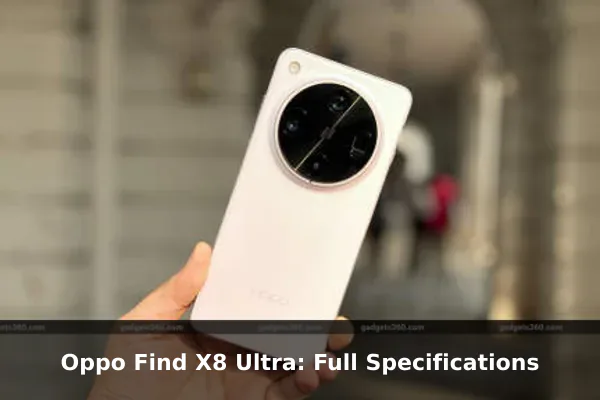
The Oppo Find X8 Ultra is a camera-first flagship with the hardware depth to compete beyond photography. Its quad 50 MP rear camera system, Snapdragon 8 Elite performance, QHD+ LTPO AMOLED display, durable body, 6100 mAh battery, and fast wired and wireless charging make it one of OPPO’s most complete premium phones. If you want a large Android flagship built around versatile imaging and long battery life, the Find X8 Ultra is an easy recommendation.
References
- OPPO China – Find X8 Ultra Product Specifications – Primary manufacturer specification page for dimensions, display, chipset, memory, cameras, battery, charging, connectivity, and model variants.
- OPPO China – Find X8 Ultra Product Page – Official product page with feature claims, camera system details, battery/charging notes, and manufacturer disclaimers.
- OPPO Global – Find X8 Ultra Photography Story – Official English-language OPPO source explaining the Find X8 Ultra camera hardware and imaging features.
- Qualcomm – Snapdragon 8 Elite Mobile Platform – Primary chipset source for verifying Snapdragon 8 Elite platform capabilities referenced in the phone specifications.
- GSMArena – Oppo Find X8 Ultra Specifications – Established phone specification database useful for cross-checking official specs, launch details, bands, and feature summaries.
