
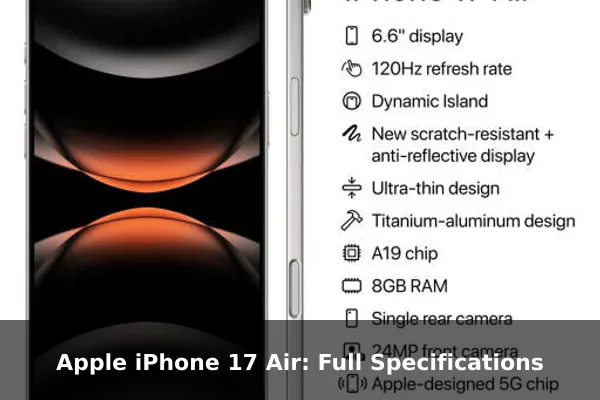
Apple iPhone 17 Air is listed as a rumored ultra-thin iPhone focused on large-screen viewing, flagship-class performance, and a lighter body than most big-display premium phones. The supplied catalog data positions it around a 6.9-inch LTPO Super Retina XDR OLED display, an Apple A19 Pro chipset, eSIM support, and a single 48 MP rear camera.
Because the source marks the phone as not announced yet, every specification should be treated cautiously until Apple confirms the final retail model. This article focuses on what the listed hardware suggests for buyers who want an iPhone-style flagship experience with a thinner design and fewer camera modules than Pro Max models.
Full Specifications
Network
| Technology: | GSM / CDMA / HSPA / EVDO / LTE / 5G |
| 2G bands: | GSM 850 / 900 / 1800 / 1900 |
| CDMA 800 / 1900 | |
| 3G bands: | HSDPA 850 / 900 / 1700(AWS) / 1900 / 2100 |
| CDMA2000 1xEV-DO | |
| 4G bands: | LTE |
| 5G bands: | SA/NSA/Sub6 |
| Speed: | HSPA, LTE, 5G, EV-DO Rev.A 3.1 Mbps |
Launch
| Announced: | Not announced yet |
| Status: | Rumored |
Body
| Dimensions: | 163 x 77.6 x 5.5 mm (6.42 x 3.06 x 0.22 in) |
| Weight: | 146 g (5.15 oz) |
| Build: | Glass front, aluminum frame (7000 series), glass back |
| SIM: | eSIM |
| IP68 dust tight and water resistant Apple Pay (Visa, MasterCard, AMEX certified) |
Display
| Type: | LTPO Super Retina XDR OLED, 120Hz, HDR10, Dolby Vision, 1000 nits (typ), 2000 nits (HBM) |
| Size: | 6.9 inches, 116.7 cm2 (~92.2% screen-to-body ratio) |
| Resolution: | 1320 x 2868 pixels, 19.5:9 ratio (~458 ppi density) |
| Protection: | Scratch-resistant glass |
Platform
| OS: | iOS 26 |
| Chipset: | Apple A19 Pro (3 nm) |
| CPU: | Penta-core |
| GPU: | Apple GPU |
Memory
| Card slot: | No |
| Internal: | 128GB 8GB RAM, 256GB 8GB RAM, 512GB 8GB RAM |
| NVMe |
Main Camera
| Single: | 48 MP, f/1.6, 26mm (wide), 1/1.56″, 1.0µm, dual pixel PDAF, sensor-shift OIS* * speculative camera details |
| Features: | Dual-LED dual-tone flash, HDR (photo/panorama) |
| Video: | 4K@24/25/30/60fps, 1080p@25/30/60/120/240fps, HDR, Dolby Vision HDR (up to 60fps), stereo sound rec. |
Selfie camera
| Single: | 12 MP, f/1.9, 23mm (wide), 1/3.6″, PDAF SL 3D, (depth/biometrics sensor)* * speculative camera details |
| Features: | HDR, Dolby Vision HDR, 3D (spatial) audio, stereo sound rec. |
| Video: | 4K@24/25/30/60fps, 1080p@25/30/60/120fps, gyro-EIS |
Sound
| Loudspeaker: | Yes |
| 3.5mm jack: | No |
Comms
| WLAN: | Wi-Fi 802.11 a/b/g/n/ac/6, dual-band, hotspot |
| Bluetooth: | 5.3, A2DP, LE |
| Positioning: | GPS, GLONASS, GALILEO, BDS, QZSS |
| NFC: | Yes |
| Radio: | No |
| USB: | USB Type-C 2.0, DisplayPort |
Features
| Sensors: | Face ID, accelerometer, gyro, proximity, compass, barometer |
| Ultra Wideband (UWB) support (gen2 chip) Emergency SOS, Messages and Find My via satellite |
Battery
| Type: | Si/C Li-Ion 3000 mAh |
Misc
| Colors: | Black; other colors |
Why Should You Buy Apple iPhone 17 Air?
The Apple iPhone 17 Air is interesting because it appears to target a different kind of flagship buyer. Instead of presenting itself as the most camera-heavy or battery-heavy iPhone, the listed specification points toward a thin, light, large-screen device that still keeps premium display, performance, and connectivity features. At 5.5 mm thick and 146 g, the catalog dimensions would make it unusually slim for a 6.9-inch phone, which could appeal to users who find large flagships too heavy for daily use.
The main value angle is not raw specification overload. It is balance. You get a large OLED panel, 120Hz refresh rate, 5G, satellite-related emergency features, UWB support, Face ID, Apple Pay compatibility, and the expected iOS ecosystem, while the camera setup stays simpler than the multi-lens Pro models. That makes the device easier to understand: it is for people who want a premium iPhone experience in a very slim body, not necessarily the most versatile photography tool Apple can build.
Design and Build Quality
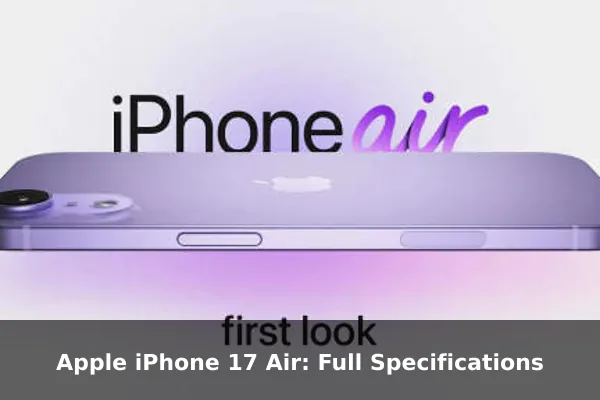
The listed body specification is the headline feature. A 163 x 77.6 x 5.5 mm frame would place the Apple iPhone 17 Air firmly in the ultra-thin category, especially because the screen size is listed at 6.9 inches. The use of a glass front, 7000 series aluminum frame, and glass back suggests a premium construction approach without moving into a heavier stainless steel or titanium-focused identity.
The reported 146 g weight is particularly important. Many large-screen phones feel powerful but tiring over long reading, gaming, and navigation sessions. If the final device keeps this weight close to the source figure, the iPhone 17 Air could feel closer to a compact phone in hand while still offering a near-tablet-like screen area. The eSIM-only setup also fits Apple’s modern direction, although buyers in regions where physical SIM cards remain common should check carrier support before considering it.
The listed IP68 dust-tight and water-resistant rating adds practical reassurance. It does not make the phone invincible, but it does suggest everyday resistance against dust exposure and accidental water contact. Apple Pay certification for Visa, MasterCard, and AMEX is also noted in the source, making the phone suitable for contactless payments in supported markets.
Display Experience
The display specification is one of the strongest parts of the listing. The Apple iPhone 17 Air is described with a 6.9-inch LTPO Super Retina XDR OLED panel, 120Hz refresh rate, HDR10, Dolby Vision, 1000 nits typical brightness, and 2000 nits high-brightness mode. On paper, that combination is designed for smooth scrolling, responsive animations, HDR video playback, and better outdoor visibility.
The 1320 x 2868 pixel resolution works out to about 458 ppi, which is dense enough for crisp text, detailed photos, and sharp interface elements. The 19.5:9 aspect ratio keeps the phone tall rather than overly wide, while the listed 92.2 percent screen-to-body ratio suggests a modern front design with narrow borders. Scratch-resistant glass is listed for protection, though users who keep phones for several years may still want a quality screen protector.
For comparison-minded buyers, this display profile is closer to a premium media phone than a mid-range panel. The large size will suit streaming, gaming, map use, document review, and multitasking-style workflows, while LTPO technology should help manage refresh rate efficiency when the screen does not need to run at the full 120Hz.
Performance and Storage
The source lists iOS 26 and an Apple A19 Pro chipset built on a 3 nm process. That combination suggests flagship-level performance, although final benchmarks and thermal behavior cannot be judged from catalog data alone. The penta-core CPU and Apple GPU should be more than enough for demanding apps, high-frame-rate gaming, video editing, camera processing, and long-term software responsiveness if the final phone matches the listed platform.
Memory options are straightforward: 128GB, 256GB, and 512GB, all paired with 8GB RAM. NVMe storage is also listed, which is important for app loading, file handling, large video capture, and general system fluidity. The absence of a card slot is expected for an iPhone, but it makes the storage choice more important at purchase time. Users who shoot a lot of 4K video or keep large offline media libraries should look past the 128GB model.
The 8GB RAM listing should be enough for modern iOS multitasking and AI-assisted system features, depending on how Apple configures the final software. The thin body may be the bigger real-world question: a slim device can be harder to cool than a thicker Pro Max-style phone, so sustained gaming and long video export sessions are areas buyers should watch in real reviews.
Camera System
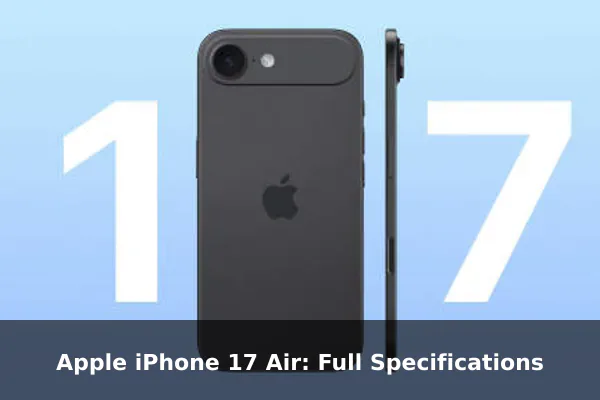
The Apple iPhone 17 Air is listed with a single 48 MP rear camera, described as a 26mm wide lens with f/1.6 aperture, dual pixel PDAF, and sensor-shift optical image stabilization. The source explicitly marks some camera details as speculative, so the exact sensor size and pixel measurements should not be treated as final. Still, a single 48 MP stabilized main camera indicates a simple, high-quality approach rather than a lens-heavy setup.
This design has clear strengths and limits. The wide camera should handle everyday photos, portraits through software processing, low-light scenes, documents, food, pets, and travel snapshots. Dual-LED dual-tone flash, HDR for photos and panoramas, and Dolby Vision HDR video support add to its versatility. Video recording is listed at up to 4K at 60fps and 1080p at up to 240fps, with stereo sound recording, making it suitable for social video and casual creator work.
The trade-off is zoom and ultra-wide flexibility. A single rear camera cannot replace dedicated telephoto and ultra-wide lenses for people who often shoot architecture, stage events, wildlife, or compressed portrait perspectives. Buyers comparing it with iPhone Pro models should view the iPhone 17 Air as a cleaner, lighter camera phone rather than a complete mobile camera studio.
Selfie Camera and Video Calling
The front camera is listed as a 12 MP wide unit with f/1.9 aperture, PDAF, and SL 3D depth and biometric hardware. As with the rear camera, the source marks some selfie-camera details as speculative. Even so, the combination fits what users expect from a modern premium iPhone: secure Face ID, sharp video calls, reliable focus, and strong HDR processing.
Front video support is listed at 4K at up to 60fps and 1080p at up to 120fps with gyro-EIS. That matters for vlog clips, short-form video, remote meetings, and family calls. Dolby Vision HDR, 3D spatial audio, and stereo sound recording are also listed, giving the front camera system a stronger media profile than basic selfie hardware.
Battery and Charging Expectations
The listed battery is a 3000 mAh Si/C Li-Ion unit. The chemistry note is important because silicon-carbon battery technology can help increase energy density, which is useful in an ultra-thin phone. Even so, 3000 mAh is not a large capacity for a 6.9-inch display, so real endurance will depend heavily on the efficiency of the A19 Pro chip, LTPO display behavior, modem tuning, and iOS 26 power management.
Based on the specification alone, the Apple iPhone 17 Air looks better suited to users who value thinness over maximum battery capacity. It should be comfortable for mixed daily use if optimization is strong, but heavy gaming, prolonged 5G hotspot use, high-brightness navigation, and long 4K recording sessions may drain it faster than thicker flagship phones with larger cells. Buyers who prioritize two-day battery life should wait for independent battery tests.
Software, Connectivity, and Safety Features
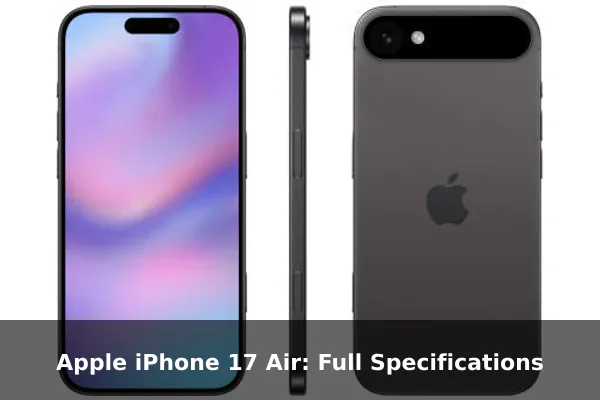
iOS 26 is listed as the operating system, which makes software longevity one of the expected advantages. Apple’s update history is a major reason buyers stay inside the iPhone ecosystem, and a new A-series Pro chipset should provide enough headroom for years of app support, security updates, and platform features.
Connectivity is broad. The listing includes GSM, CDMA, HSPA, EVDO, LTE, and 5G with SA, NSA, and Sub6 support. Wi-Fi 802.11 a/b/g/n/ac/6, Bluetooth 5.3, NFC, GPS, GLONASS, GALILEO, BDS, and QZSS are also included. USB Type-C 2.0 with DisplayPort support is listed, which is useful for wired accessories and display output, although USB 2.0 speeds would not satisfy users who regularly transfer very large video files by cable.
The feature list also includes second-generation Ultra Wideband support plus Emergency SOS, Messages, and Find My via satellite. These functions are especially relevant for travelers, hikers, commuters in weak-signal areas, and users who want more location-aware ecosystem features. There is no 3.5 mm headphone jack and no FM radio, which is typical for a modern premium iPhone.
Who Should Buy It?
The Apple iPhone 17 Air makes the most sense for buyers who want a large premium iPhone that feels physically lighter and slimmer than traditional big-screen flagships. It should appeal to readers, travelers, office users, social media creators, and anyone who values display quality, iOS polish, and everyday camera reliability over having every possible lens on the back.
It is less ideal for buyers who need maximum battery capacity, expandable storage, a physical SIM slot, advanced optical zoom, or the most complete rear camera system. It is also worth waiting for final Apple confirmation because the source lists the product as rumored and marks some camera details as speculative. If the final model keeps the core design, display, and chipset profile described here, it could become one of the most distinctive iPhones for users who want flagship power without flagship bulk.
Conclusion
Apple iPhone 17 Air is best understood as a rumored slim flagship built around a large OLED display, A19 Pro-class performance, eSIM connectivity, and a simplified 48 MP camera system. Its strongest appeal is the combination of a 6.9-inch screen with a very thin and light body, while its main compromises are likely battery capacity, single-camera flexibility, and the lack of expandable storage. If you want a large iPhone that prioritizes portability and premium essentials over Pro-style camera hardware, it is worth shortlisting once final specifications and pricing are confirmed.
References
- Apple iPhone Air Technical Specifications – Primary manufacturer source for the official iPhone Air name, dimensions, display, chip, cameras, battery-life claims, charging, wireless bands, SIM support, and included accessories.
- Apple Support – iPhone Air Tech Specs – Stable Apple support documentation for the model year and full technical specifications; useful for cross-checking Apple product-page data.
- Apple Newsroom – Introducing iPhone Air – Official launch announcement with release timing, design claims, chip details, camera positioning, colors, and availability context.
- Apple iPhone Cellular and Wireless Bands – Official source for iPhone Air model variants and supported 5G/LTE bands by region, important for full specification accuracy.
- Apple Regulatory Information – iPhone RF Exposure – Official Apple regulatory page for RF exposure and SAR values tied to iPhone Air model numbers.
