
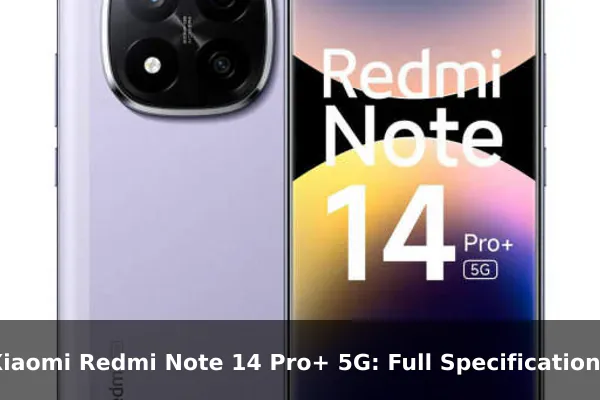
The Xiaomi Redmi Note 14 Pro+ 5G is the highest-positioned model in the Redmi Note 14 line, aimed at buyers who want stronger durability, faster charging, and a more premium camera setup without moving into flagship pricing.
Its headline mix includes a 6.67-inch 1.5K AMOLED display, Snapdragon 7s Gen 3 silicon, a 200MP OIS main camera, IP68 protection, and 120W wired charging. That makes it a value-focused Android phone where the details matter more than the badge.
Full Specifications
Network
| Technology: | GSM / HSPA / LTE / 5G |
| 2G bands: | GSM 850 / 900 / 1800 / 1900 |
| 3G bands: | HSDPA 800 / 850 / 900 / 1700(AWS) / 1900 / 2100 |
| 4G bands: | 1, 2, 3, 4, 5, 7, 8, 12, 13, 17, 18, 19, 20, 26, 28, 32, 38, 40, 41, 42, 48, 66 |
| 5G bands: | 1, 2, 3, 5, 7, 8, 12, 20, 26, 28, 38, 40, 41, 48, 66, 77, 78 SA/NSA |
| Speed: | HSPA, LTE, 5G |
Launch
| Announced: | 2025, January 10 |
| Status: | Available. Released 2025, January 15 |
Body
| Dimensions: | 162.5 x 74.7 x 8.8 mm (6.40 x 2.94 x 0.35 in) |
| Weight: | 205 g or 210 g (7.23 oz) |
| Build: | Glass front (Gorilla Glass Victus 2), glass back (Gorrila Glass 7i) or silicone polymer back (eco leather), aluminum frame |
| SIM: | Nano-SIM + eSIMNano-SIM + Nano-SIM |
| IP68 dust tight and water resistant (immersible up to 1.5m for 30 min) |
Display
| Type: | AMOLED, 68B colors, 120Hz, 1920Hz PWM, HDR10+, Dolby Vision, 3000 nits (peak) |
| Size: | 6.67 inches, 107.4 cm2 (~88.5% screen-to-body ratio) |
| Resolution: | 1220 x 2712 pixels, 20:9 ratio (~446 ppi density) |
| Protection: | Corning Gorilla Glass Victus 2, Mohs level 5 |
Platform
| OS: | Android 14, up to 3 major Android upgrades, HyperOS |
| Chipset: | Qualcomm SM7635 Snapdragon 7s Gen 3 (4 nm) |
| CPU: | Octa-core (1×2.5 GHz Cortex-A720 & 3×2.4 GHz Cortex-A720 & 4×1.8 GHz Cortex-A520) |
| GPU: | Adreno 810 |
Memory
| Card slot: | No |
| Internal: | 256GB 8GB RAM, 256GB 12GB RAM, 512GB 12GB RAM |
| UFS 2.2 |
Main Camera
| Triple: | 200 MP, f/1.7, 23mm (wide), 1/1.4″, 0.56µm, multi-directional PDAF, OIS 8 MP, f/2.2, 15mm, 120˚ (ultrawide), 1/4.0″, 1.12µm 2 MP, f/2.4, (macro) |
| Features: | LED flash, HDR, panorama |
| Video: | 4K@24/30fps, 1080p@30/60/120fps, gyro-EIS, OIS |
Selfie camera
| Single: | 20 MP, f/2.2, 21mm (wide), 1/4.0″, 0.7µm |
| Features: | HDR, panorama |
| Video: | 1080p@30/60fps |
Sound
| Loudspeaker: | Yes, with stereo speakers (with Dolby Atmos) |
| 3.5mm jack: | No |
| 24-bit/192kHz Hi-Res & Hi-Res wireless audio |
Comms
| WLAN: | Wi-Fi 802.11 a/b/g/n/ac/6/6e, dual-band, Wi-Fi Direct (/6e is market/region dependent) |
| Bluetooth: | 5.4, A2DP, LE |
| Positioning: | GPS (L1+L5), GALILEO, GLONASS, QZSS, BDS |
| NFC: | Yes (market/region dependent) |
| Infrared port: | Yes |
| Radio: | Unspecified |
| USB: | USB Type-C 2.0, OTG |
Features
| Sensors: | Fingerprint (under display, optical), accelerometer, gyro, compass, proximity |
| Circle to Search |
Battery
| Type: | 5110 mAh |
| Charging: | 120W wired |
Misc
| Colors: | Lavender Purple, Frost Blue, Midnight Black, Sand Gold |
| Models: | 24115RA8EG |
| SAR EU: | 0.99 W/kg (head) 1.00 W/kg (body) |
| Price: | € 270.00 / $ 372.50 / £ 255.00 |
Our Tests
| Performance: | AnTuTu: 750292 (v10) GeekBench: 3234 (v6) 3DMark: 1049 (Wild Life Extreme) |
| Display: | 1200 nits max brightness (measured) |
| Loudspeaker: | -26.5 LUFS (Good) |
| Battery: | Active use score 10:40h |
EU LABEL
| Energy: | Class B |
| Battery: | 50:09h endurance, 1000 cycles |
| Free fall: | Class C (90 falls) |
| Repairability: | Class C |
Price and Availability
The Xiaomi Redmi Note 14 Pro+ 5G offers a compelling combination of features and performance. While the base price is around €270, the actual cost may vary depending on your location and retailer. Below, you’ll find the approximate price of the Xiaomi Redmi Note 14 Pro+ 5G converted into various currencies. Please note that these are estimates based on recent exchange rates as of October 4, 2026 and may not reflect the exact price you’ll find at a retailer.
- United States: $304
- Japan: ¥48,107
- United Kingdom: £230
- Australia: A$437
- Canada: C$433
- Taiwan: NT$9,690
- Denmark: kr2.018
- Saudi Arabia: ﷼1,139
- South Korea: ₩410,151
- Germany: €270
- Brazil: R$1.586
- Vietnam: ₫7.895.021
- Kenya: KSh 39,988
- India: ₹29,259
- Indonesia: Rp 5.429.840
- Nigeria: ₦415,815
- Pakistan: ₨84,208
- Philippines: ₱19,000
- Bangladesh: ৳৩৭,৮২৪
Value Position
The Redmi Note 14 Pro+ 5G sits in a useful middle ground: it is not a true flagship, but it borrows several flagship-style priorities. The 200MP stabilized main camera, Gorilla Glass Victus 2 front protection, aluminum frame, IP68 rating, Dolby Vision display support, and 120W charging all help it feel more ambitious than a basic mid-range phone. The raw source price data lists it at €270.00, $372.50, and £255.00, but actual retail pricing can vary strongly by market, storage version, taxes, and import channel.
The strongest buying argument is not one single spec. It is the combination of display quality, charging speed, storage capacity, water resistance, and wide 5G support. Buyers comparing it with cheaper Redmi Note models should pay attention to the Plus model’s faster 120W charging, Snapdragon chipset, and stronger durability package rather than only the 200MP camera label.
Design and Durability
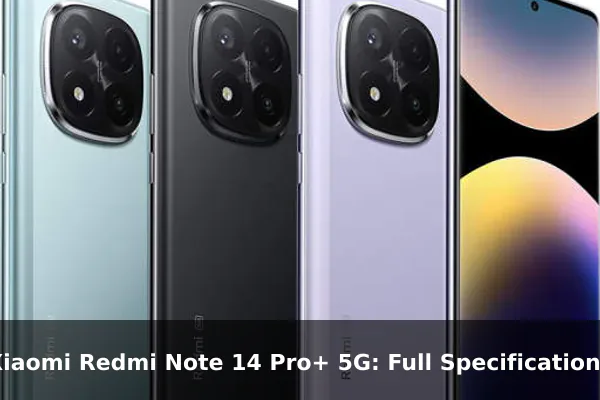
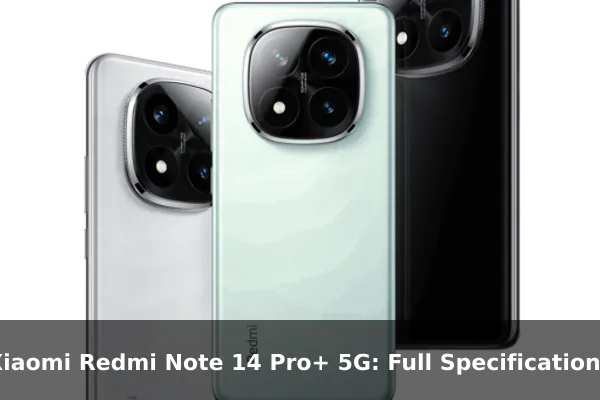
At 162.5 x 74.7 x 8.8 mm, the phone is large but still within the normal size range for a 6.67-inch Android device. The weight is listed at 205 g or 210 g depending on finish, so it will feel substantial in the hand. Xiaomi uses Gorilla Glass Victus 2 on the front, with either a glass back or silicone polymer eco-leather-style rear depending on variant, plus an aluminum frame.
The IP68 rating is one of the most practical upgrades here. The listed protection covers dust tightness and immersion up to 1.5 meters for 30 minutes under test conditions. That is reassuring for rain, spills, and daily accidents, though it should not be treated as an invitation to use the phone in pools or seawater. The color options, Lavender Purple, Frost Blue, Midnight Black, and Sand Gold, also give the phone a broader personality than the usual black-only value handset.
Display Experience
The display is one of the clearest reasons to consider this phone. The 6.67-inch AMOLED panel uses a 1220 x 2712 pixel resolution, giving it a sharp 446 ppi density, and it supports 120Hz refresh, HDR10+, Dolby Vision, 68 billion colors, and 1920Hz PWM dimming. Peak brightness is listed at 3000 nits, while the provided test data reports 1200 nits measured maximum brightness, which is still strong for outdoor readability.
In everyday terms, this is a screen built for streaming, reading, social apps, and gaming with smooth motion. The 20:9 aspect ratio makes it tall enough for feeds and multitasking, while Gorilla Glass Victus 2 and a Mohs level 5 protection listing add useful reassurance. Buyers who care about display comfort should also note the high-frequency PWM dimming, although individual sensitivity to flicker can still vary.
Performance and Storage
The Snapdragon 7s Gen 3 is a modern 4 nm chipset with an octa-core CPU layout led by Cortex-A720 performance cores and an Adreno 810 GPU. This is not a top-tier gaming chipset, but it is well matched to the phone’s role as an upper mid-range device. The provided test figures show AnTuTu 750292 on v10, GeekBench 3234 on v6, and 3DMark Wild Life Extreme 1049, which points to solid daily performance and reasonable graphics ability rather than enthusiast-class power.
Storage choices are generous: 256GB with 8GB RAM, 256GB with 12GB RAM, or 512GB with 12GB RAM. The storage type is UFS 2.2, which is acceptable for this class, though not as fast as newer UFS 3.x or UFS 4.0 solutions found in more expensive phones. There is no memory card slot, so the 512GB model is the safer pick for users who record a lot of 4K video or keep large offline media libraries.
Camera System
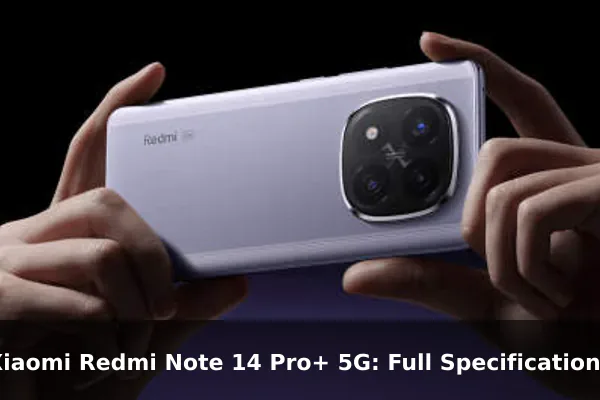
The rear camera setup is built around a 200MP wide camera with a 1/1.4-inch sensor, multi-directional PDAF, and optical image stabilization. That main camera is the star of the system and should be the lens buyers rely on most. It supports 4K video at 24 or 30fps, plus 1080p at up to 120fps, with OIS and gyro-EIS listed for stabilization support.
The rest of the camera hardware is more typical for this class: an 8MP ultrawide camera with a 120-degree field of view and a 2MP macro camera. The ultrawide adds useful flexibility for landscapes, interiors, and group shots, but it is unlikely to match the main sensor for detail or low-light quality. The 20MP front camera supports 1080p video at 30 or 60fps, which is suitable for selfies, video calls, and social clips.
Battery and Charging
The 5110 mAh battery is a sensible capacity for a slim-ish 5G phone with a bright, high-resolution AMOLED display. The more distinctive feature is 120W wired charging, which remains a major convenience if you regularly top up during the day. The source data does not list wireless charging, so buyers should treat this as a fast wired-charging phone first.
Battery test data lists an active use score of 10:40h. That is enough for a normal day for many users, but not necessarily a battery-life champion result compared with some larger-cell mid-range rivals. The EU label data is also useful: Class B energy rating, 50:09h endurance, 1000 battery cycles, Class C free fall rating, and Class C repairability. Those labels make the phone easier to compare for long-term ownership, not just launch-day speed.
Software and Features
The phone ships with Android 14 and HyperOS, with the source data listing up to three major Android upgrades. HyperOS adds Xiaomi’s own interface style and ecosystem features, while Circle to Search gives the device a modern AI-assisted search function. As always with Android update policies, exact timing can vary by region, carrier, and model variant.
Security is handled by an under-display optical fingerprint sensor, backed by the usual motion and orientation sensors such as accelerometer, gyro, compass, and proximity. Audio is also well covered with stereo speakers, Dolby Atmos, and Hi-Res wired and wireless audio support. There is no 3.5mm headphone jack, so wired headphone users will need USB-C audio or an adapter.
Connectivity and Travel Notes
Network support is broad, with GSM, HSPA, LTE, and 5G across SA and NSA bands. The listed 4G and 5G band coverage is especially useful for buyers who travel or import phones, although carrier compatibility should still be checked before purchase. SIM support is listed as Nano-SIM plus eSIM or Nano-SIM plus Nano-SIM, depending on market version.
Wireless connectivity includes Wi-Fi 6 and Wi-Fi 6E support where available, Bluetooth 5.4, NFC depending on market, infrared, GPS-related positioning systems, and USB Type-C 2.0 with OTG. The infrared port is a small but practical Redmi-style extra for controlling TVs and appliances. The USB 2.0 speed is less exciting, so users who transfer large video files by cable may notice slower wired data movement than on premium phones.
Who Should Buy It?
The Redmi Note 14 Pro+ 5G is best suited to buyers who want a premium-feeling mid-range phone with a sharp AMOLED display, strong water resistance, very fast charging, and a high-resolution stabilized main camera. It makes particular sense for users upgrading from older Redmi Note, Poco, or budget Galaxy A models who want a more polished display and build without paying flagship money.
It is less ideal for buyers whose top priority is heavy 3D gaming, expandable storage, wireless charging, or a balanced multi-camera system with a strong telephoto lens. The main camera and charging system carry much of the appeal here. If those two features matter to you, the phone looks compelling; if not, some rivals may offer better battery endurance or cleaner software preferences.
References
Reference sources used for verification include the official Xiaomi Redmi Note 14 Pro+ 5G specifications page, GSMArena lab test data for the Redmi Note 14 Pro+, and the provided source catalog entry from tampungspekhp.berkasdrive.com.
Conclusion
The Xiaomi Redmi Note 14 Pro+ 5G is a strong upper mid-range choice for buyers who value display quality, fast charging, IP68 durability, and a capable 200MP main camera. It is not the best fit for users who need expandable storage or flagship gaming performance, but as a practical feature-packed Android phone, it earns a confident recommendation.
