
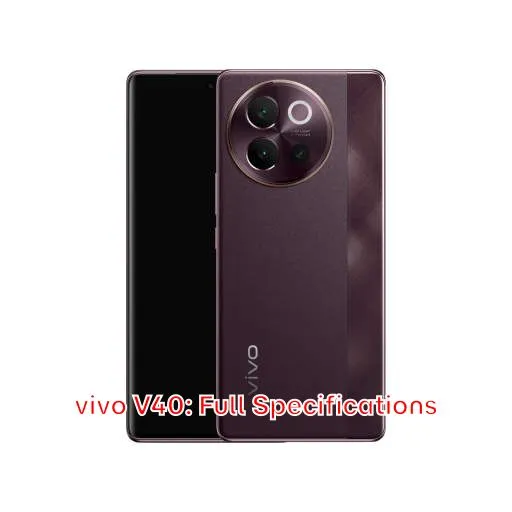
The vivo V40 is poised to make a splash in the competitive smartphone market. This article delves into the full specifications of the much-anticipated vivo V40, offering a comprehensive overview of its features, performance capabilities, and design aesthetics. Whether you’re a tech enthusiast or simply seeking an upgrade, understanding the vivo V40’s specifications is crucial for making an informed decision. Prepare to explore every facet of this new device.
From its advanced camera system and powerful processor to its stunning display and long-lasting battery, we will dissect each aspect of the vivo V40’s hardware and software. Get ready for an in-depth look at what makes the vivo V40 a potential game-changer, as we cover everything from its storage options and connectivity features to its operating system and overall user experience. This detailed breakdown of the vivo V40 full specifications will equip you with the knowledge needed to assess its value and suitability for your needs.
Full Specifications
Network
| Technology: | GSM / HSPA / LTE / 5G |
| 2G bands: | GSM 850 / 900 / 1800 / 1900 |
| 3G bands: | HSDPA 850 / 900 / 1700(AWS) / 1900 / 2100 – International |
| HSDPA 850 / 900 / 1900 / 2100 – India | |
| 4G bands: | 1, 2, 3, 4, 5, 7, 8, 12, 13, 17, 18, 19, 20, 26, 28, 32, 38, 39, 40, 41, 66 – International |
| 1, 3, 4, 5, 7, 8, 18, 19, 26, 28, 38, 39, 40, 41 – India | |
| 5G bands: | 1, 2, 3, 5, 7, 8, 20, 26, 28, 38, 40, 41, 66, 75, 77, 78 SA/NSA – International |
| 1, 3, 5, 8, 28, 40, 77, 78 SA/NSA – India | |
| Speed: | HSPA, LTE, 5G |
Launch
| Announced: | 2024, June 17 |
| Status: | Available. Released 2024, July 03 |
Body
| Dimensions: | 164.2 x 75 x 7.6 mm (6.46 x 2.95 x 0.30 in) |
| Weight: | 190 g (6.70 oz) |
| Build: | Glass front, plastic frame, glass back |
| SIM: | Nano-SIM + Nano-SIM + eSIM (max 2 at a time)Nano-SIM + Nano-SIM |
| IP68/IP69 dust tight and water resistant (high pressure water jets; immersible up to 1.5m for 30 min) |
Display
| Type: | AMOLED, HDR10+, 120Hz, 2160Hz PWM, 4500 nits (peak) |
| Size: | 6.78 inches, 111.0 cm2 (~90.1% screen-to-body ratio) |
| Resolution: | 1260 x 2800 pixels, 20:9 ratio (~453 ppi density) |
| Protection: | Schott Xensation Alpha |
Platform
| OS: | Android 14, Funtouch 14 |
| Chipset: | Qualcomm SM7550-AB Snapdragon 7 Gen 3 (4 nm) |
| CPU: | Octa-core (1×2.63 GHz Cortex-A715 & 3×2.4 GHz Cortex-A715 & 4×1.8 GHz Cortex-A510) |
| GPU: | Adreno 720 |
Memory
| Card slot: | No |
| Internal: | 128GB 8GB RAM, 256GB 8GB RAM, 256GB 12GB RAM, 512GB 12GB RAM |
| UFS 2.2 |
Main Camera
| Dual: | 50 MP, f/1.9, 24mm (wide), 1/1.56″, 1.0µm, PDAF, OIS 50 MP, f/2.0, 15mm, 119˚ (ultrawide), 1/2.76″, 0.64µm, AF |
| Features: | Zeiss optics, Ring-LED flash, panorama, HDR |
| Video: | 4K@30fps, 1080p@30fps, gyro-EIS, OIS |
Selfie camera
| Single: | 50 MP, f/2.0, 21mm (wide), 1/2.76″, 0.64µm, AF |
| Features: | HDR |
| Video: | 4K@30fps, 1080p@30fps |
Sound
| Loudspeaker: | Yes, with stereo speakers |
| 3.5mm jack: | No |
Comms
| WLAN: | Wi-Fi 802.11 a/b/g/n/ac/6, dual-band |
| Bluetooth: | 5.4, A2DP, LE |
| Positioning: | GPS, GALILEO, GLONASS, QZSS, BDS, NavIC |
| NFC: | Yes (market/region dependent) |
| Radio: | No |
| USB: | USB Type-C 2.0, OTG |
Features
| Sensors: | Fingerprint (under display, optical), accelerometer, gyro, proximity, compass |
Battery
| Type: | Si/C Li-Ion 5500 mAh |
| Charging: | 80W wired, PD Reverse wired |
Misc
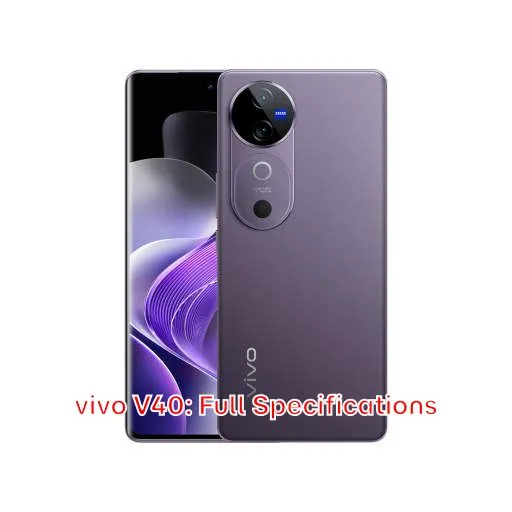
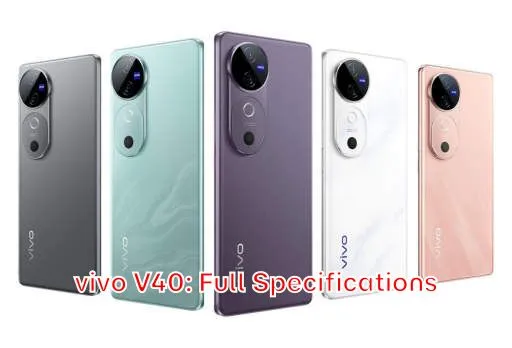
| Colors: | Stellar Silver (Titanium Grey), Nebula Purple (Lotus Purple), Ganges Blue, Moonlight White, Sunglow Peach |
| Models: | V2348 |
| SAR: | 0.97 W/kg (head) 0.90 W/kg (body) |
| SAR EU: | 0.97 W/kg (head) 1.14 W/kg (body) |
| Price: | ₹ 34,300 |
Our Tests
| Performance: | AnTuTu: 658597 (v9), 818546 (v10)
GeekBench: 2891 (v5), 3208 (v6) |
| Display: | 1353 nits max brightness (measured) |
| Loudspeaker: | -25.4 LUFS (Very good) |
| Battery: | Active use score 15:06h |
Price of HP Vivo V40
The Vivo V40 is anticipated to be a competitively priced smartphone, offering a blend of features and performance. Based on an initial price of ₹34,300 in India, we have converted the approximate cost to various currencies for our global audience. Please note that these are estimated prices and the actual retail cost may vary based on local taxes, import duties, and retailer markups.
- United States: $412.00
- Japan: ¥64,947
- United Kingdom: £325.00
- Australia: $623.00
- Canada: $565.00
- Taiwan: NT$13,260
- Denmark: kr2,850
- Saudi Arabia: SAR 1,545
- South Korea: ₩565,000
- Germany: €385.00
- Brazil: R$2,120
- Vietnam: ₫10,500,000
- Kenya: KES 55,000
- India: ₹34,300
- Indonesia: Rp 6,700,000
- Nigeria: ₦610,000
- Pakistan: PKR 115,000
- Philippines: ₱23,900
- Bangladesh: ৳48,000
Is the vivo V40’s Camera Worth the Hype?
The vivo V40 is generating significant buzz, particularly regarding its camera capabilities. The question is: does it live up to the hype? Let’s delve into the specifics. The V40 typically boasts a multi-lens rear camera system, often headlined by a high-resolution main sensor, commonly 50MP or higher. This allows for detailed images in well-lit conditions. However, resolution isn’t everything. The size of the sensor, the quality of the lens, and the image processing algorithms all play crucial roles.
Many reviewers praise the V40’s image processing, which often leans towards vibrant and saturated colors, appealing to users who frequently share photos on social media. This processing, however, can sometimes lead to images that are not entirely true to life. Consider your preference: do you prioritize accuracy or visual appeal? Furthermore, the V40 often includes features like optical image stabilization (OIS) and electronic image stabilization (EIS) to help reduce blur in photos and videos, particularly in low-light situations.
Low-light performance is a key battleground for smartphone cameras. The V40 usually incorporates a dedicated night mode that utilizes software algorithms to brighten shadows and reduce noise. While these modes are generally effective, they can sometimes produce images that appear artificially bright or overly processed. User reviews and comparisons often highlight the trade-offs between brightness, detail, and noise levels in low-light photos.
Beyond the main sensor, the V40 typically includes ultrawide and macro lenses. The ultrawide lens allows you to capture expansive landscapes or fit more subjects into a frame. The macro lens enables you to take close-up photos of small objects. The quality of these secondary lenses often varies, so it’s important to check reviews and sample photos to see if they meet your expectations. The front-facing camera is also a crucial aspect, especially for selfie enthusiasts. The V40 usually features a high-resolution front camera with various beautification modes and portrait effects.
Ultimately, whether the vivo V40’s camera is worth the hype depends on your individual needs and preferences. If you prioritize vibrant colors, ease of use, and good low-light performance in a user-friendly package, the V40 is likely a strong contender. However, if you demand the utmost accuracy and the best possible low-light performance, you may want to compare it with other flagship phones in the same price range. Pay close attention to independent reviews, sample photos, and videos to form your own opinion.
Battery Life on the vivo V40: Can It Last All Day?
Battery life is a critical factor for any smartphone, and the vivo V40 is no exception. The question on many potential buyers’ minds is whether it can truly last a full day on a single charge. The answer, as with most smartphones, depends heavily on usage patterns. The V40 typically packs a battery with a capacity ranging from 4500mAh to 5000mAh, which is a decent size for a modern smartphone. However, battery capacity is just one piece of the puzzle.
Factors that significantly impact battery life include screen brightness, the types of apps you use, the amount of time you spend gaming or streaming videos, and network connectivity (Wi-Fi vs. cellular data). Heavy users who spend hours gaming, streaming videos, or using GPS navigation will naturally drain the battery faster than light users who primarily use their phone for basic tasks like making calls, sending emails, and browsing social media.
Many reviews suggest that the vivo V40 can comfortably last a full day for moderate users. This means you can expect to get through a typical day of calls, emails, social media browsing, and some light gaming without needing to recharge. However, heavy users may need to top up the battery at some point during the day, especially if they’re using power-hungry apps or features. The efficiency of the phone’s processor and software optimization also play a significant role in battery life. A well-optimized phone can often squeeze more life out of the same battery capacity compared to a poorly optimized one.
The V40 often features fast charging technology, which allows you to quickly replenish the battery when it’s running low. Some models even support wireless charging. Fast charging can be a lifesaver when you’re short on time and need to quickly boost your battery percentage. To extend battery life, consider adjusting screen brightness, disabling unnecessary background app activity, and turning off features like GPS and Bluetooth when you’re not using them. You can also enable battery saver mode, which typically limits performance and background activity to conserve power.
Ultimately, the battery life of the vivo V40 is likely to be satisfactory for most users. However, heavy users should be prepared to charge their phone more frequently or consider carrying a portable power bank. Pay attention to user reviews and battery life tests to get a better understanding of what to expect based on your individual usage patterns.
vivo V40: Design and Build Quality – Is It Premium Enough?
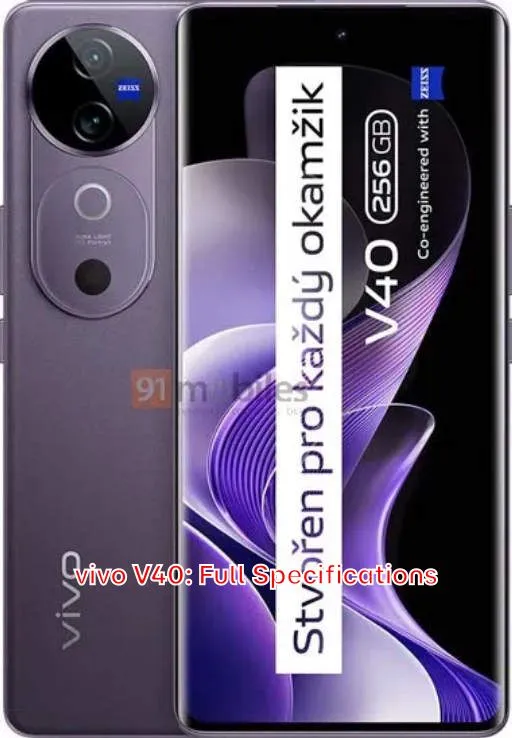
The design and build quality of a smartphone are crucial for both aesthetics and durability. Does the vivo V40 deliver a premium feel? Many aspects contribute to the perception of “premium,” including the materials used, the overall design, and the attention to detail. The V40 typically employs a combination of materials such as glass, metal, and plastic. The choice of materials and how they are integrated plays a significant role in the overall feel of the phone.
A glass back panel often contributes to a premium aesthetic, but it also makes the phone more susceptible to scratches and fingerprints. Metal frames provide structural rigidity and add a touch of elegance, while plastic frames are more durable and lightweight. The design language of the V40 often features sleek lines, curved edges, and a minimalist aesthetic. The placement of buttons and ports is usually well thought out, and the phone feels comfortable to hold in the hand. Pay close attention to the fit and finish of the phone. Do the seams between the different materials feel seamless? Are the buttons tactile and responsive?
Durability is another essential aspect of build quality. The vivo V40 often features some level of water and dust resistance, typically rated as IP53 or higher. This means the phone can withstand splashes of water and dust ingress, but it’s not necessarily waterproof. A stronger IP rating, such as IP67 or IP68, would provide greater protection against water damage. Corning Gorilla Glass is often used to protect the display from scratches and cracks. The specific version of Gorilla Glass used can vary, with newer versions offering greater protection. User reviews and durability tests can provide insights into how well the phone holds up to everyday wear and tear.
Whether the vivo V40’s design and build quality are “premium enough” is subjective and depends on individual expectations and budget. Compared to flagship phones from top-tier brands, the V40 may not offer the same level of luxury and refinement. However, it generally provides a solid and well-built device with a stylish design that appeals to a wide range of users. Consider the materials, design, durability, and overall feel of the phone when evaluating its premium appeal. Visiting a physical store to handle the phone in person can provide valuable insights.
Gaming Performance on the vivo V40: Smooth Gameplay or Lag City?
For mobile gamers, performance is paramount. The question is: does the vivo V40 deliver a smooth and enjoyable gaming experience, or does it suffer from lag and stuttering? Several factors contribute to a phone’s gaming performance, including the processor, RAM, display, and software optimization. The V40 typically uses a mid-range to upper-mid-range processor from Qualcomm Snapdragon or MediaTek Dimensity. These processors are generally capable of handling most mobile games without significant issues.
However, the specific processor model and the amount of RAM (typically 6GB or 8GB) will influence the phone’s ability to handle demanding games at high settings. Games with complex graphics and physics require more processing power and memory. The display’s refresh rate also plays a role in gaming smoothness. A higher refresh rate, such as 90Hz or 120Hz, results in smoother animations and a more responsive feel. The vivo V40 often features a high refresh rate display, which enhances the gaming experience.
Software optimization is crucial for ensuring smooth gameplay. The phone’s operating system and gaming-specific features can help optimize performance by allocating resources efficiently and minimizing background processes. Some phones even offer dedicated gaming modes that further enhance performance. Overheating can be a significant issue during prolonged gaming sessions. The vivo V40 typically incorporates a cooling system to help dissipate heat and prevent performance throttling. However, even with a cooling system, the phone may still get warm during extended gaming periods.
User reviews and gaming benchmarks can provide valuable insights into the vivo V40’s gaming performance. Look for reviews that specifically test the phone’s ability to run popular games at different settings. Pay attention to frame rates, thermal management, and any reports of lag or stuttering. Ultimately, the vivo V40 is likely to provide a decent gaming experience for most users. It may not be able to handle the most demanding games at maximum settings without some compromises, but it should be capable of running most games smoothly at medium to high settings.
vivo V40 vs. the Competition: Why Choose This Phone?
The smartphone market is crowded, so why should you choose the vivo V40 over its competitors? To answer this question, we need to consider the V40’s strengths and weaknesses relative to other phones in the same price range. The V40 often excels in areas such as camera performance, design, and fast charging. Its camera system typically offers good image quality, especially in well-lit conditions, and the phone’s design is often stylish and eye-catching. Fast charging is a convenient feature that allows you to quickly replenish the battery when it’s running low.
However, the V40 may not be the best choice for users who prioritize raw processing power or the most durable build quality. Its processor is usually in the mid-range to upper-mid-range category, which may not be sufficient for demanding tasks such as video editing or heavy gaming. While the V40’s design is often attractive, its build quality may not be as robust as some of its competitors. Other factors to consider include the phone’s software experience, display quality, and battery life. The vivo V40’s software is typically based on Android with a custom skin, which may appeal to some users but not others. Its display usually offers good color accuracy and brightness, but it may not be as sharp or vibrant as the displays on some flagship phones.
Battery life is generally decent, but it can vary depending on usage patterns. When comparing the vivo V40 to its competitors, consider your individual needs and priorities. If you value camera performance, design, and fast charging, the V40 is likely a strong contender. However, if you prioritize raw processing power, durability, or a stock Android experience, you may want to consider other options. Researching specific models and reading user reviews is crucial to making an informed decision.
User Experience: Is the vivo V40 Easy to Use?
A good user experience (UX) is essential for any smartphone. Is the vivo V40 easy to use, even for those who aren’t tech-savvy? UX encompasses several factors, including the phone’s software interface, responsiveness, and overall ease of navigation. The V40 typically runs on Android with a custom skin developed by vivo. This skin often includes various features and customizations that aim to enhance the user experience.
However, the effectiveness of these customizations can vary. Some users may find them helpful and intuitive, while others may find them cluttered or confusing. The phone’s responsiveness is crucial for a smooth user experience. The vivo V40 usually offers good responsiveness, thanks to its processor and sufficient RAM. Apps open quickly, and animations are generally smooth. However, performance can sometimes slow down when running multiple apps simultaneously or playing demanding games.
Ease of navigation is another important aspect of UX. The vivo V40’s software interface is typically well-organized and intuitive, making it easy to find settings and apps. The phone also includes various gestures and shortcuts that can further enhance navigation. Accessibility features are also important for users with disabilities. The vivo V40 typically includes various accessibility features, such as screen readers, magnifiers, and color correction tools.
Overall, the vivo V40 generally offers a good user experience. Its software interface is relatively easy to use, and its responsiveness is generally good. However, some users may find its custom skin cluttered or unnecessary. The best way to determine if the vivo V40 is easy to use for you is to try it out in person or read reviews from other users.
Who is the vivo V40 Perfect For?
The vivo V40 isn’t for everyone, but it excels for specific user types. It’s a particularly good fit for individuals who prioritize:
- Photography Enthusiasts: Its strong camera system, often featuring a high-resolution main sensor and versatile lens options, makes it great for capturing quality photos and videos.
- Style-Conscious Users: Its sleek design and attractive aesthetics appeal to those who value a phone that looks good.
- Social Media Addicts: Its vibrant image processing and user-friendly interface make it easy to share content on social platforms.
- Moderate Gamers: It delivers a decent gaming experience for casual and moderate gamers, but may not be suitable for hardcore gaming enthusiasts.
- Users Seeking Value: It offers a good balance of features and performance at a competitive price point.
Best vivo V40 Features for Photographers
For photographers, the vivo V40 presents several appealing features:
- High-Resolution Main Sensor: Captures detailed images in various lighting conditions.
- Versatile Lens Options: Typically includes ultrawide and macro lenses for creative shooting.
- Optical Image Stabilization (OIS): Reduces blur in photos and videos, especially in low-light.
- Advanced Image Processing: Enhances colors and details for visually appealing results.
- Dedicated Night Mode: Improves low-light performance by brightening shadows and reducing noise.
vivo V40: A Great Phone for Social Media?
The vivo V40 is a strong contender for social media users because:
- Vibrant Image Processing: Photos and videos often have punchy colors and enhanced details, making them stand out on social feeds.
- High-Resolution Front Camera: Captures detailed selfies for profile pictures and stories.
- User-Friendly Interface: Makes it easy to edit and share content directly to social media platforms.
- Compact Design: Easy to carry and use on the go.
- Quick Share Options: Streamlined sharing process for various social platforms.
vivo V40: Is it Future-Proof?
The term “future-proof” is relative when discussing smartphones. No phone can truly be immune to obsolescence, but the vivo V40 can be considered relatively future-proof if it meets certain criteria. Software updates are crucial for future-proofing a smartphone. The longer a phone receives software updates, the longer it will remain secure and compatible with new apps and features. The vivo V40 typically receives a few years of software updates, but it may not receive as many updates as flagship phones from top-tier brands. Hardware capabilities also play a role in future-proofing. A phone with a powerful processor, ample RAM, and a large storage capacity will be better equipped to handle future software updates and demanding apps.
The vivo V40’s processor and RAM are generally sufficient for current needs, but they may become outdated in a few years. Network compatibility is another important factor. The vivo V40 typically supports 5G connectivity, which is the latest generation of mobile network technology. However, new network technologies may emerge in the future, rendering the V40’s 5G capabilities obsolete. To maximize the lifespan of your vivo V40, take care of it properly by protecting it from physical damage and avoiding extreme temperatures. You should also keep its software up to date and avoid installing unnecessary apps.
While the vivo V40 may not be entirely future-proof, it offers a good balance of features and performance that should keep it relevant for a few years. However, if you prioritize long-term software support or the latest hardware technologies, you may want to consider other options. Ultimately, the decision of whether or not the vivo V40 is “future-proof” depends on your individual needs and expectations. Consider how you plan to use the phone and how long you intend to keep it before making a decision.
