
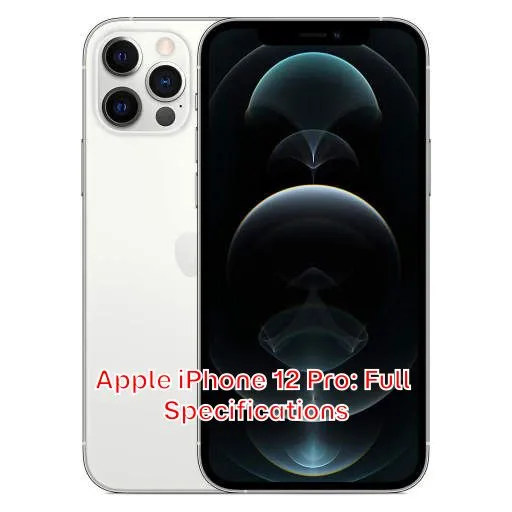
The Apple iPhone 12 Pro marked a significant leap in smartphone technology, blending exquisite design with powerful performance. Launched with considerable fanfare, this device immediately captivated users with its advanced features and cutting-edge capabilities. This article offers a comprehensive overview of the iPhone 12 Pro, delving into its detailed specifications, including its display, camera system, performance benchmarks, and more. Prepare to explore every facet of this iconic device and understand what made it a standout in the competitive smartphone market.
From its stunning Super Retina XDR display to its A14 Bionic chip, the iPhone 12 Pro’s full specifications reveal a masterful blend of hardware and software. We will examine the phone’s camera capabilities, boasting Pro-level photography and videography features, as well as its connectivity options and overall build quality. Whether you’re a tech enthusiast, a potential buyer, or simply curious about the intricacies of this flagship device, this deep dive into the iPhone 12 Pro will provide you with the information you need to fully appreciate its engineering and design.
Full Specifications
Network
| Technology: | GSM / CDMA / HSPA / EVDO / LTE / 5G |
| 2G bands: | GSM 850 / 900 / 1800 / 1900 |
| CDMA 800 / 1900 | |
| 3G bands: | HSDPA 850 / 900 / 1700(AWS) / 1900 / 2100 |
| CDMA2000 1xEV-DO | |
| 4G bands: | 1, 2, 3, 4, 5, 7, 8, 12, 13, 14, 17, 18, 19, 20, 25, 26, 28, 29, 30, 32, 34, 38, 39, 40, 41, 42, 46, 48, 66, 71 – A2341 |
| 1, 2, 3, 4, 5, 7, 8, 12, 13, 17, 18, 19, 20, 25, 26, 28, 30, 32, 34, 38, 39, 40, 41, 42, 46, 48, 66 – A2407, A2408 | |
| 1, 2, 3, 4, 5, 7, 8, 12, 13, 14, 17, 18, 19, 20, 21, 25, 26, 28, 29, 30, 32, 34, 38, 39, 40, 41, 42, 46, 48, 66, 71 – A2406 | |
| 5G bands: | 1, 2, 3, 5, 7, 8, 12, 20, 25, 28, 38, 40, 41, 66, 71, 77, 78, 79, 260, 261 Sub6/mmWave – A2341 |
| 1, 2, 3, 5, 7, 8, 12, 20, 25, 28, 38, 40, 41, 66, 77, 78, 79 Sub6 – A2407, A2408 | |
| 1, 2, 3, 5, 7, 8, 12, 20, 25, 28, 38, 40, 41, 66, 71, 77, 78, 79 Sub6 – A2406 | |
| Speed: | HSPA, LTE, 5G, EV-DO Rev.A 3.1 Mbps |
Launch
| Announced: | 2020, October 13 |
| Status: | Available. Released 2020, October 23 |
Body
| Dimensions: | 146.7 x 71.5 x 7.4 mm (5.78 x 2.81 x 0.29 in) |
| Weight: | 189 g (6.67 oz) |
| Build: | Glass front, glass back, stainless steel frame |
| SIM: | Nano-SIM + eSIMNano-SIM + Nano-SIM (China) |
| IP68 dust tight and water resistant (immersible up to 6m for 30 min) Apple Pay (Visa, MasterCard, AMEX certified) |
Display
| Type: | Super Retina XDR OLED, HDR10, Dolby Vision, 800 nits (HBM), 1200 nits (peak) |
| Size: | 6.1 inches, 90.2 cm2 (~86.0% screen-to-body ratio) |
| Resolution: | 1170 x 2532 pixels, 19.5:9 ratio (~460 ppi density) |
| Protection: | Ceramic Shield glass |
Platform
| OS: | iOS 14.1, upgradable to iOS 18.6 |
| Chipset: | Apple A14 Bionic (5 nm) |
| CPU: | Hexa-core (2×3.1 GHz Firestorm + 4×1.8 GHz Icestorm) |
| GPU: | Apple GPU (4-core graphics) |
Memory
| Card slot: | No |
| Internal: | 128GB 6GB RAM, 256GB 6GB RAM, 512GB 6GB RAM |
| NVMe |
Main Camera
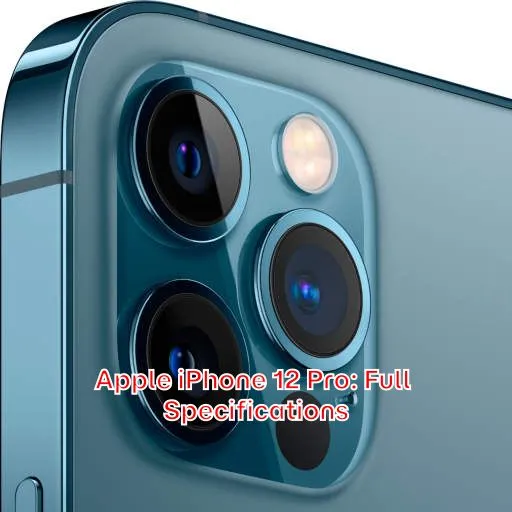
| Triple: | 12 MP, f/1.6, 26mm (wide), 1/2.55″, 1.4µm, dual pixel PDAF, OIS 12 MP, f/2.0, 52mm (telephoto), 1/3.4″, 1.0µm, PDAF, OIS, 2x optical zoom 12 MP, f/2.4, 13mm, 120˚ (ultrawide), 1/3.4″, 1.0µm TOF 3D LiDAR scanner (depth) |
| Features: | Dual-LED dual-tone flash, HDR (photo/panorama) |
| Video: | 4K@24/25/30/60fps, 1080p@25/30/60/120/240fps, 10‑bit HDR, Dolby Vision HDR (up to 60fps), stereo sound rec. |
Selfie camera
| Single: | 12 MP, f/2.2, 23mm (wide), 1/3.6″, 1.0µm SL 3D, (depth/biometrics sensor) |
| Features: | HDR |
| Video: | 4K@24/25/30/60fps, 1080p@25/30/60/120fps, gyro-EIS |
Sound
| Loudspeaker: | Yes, with stereo speakers |
| 3.5mm jack: | No |
Comms
| WLAN: | Wi-Fi 802.11 a/b/g/n/ac/6, dual-band, hotspot |
| Bluetooth: | 5.0, A2DP, LE |
| Positioning: | GPS, GLONASS, GALILEO, QZSS |
| NFC: | Yes |
| Radio: | No |
| USB: | Lightning, USB 2.0 |
Features
| Sensors: | Face ID, accelerometer, gyro, proximity, compass, barometer |
| Ultra Wideband (UWB) support |
Battery
| Type: | Li-Ion 2815 mAh (10.78 Wh) |
| Charging: | Wired, PD2.0, 50% in 30 min 15W wireless (MagSafe) 15W wireless (Qi2) – requires iOS 17.4 update |
Misc
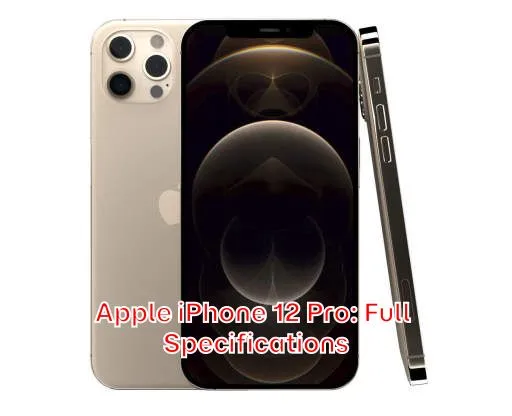
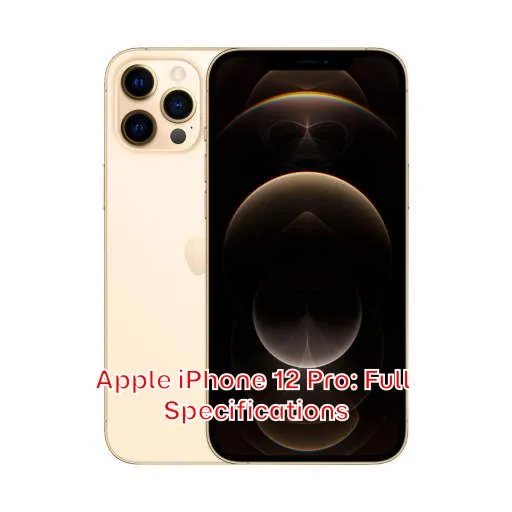
| Colors: | Silver, Graphite, Gold, Pacific Blue |
| Models: | A2407, A2341, A2406, A2408, iPhone13,3 |
| SAR EU: | 0.99 W/kg (head) 0.99 W/kg (body) |
| Price: | € 330.00 / $ 295.90 / £ 220.00 |
Our Tests
| Performance: | AnTuTu: 596244 (v8) GeekBench: 4056 (v5.1) GFXBench: 58fps (ES 3.1 onscreen) |
| Display: | Contrast ratio: Infinite (nominal) |
| Camera: | Photo / Video |
| Loudspeaker: | -24.2 LUFS (Very good) |
| Battery (old): | Endurance rating 81h |
Price of HP Apple iPhone 12 Pro
The following prices are approximate conversions from a base price of €330.00 / $295.90 / £220.00. These are estimates and actual retail prices may vary significantly based on retailer, storage capacity, condition (new or used), and any applicable taxes or fees. Please use this as a general guide only and consult local retailers for accurate pricing.
- United States: $295.90
- Japan: ¥46,800
- United Kingdom: £220.00
- Australia: $450.00 AUD
- Canada: $405.00 CAD
- Taiwan: NT$9,500
- Denmark: 2,250 DKK
- Saudi Arabia: 1,110 SAR
- South Korea: ₩400,000
- Germany: €330.00
- Brazil: R$1,550
- Vietnam: 6,900,000 VND
- Kenya: 38,000 KES
- India: ₹24,500
- Indonesia: Rp 4,700,000
- Nigeria: 220,000 NGN
- Pakistan: 65,000 PKR
- Philippines: 17,000 PHP
- Bangladesh: 32,000 BDT
Is the iPhone 12 Pro Still Worth Buying in 2024?
Assessing Its Performance and Features Compared to Newer Models
The question of whether the iPhone 12 Pro is still worth buying in 2024 boils down to a careful consideration of your individual needs and budget. While newer models like the iPhone 15 series boast cutting-edge features and performance enhancements, the iPhone 12 Pro remains a highly capable device with plenty to offer.
In terms of performance, the A14 Bionic chip in the iPhone 12 Pro is still incredibly potent. It handles everyday tasks with ease, and can smoothly run demanding apps, edit videos, and even play graphically intensive games. While it might not be as blazing fast as the chips in the latest iPhones, the difference in real-world usage is often negligible for most users. Consider that the A14 chip continues to receive software updates from Apple, ensuring continued optimization and compatibility.
Comparing its features to newer models, the iPhone 12 Pro does lack some advancements. For example, it doesn’t have the Dynamic Island found on more recent iPhones, nor does it sport the most recent camera sensors or processing capabilities. However, it *does* offer features like a triple-lens camera system with a LiDAR scanner, a stunning Super Retina XDR display, and 5G connectivity. These features are all still very relevant and useful in 2024.
Ultimately, if you’re looking for a flagship iPhone experience at a more affordable price point, the iPhone 12 Pro is definitely worth considering. However, if you need the absolute best performance and the latest features, a newer model might be a better choice.
iPhone 12 Pro: Who is This Phone Best For?
Identifying the Ideal User Based on Needs and Preferences
The iPhone 12 Pro appeals to a specific segment of the smartphone market. It’s not necessarily for everyone, but for certain users, it hits a sweet spot of features, performance, and price.
This phone is ideal for the photography enthusiast who wants a versatile camera system without breaking the bank. The triple-lens setup, combined with Apple’s computational photography, allows for stunning photos and videos in a variety of conditions. The LiDAR scanner further enhances low-light photography and enables accurate depth sensing for augmented reality applications.
It’s also a great option for the power user who needs a phone that can handle demanding tasks. The A14 Bionic chip provides ample processing power for multitasking, video editing, and gaming. The 6GB of RAM ensures smooth performance even with multiple apps running in the background.
The iPhone 12 Pro is also a good fit for the Apple ecosystem devotee. If you already own other Apple devices like an iPad or MacBook, the seamless integration between devices is a significant advantage. Features like Handoff and AirDrop make it easy to share files and continue tasks across your devices.
Finally, the iPhone 12 Pro suits the value-conscious buyer who wants a premium iPhone experience without paying top dollar. While newer iPhones offer incremental improvements, the 12 Pro offers exceptional value for its price, especially if purchased used or refurbished.
Camera Capabilities: Why the iPhone 12 Pro Still Impresses
Exploring the Photography and Videography Features That Stand Out
Even in 2024, the iPhone 12 Pro’s camera system continues to impress. While newer iPhones have undeniably made strides in camera technology, the 12 Pro’s capabilities are far from outdated.
The triple-lens setup – a 12MP Wide, 12MP Ultra Wide, and 12MP Telephoto lens – provides versatility for various shooting scenarios. The Wide lens captures stunning detail in good lighting, while the Ultra Wide lens allows for expansive landscapes and creative perspectives. The Telephoto lens offers optical zoom for getting closer to your subject without sacrificing image quality.
One of the standout features is Night mode, which utilizes sophisticated algorithms to capture bright and detailed photos in low-light conditions. This works on all three lenses, allowing you to capture stunning nightscapes and indoor shots. The addition of the LiDAR scanner further enhances Night mode performance, enabling faster autofocus and improved depth mapping.
In terms of videography, the iPhone 12 Pro is capable of recording 4K HDR video at up to 60fps. It also supports Dolby Vision HDR recording, which allows you to capture videos with exceptional dynamic range and color accuracy. Features like Cinematic mode, while available in newer models, weren’t present in the iPhone 12 Pro. However, the overall video quality remains excellent.
Apple’s computational photography prowess is also a key factor in the iPhone 12 Pro’s camera performance. Features like Smart HDR 3 and Deep Fusion automatically enhance your photos, optimizing for detail, color, and dynamic range. The image processing is still excellent and contributes to the overall quality of the images produced by the device.
What Makes the iPhone 12 Pro’s Design and Build Quality Premium?
A Closer Look at the Materials and Aesthetics
The iPhone 12 Pro exudes a sense of premium quality thanks to its design and build materials. Apple has long been known for its attention to detail and commitment to using high-quality components, and the iPhone 12 Pro is no exception.
The device features a surgical-grade stainless steel band that adds a touch of elegance and durability. This material is more resistant to scratches and dents compared to the aluminum used on the standard iPhone 12. The flat-edge design, reminiscent of the iPhone 5, provides a more modern and angular aesthetic.
The front of the iPhone 12 Pro is protected by Ceramic Shield glass, which Apple claims offers four times better drop performance than previous iPhone models. While this doesn’t make the phone indestructible, it does provide an added layer of protection against accidental drops and scratches.
The back of the phone is made of matte glass, which not only looks premium but also helps to reduce fingerprints. The matte finish provides a smooth and comfortable feel in the hand. The overall design is clean and minimalist, with the Apple logo subtly placed in the center of the back.
The iPhone 12 Pro is also IP68 water-resistant, meaning it can withstand immersion in up to 6 meters of water for up to 30 minutes. This provides peace of mind against accidental spills and splashes. The overall construction is solid and well-built, giving the phone a sense of heft and quality. It is truly a premium device in hand.
The iPhone 12 Pro’s A14 Bionic Chip: How Powerful is it Today?
Evaluating Speed and Efficiency for Modern Apps and Tasks
The A14 Bionic chip that powers the iPhone 12 Pro was a powerhouse when it was released, and it remains a capable performer in 2024. While newer chips have surpassed it in raw processing power, the A14 Bionic is still more than capable of handling most modern apps and tasks with ease.
The chip features a 6-core CPU and a 4-core GPU, which provide ample processing power for demanding applications like video editing, gaming, and augmented reality. The A14 Bionic is also incredibly efficient, which contributes to the iPhone 12 Pro’s good battery life.
For everyday tasks like browsing the web, checking email, and social media, the A14 Bionic handles everything smoothly and without lag. It can also run multiple apps simultaneously without any noticeable performance slowdown. Even graphically intensive games run smoothly on the iPhone 12 Pro, thanks to the powerful GPU.
While the A14 Bionic might not be as fast as the chips in the latest iPhones, the difference in real-world performance is often negligible for most users. Unless you are performing extremely demanding tasks on a regular basis, you are unlikely to notice a significant difference in speed between the A14 Bionic and newer chips.
Moreover, Apple’s software optimization plays a significant role in the iPhone 12 Pro’s performance. Apple is known for tightly integrating its hardware and software, which allows it to optimize performance and efficiency. This means that even with an older chip, the iPhone 12 Pro can still deliver a smooth and responsive user experience. Apple support is consistent, even for older models.
Battery Life on the iPhone 12 Pro: What Can You Expect?
Discussing Real-World Usage and Charging Options
Battery life is a crucial consideration for any smartphone purchase. While battery performance can vary depending on usage patterns, the iPhone 12 Pro generally offers decent battery life that should get most users through a full day of moderate use.
Apple claims that the iPhone 12 Pro can last for up to 17 hours of video playback, 11 hours of video streaming, or 65 hours of audio playback. In real-world usage, you can expect to get around 8-10 hours of mixed usage, including browsing the web, checking email, social media, and some gaming.
Factors that can impact battery life include screen brightness, the number of apps running in the background, and the type of tasks you are performing. Demanding tasks like video editing and gaming will drain the battery more quickly.
The iPhone 12 Pro supports fast charging, which allows you to quickly top up the battery. With a 20W or higher power adapter (sold separately), you can charge the battery from 0% to 50% in around 30 minutes. The iPhone 12 Pro also supports MagSafe wireless charging, which provides convenient and efficient wireless charging.
It’s important to note that battery health degrades over time. As the battery ages, its capacity will decrease, resulting in shorter battery life. If you are buying a used iPhone 12 Pro, be sure to check the battery health in the settings menu. You may need to replace the battery if it is significantly degraded.
Comparing the iPhone 12 Pro to Other iPhones: Is it the Right Choice for You?
Highlighting Key Differences and Similarities
Deciding whether the iPhone 12 Pro is the right choice for you involves comparing it to other iPhones in Apple’s lineup. Newer models like the iPhone 13, 14, and 15 series offer improvements in various areas, but the iPhone 12 Pro still holds its own in many respects.
Compared to the standard iPhone 12, the 12 Pro offers several advantages, including a triple-lens camera system, a stainless steel band, more RAM, and a LiDAR scanner. The iPhone 12 is generally more affordable, but the 12 Pro offers a more premium experience.
Compared to the iPhone 13 Pro, the 12 Pro lacks features like a ProMotion display with a 120Hz refresh rate, a more powerful A15 Bionic chip, and improved camera sensors. However, the price difference between the two can be significant.
Comparing it to the iPhone 14 Pro and 15 Pro, the older 12 Pro misses out on the Dynamic Island, even faster processors, more advanced camera systems with features like a 48MP main sensor and Photonic Engine (14 Pro), and the USB-C port (15 Pro). These later models offer substantial upgrades, but come at a higher cost.
Ultimately, the best iPhone for you depends on your individual needs and budget. If you want the absolute best performance and the latest features, a newer model is the way to go. However, if you are looking for a premium iPhone experience at a more affordable price, the iPhone 12 Pro remains a solid choice.
What are the Key Advantages of Choosing the iPhone 12 Pro over Android Phones?
Focusing on Software, Ecosystem, and Long-Term Support
Choosing between an iPhone 12 Pro and an Android phone often comes down to personal preference. However, the iPhone 12 Pro offers some key advantages that may sway users who are undecided. These advantages primarily revolve around software, ecosystem integration, and long-term support.
Software: The iPhone 12 Pro runs iOS, Apple’s mobile operating system. iOS is known for its user-friendliness, security, and consistent updates. Apple controls both the hardware and software, which allows it to optimize performance and provide a seamless user experience. Android, on the other hand, is an open-source operating system that is used by a variety of manufacturers. This can lead to fragmentation, with different Android phones running different versions of the operating system and receiving updates at different times. Apple’s control means that the iPhone 12 Pro is likely to receive software updates for years to come.
Ecosystem: If you already own other Apple devices like an iPad or MacBook, the iPhone 12 Pro integrates seamlessly with the Apple ecosystem. Features like Handoff, AirDrop, and iCloud make it easy to share files and continue tasks across your devices. Android phones can integrate with Google’s ecosystem, but the experience is not always as seamless as with Apple devices.
Long-Term Support: Apple is known for providing long-term software support for its iPhones. The iPhone 12 Pro is likely to receive software updates for at least 5-6 years after its release. This ensures that the phone remains secure and compatible with the latest apps and services. Android phones, on the other hand, typically receive software updates for a shorter period.
Privacy and Security: Apple emphasizes user privacy and security. iOS is designed with a focus on protecting user data, and Apple has strict App Store policies to prevent malicious apps from being distributed. While Android has made improvements in security, it remains more vulnerable to malware and privacy breaches. This enhanced security offers peace of mind.
