
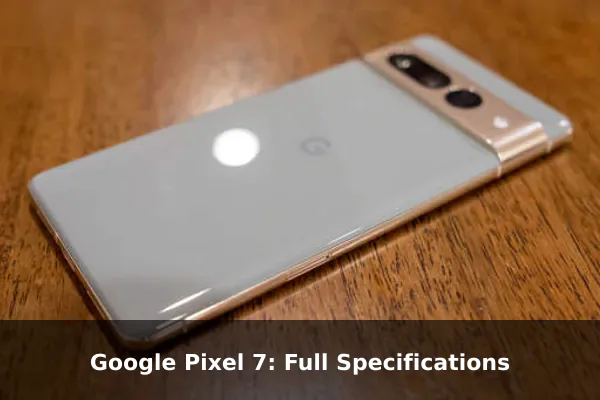
Google Pixel 7 is a compact flagship Android phone built around Google’s Tensor G2 chipset, a 6.3-inch 90Hz AMOLED display, and a camera system that leans heavily on computational photography.
This specifications article focuses on what the Pixel 7 means for buyers now: its hardware strengths, software support, camera value, connectivity coverage, and the trade-offs that matter before choosing it over newer Pixel or Android alternatives.
Full Specifications
Network
| Technology: | GSM / CDMA / HSPA / EVDO / LTE / 5G |
| 2G bands: | GSM 850 / 900 / 1800 / 1900 |
| CDMA 800 / 1700 / 1900 | |
| 3G bands: | HSDPA 800 / 850 / 900 / 1700(AWS) / 1900 / 2100 |
| CDMA2000 1xEV-DO | |
| 4G bands: | 1, 2, 3, 4, 5, 7, 8, 12, 13, 14, 17, 18, 19, 20, 25, 26, 28, 29, 30, 38, 40, 41, 42, 46, 48, 66, 71 – GQML3 |
| 1, 2, 3, 4, 5, 7, 8, 12, 13, 14, 17, 18, 19, 20, 25, 26, 28, 29, 30, 32, 38, 39, 40, 41, 42, 46, 48, 66, 71 – GVU6C | |
| 5G bands: | 1, 2, 3, 4, 5, 7, 8, 12, 13, 14, 17, 18, 19, 20, 25, 26, 28, 29, 30, 38, 40, 41, 46, 48, 66, 71, 260, 261 SA/NSA/Sub6/mmWave – GQML3 |
| 1, 2, 3, 5, 7, 8, 12, 14, 20, 25, 28, 30, 38, 40, 41, 48, 66, 71, 75, 76, 77, 78 SA/NSA/Sub6 – GVU6C | |
| Speed: | HSPA, LTE (CA), 5G |
Launch
| Announced: | 2022, October 06 |
| Status: | Available. Released 2022, October 13 |
Body
| Dimensions: | 155.6 x 73.2 x 8.7 mm (6.13 x 2.88 x 0.34 in) |
| Weight: | 197 g (6.95 oz) |
| Build: | Glass front (Gorilla Glass Victus), glass back (Gorilla Glass Victus), aluminum frame |
| SIM: | Nano-SIM + eSIM |
| IP68 dust tight and water resistant (immersible up to 1.5m for 30 min) |
Display
| Type: | AMOLED, 90Hz, HDR10+, 1000 nits (HBM), 1400 nits (peak) |
| Size: | 6.3 inches, 96.7 cm2 (~84.9% screen-to-body ratio) |
| Resolution: | 1080 x 2400 pixels, 20:9 ratio (~416 ppi density) |
| Protection: | Corning Gorilla Glass Victus |
Platform
| OS: | Android 13, upgradable to Android 15, up to 5 major Android upgrades |
| Chipset: | Google Tensor G2 (5 nm) |
| CPU: | Octa-core (2×2.85 GHz Cortex-X1 & 2×2.35 GHz Cortex-A78 & 4×1.80 GHz Cortex-A55) |
| GPU: | Mali-G710 MP7 |
Memory
| Card slot: | No |
| Internal: | 128GB 8GB RAM, 256GB 8GB RAM |
| UFS 3.1 |
Main Camera
| Dual: | 50 MP, f/1.9, 25mm (wide), 1/1.31″, 1.2µm, dual pixel PDAF, OIS 12 MP, f/2.2, 114˚ (ultrawide), 1/2.9″, 1.25µm |
| Features: | Laser AF, Dual-LED flash, Pixel Shift, Auto-HDR, panorama |
| Video: | 4K@30/60fps, 1080p@30/60/120/240fps; gyro-EIS, OIS, 10-bit HDR |
Selfie camera
| Single: | 10.8 MP, f/2.2, 21mm (ultrawide), 1/3.1″, 1.22µm |
| Features: | HDR, panorama |
| Video: | 4K@30/60fps, 1080p@30/60fps |
Sound
| Loudspeaker: | Yes, with stereo speakers |
| 3.5mm jack: | No |
Comms
| WLAN: | Wi-Fi 802.11 a/b/g/n/ac/6e, tri-band, Wi-Fi Direct |
| Bluetooth: | 5.2, A2DP, LE, aptX HD |
| Positioning: | GPS (L1+L5), GLONASS (G1), BDS (B1I+B1c+B2a), GALILEO (E1+E5a), QZSS (L1+L5) |
| NFC: | Yes |
| Radio: | No |
| USB: | USB Type-C 3.2 |
Features
| Sensors: | Fingerprint (under display, optical), accelerometer, gyro, proximity, compass, barometer |
| Circle to Search |
Battery
| Type: | Li-Ion 4355 mAh |
| Charging: | 20W wired, PD3.0, 50% in 30 min 20W wireless Reverse wireless |
Misc
| Colors: | Obsidian, Lemongrass, Snow |
| Models: | GVU6C, GQML3, GO3Z5 |
| Price: | € 198.59 / $ 199.95 / £ 170.00 / ₹ 29,999 |
Our Tests
| Performance: | AnTuTu: 813114 (v9) GeekBench: 3288 (v5.1) GFXBench: 59fps (ES 3.1 onscreen) |
| Display: | 974 nits max brightness (measured) |
| Camera: | Photo / Video |
| Loudspeaker: | -26.2 LUFS (Good) |
| Battery (old): | Endurance rating 96h |
Price and Availability
The Google Pixel 7 offers a compelling combination of features and performance. While the base price is around €199, the actual cost may vary depending on your location and retailer. Below, you’ll find the approximate price of the Google Pixel 7 converted into various currencies. Please note that these are estimates based on recent exchange rates as of July 31, 2026 and may not reflect the exact price you’ll find at a retailer.
- United States: $229
- Japan: ¥36,697
- United Kingdom: £170
- Australia: A$326
- Canada: C$320
- Taiwan: NT$7,412
- Denmark: kr1.482
- Saudi Arabia: ﷼857
- South Korea: ₩326,513
- Germany: €199
- Brazil: R$1.161
- Vietnam: ₫5.983.741
- Kenya: KSh 29,461
- India: ₹21,851
- Indonesia: Rp 4.113.425
- Nigeria: ₦309,953
- Pakistan: ₨63,389
- Philippines: ₱14,041
- Bangladesh: ৳২৮,০২৭
Value Position
The Google Pixel 7 is most interesting as a value flagship rather than as a latest-generation premium phone. Its launch-era hardware still covers the essentials expected from a serious Android device: 5G, a bright AMOLED panel, stereo speakers, wireless charging, IP68 protection, fast storage, and a high-end main camera with optical image stabilization. The listed source price places it well below many newer flagship phones, which makes the overall package more compelling for buyers who care more about clean software and camera consistency than headline charging speeds or gaming-focused extras.
The main reason to consider the Pixel 7 is balance. It does not try to win every specification category, but it combines a premium build, Google-first Android features, strong still-photo processing, and long software support in a body that is easier to handle than many larger flagships. For shoppers comparing used, refurbished, or discounted stock, that combination is still relevant.
Design and Build
Pixel 7 uses a glass-and-metal construction with Gorilla Glass Victus on the front and back, plus an aluminum frame. At 155.6 x 73.2 x 8.7 mm and 197 g, it is not an ultra-light phone, but it stays within a practical size for one-handed use compared with many 6.7-inch models. The horizontal camera bar gives the phone a distinctive Pixel identity and also helps separate it visually from generic rectangular camera islands.
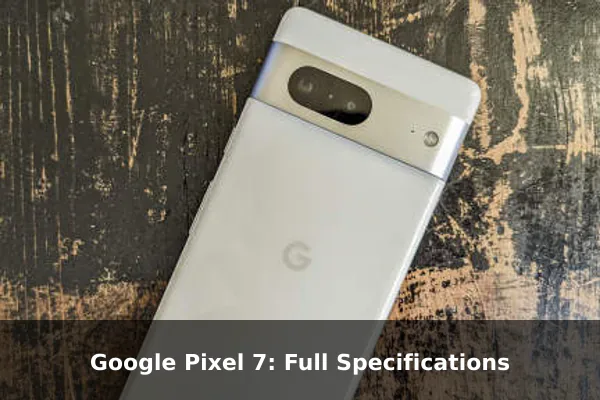
Durability is one of its stronger hardware points. The IP68 rating means the phone is dust tight and rated for immersion up to 1.5 meters for 30 minutes under controlled conditions. That should not be treated as permission to use it underwater, but it is useful protection against rain, spills, and everyday accidents. Color options are Obsidian, Lemongrass, and Snow, giving the Pixel 7 a cleaner and more restrained look than many performance-oriented Android phones.
Display Experience
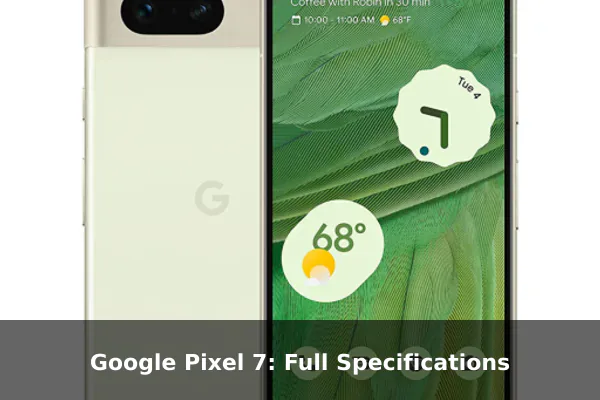
The 6.3-inch AMOLED display is a sensible middle ground. Its 1080 x 2400 resolution produces a sharp 416 ppi density, while the 20:9 aspect ratio works well for scrolling, messaging, video apps, and split-screen use. The 90Hz refresh rate is smoother than a basic 60Hz panel, though it does not match the 120Hz screens common on newer premium models.
Brightness is a practical strength. The panel is rated at up to 1000 nits in high brightness mode and 1400 nits peak, with the supplied test data showing 974 nits measured maximum brightness. HDR10+ support also helps with compatible video content. Buyers who want the smoothest possible display for gaming may prefer a 120Hz device, but for everyday use the Pixel 7 display remains crisp, bright, and color-rich.
Tensor G2 Performance
Google Tensor G2 is a 5 nm chipset with an octa-core CPU, including two Cortex-X1 cores, two Cortex-A78 cores, and four Cortex-A55 efficiency cores. It is paired with a Mali-G710 MP7 GPU and 8GB of RAM across both 128GB and 256GB storage variants. UFS 3.1 storage is important because it keeps app loading, file access, and system responsiveness feeling modern.
The listed test scores show AnTuTu 813114, GeekBench 3288, and GFXBench 59fps in ES 3.1 onscreen. In practical terms, Pixel 7 is fast enough for demanding everyday Android use, camera processing, navigation, multitasking, and casual to moderate gaming. It is not the best choice for buyers who prioritize sustained gaming performance above everything else, but Tensor G2 was designed around Google’s AI, imaging, and voice features as much as raw benchmark dominance.
Camera System
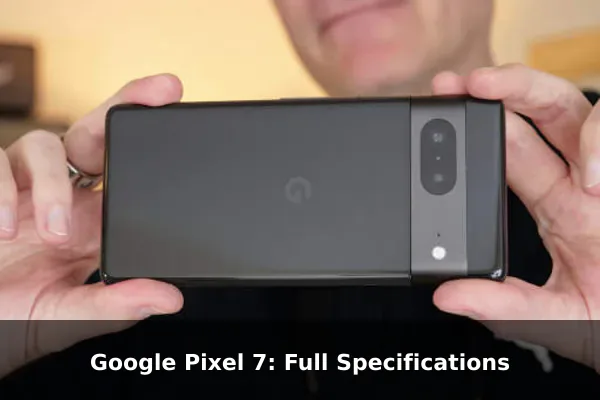
The rear camera setup is built around a 50 MP wide camera with dual pixel PDAF and OIS, supported by a 12 MP ultrawide camera. This is not the most flexible arrangement because there is no dedicated telephoto lens, but the main sensor is strong and Google’s image processing is the real advantage. Features such as Pixel Shift, Auto-HDR, panorama, laser autofocus, and 10-bit HDR video support give the Pixel 7 more creative range than the simple dual-camera label might suggest.
Video support is also strong for the class, with 4K recording at 30 or 60fps and 1080p recording up to 240fps. Gyro-EIS and OIS help stabilize footage, while the 10.8 MP ultrawide selfie camera can also record 4K at 30 or 60fps. The lack of optical zoom is the key limitation, so buyers who often shoot concerts, wildlife, or distant subjects should look at a Pro model. For portraits, landscapes, city shots, social media clips, and everyday family photos, the Pixel 7 remains a very capable camera phone.
Battery and Charging
The Pixel 7 has a 4355 mAh battery, with the source test data listing a 96-hour endurance rating under the older battery test method. That points to dependable mixed-use battery life rather than class-leading stamina. The relatively efficient display resolution helps, but heavy 5G use, camera recording, gaming, and navigation can still drain the phone faster.
Charging is more conservative than many competing Android phones. The phone supports 20W wired charging with PD3.0, with a quoted 50% in 30 minutes, plus 20W wireless charging and reverse wireless charging. This is convenient but not especially fast by modern Android standards. The advantage is flexibility: wired, wireless, and reverse wireless charging are all included, which is useful for earbuds and other Qi-compatible accessories.
Software and Pixel Features
Pixel 7 launched with Android 13 and is listed as upgradable to Android 15, with up to five major Android upgrades. Google’s official update policy is an important part of the Pixel value equation because it helps the phone stay usable, secure, and feature-relevant for longer than many Android models from the same period.
The software experience is clean, fast, and tightly connected to Google services. Pixel-specific features such as Circle to Search add practical convenience, while Tensor G2 supports Google’s camera, speech, and assistant-driven features. The under-display optical fingerprint reader, barometer, compass, gyro, accelerometer, and proximity sensor round out the expected flagship sensor package.
Connectivity and Audio
Connectivity is one of the Pixel 7’s more detailed specification areas. It supports GSM, CDMA, HSPA, EVDO, LTE, and 5G, with different band coverage depending on model version. The GQML3 variant includes Sub6 and mmWave 5G support, while the GVU6C variant focuses on Sub6 5G. This distinction matters for buyers importing the phone or checking carrier compatibility, especially in markets where mmWave support is limited to specific models.
Wireless features include Wi-Fi 6e, Bluetooth 5.2 with aptX HD, NFC, and multi-constellation positioning with GPS, GLONASS, BDS, GALILEO, and QZSS support. USB Type-C 3.2 is another practical plus. Audio is handled by stereo speakers, with the supplied loudspeaker result rated at -26.2 LUFS, marked as good. There is no 3.5mm headphone jack and no FM radio, so wired-audio users will need USB-C or wireless accessories.
Who Should Buy It
Pixel 7 is best for buyers who want a compact-feeling flagship with clean Android, reliable cameras, premium materials, and long software support at a lower current price. It suits people who take many photos, prefer Google’s Android interface, use wireless charging, and want a phone that feels polished without paying new-flagship money.
It is less suitable for users who need expandable storage, a headphone jack, very fast charging, a 120Hz display, or a dedicated telephoto camera. Power users focused on maximum gaming performance should also compare newer chipsets. But for everyday flagship use, the Pixel 7 still offers a strong mix of camera quality, software longevity, and practical hardware.
Conclusion
Google Pixel 7 remains a smart buy when the price is right. Its Tensor G2 performance, 90Hz AMOLED display, IP68 build, strong main camera, wireless charging, and Pixel software support make it more useful than its age might suggest. Choose it if you want a polished Android camera phone with reliable long-term value, but skip it if fast charging, optical zoom, or expandable storage are must-haves.
References
- Google Pixel Phone Help – Pixel phone hardware tech specs – Primary Google source for Pixel 7 specifications including display, dimensions, weight, battery, memory, storage, cameras, connectivity, materials, colors, in-box items, and warranty notes.
- Google Pixel Phone Help – Safety and regulatory guide for Pixel 7 and Pixel 7 Pro – Official source for Pixel 7 model numbers, SAR values, FCC compliance, EU declaration details, radio-frequency information, and safety/regulatory statements.
- Google Pixel Phone Help – Pixel software update policy – Official Google source for Pixel 7 OS and security update support duration.
- Google Blog – The latest and greatest: meet Pixel 7 and Pixel 7 Pro – Official launch announcement confirming Pixel 7 release context, Tensor G2, Android 13, design, colors, and key feature positioning.
- Google Store – Google Pixel 7 features – Official Google Store feature overview useful for corroborating Tensor G2, Titan M2, camera/software features, and security claims.
